Trump-Xi Summit in Beijing: Iran Changed the Agenda Between the United States and China
The two-day summit between Donald Trump and Xi Jinping in Beijing showed that relations between the United States and China are entering a new phase of cautious interaction. They remain rivals, have deep disagreements over trade, technology, Taiwan, and military influence in Asia, but the war in Iran forced both sides to speak not only about competition, but also about risks that could hit the entire global economy.
Time for Action analyzed why the Iranian issue became central to a meeting that was initially expected to be mainly about trade. Trump’s first visit to China since 2017 was supposed to focus on tariffs, technology restrictions, access for American goods to the Chinese market, and the overall economic tension between the two states. However, the almost complete closure of the Strait of Hormuz changed the order of the conversation. The Strait of Hormuz is one of the most important sea routes for global oil trade. About one-fifth of global oil supplies usually pass through it. Therefore, its blockage or even prolonged instability around it immediately creates a threat to energy prices, supplies, production, and political stability far beyond the Middle East.
For Washington, the main goals look clear: to prevent Iran from obtaining nuclear weapons, keep sea routes open, and prevent the war from growing into a broader crisis. Trump himself said in Beijing:
“We discussed Iran. We have very similar views on how we want this to end.”
He separately added:
“We do not want them to have nuclear weapons. We want the strait to be opened.”
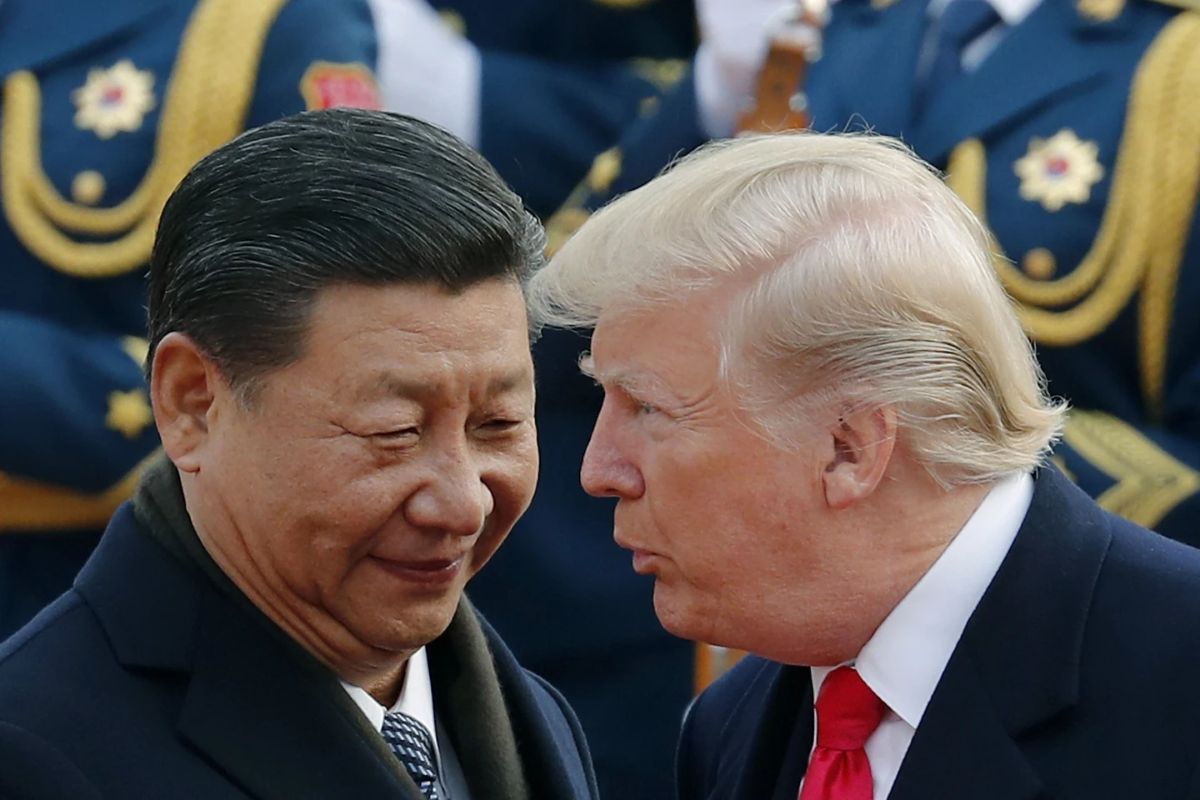
These statements are important not only because of their content, but also because of the place where they were made. The American president spoke about Iran next to the Chinese leader, showing that even in relations between two competitors, issues can appear where fully ignoring the other side’s position becomes disadvantageous.
For China, the situation is no less difficult. Beijing traditionally opposes military escalation, but at the same time has its own economic interests in Iran. China remains the largest consumer of Iranian oil, so instability in the region directly affects its energy security. A prolonged war is disadvantageous for Beijing, as it could disrupt supplies, push oil prices upward, and worsen the condition of the Chinese economy, which is already showing signs of slowing down. That is why the Chinese side supported the wording on the need to preserve open shipping routes and prevent Iran from obtaining nuclear weapons. However, such a position does not yet mean Beijing’s readiness to put hard pressure on Tehran. It is rather a cautious diplomatic line: China demonstrates responsibility, but does not take on obligations that could limit its own levers of influence.
Trump also said that Xi Jinping offered to help reach a deal with Tehran and promised not to supply Iran with military equipment. At the same time, the American administration tried not to create the impression that Washington depends on Beijing’s support. Secretary of State Marco Rubio put it sharply:
“He did not ask him for anything. We do not need their help.”
This phrase clearly shows the balance the United States tried to maintain. On the one hand, Washington benefits if China uses its economic influence over Iran. On the other hand, Trump cannot allow his diplomacy to look like a request to the main strategic competitor. The trade part of the summit did not disappear, but moved into the background. The sides discussed China’s purchase of American agricultural products worth tens of billions of dollars annually over the next three years. There was also talk of an order for 200 Boeing aircraft, the renewal of export licenses for hundreds of American beef producers, and the creation of a Trade Council for goods that do not belong to sensitive categories.
For Trump, these agreements can become an argument inside the United States. They make it possible to speak about concrete economic results: aircraft sales, access for agricultural products, and the return of American companies to the Chinese market. For Xi, these agreements are also useful, because they allow him to show that relations with Washington are manageable and reduce the risk of a new trade escalation. But deeper disputes remained almost unresolved. Taiwan continues to be one of the most dangerous points in relations between the United States and China. Xi warned Trump that mishandling this issue could lead to clashes and even conflicts. Beijing continues to demand that Washington limit arms sales to Taiwan and reduce political support for the island.
The issues of export control, artificial intelligence, rare earth resources, and military presence in Asia remain no less difficult. The summit gave a signal of a desire to reduce tension, but did not change the nature of American-Chinese rivalry. Both sides want manageable relations, but neither is ready to give up key levers. The rhetoric around the personal relations of the two leaders is also telling. Trump called Xi a “friend,” while the Chinese leader spoke about the need for constructive and stable strategic relations. Such words create an atmosphere of control, but do not remove distrust. They rather help keep the diplomatic channel open at a moment when several dangerous crises are accumulating at the same time.


The main result of the Beijing summit is that the United States and China did not become closer allies, but showed readiness to talk where their interests temporarily coincide. Iran became a test of this ability. Washington wants to stop nuclear risks and restore stability in the Strait of Hormuz. Beijing wants to avoid an energy shock and preserve room for its own diplomacy. Both sides have reasons not to allow a major crisis, but each acts from its own calculation. The summit did not produce a breakthrough. It produced a pause, controlled language, and several moderate agreements that can be presented as a result. But the real test will begin not after banquets and statements, but when it becomes clear whether China is ready to really influence Iran, whether the United States can turn diplomatic formulas into practical decisions, and whether the war will not destroy the fragile balance between rivalry and forced coordination.
About the Author

Related posts:
 US-China Summit in Beijing: What Trump and Xi Are Negotiating and Whether Ukraine Is on the Agenda
  The Strait of Hormuz Has Become a Pressure Point: The United States and Iran Have Entered a War of Endurance
  Russia–Iran Alliance Has Moved Beyond Convenience: Why It Threatens Ukraine, the Middle East, and the United States
  Trump’s Force-First Course on Iran What’s Behind the Strikes