Strait of Hormuz Becomes a Pressure Point as the US and Iran Enter a War of Endurance
The blockade of Iranian ports, which the U.S. Navy has now maintained for a third week, has sharply changed the situation around Iran. Nearly all of the country’s maritime trade has been halted, including oil exports. For Tehran, this is a blow to the economy. For Washington, it is a way to force Iran into concessions on its nuclear program. But such a strategy does not automatically reduce tensions. On the contrary, it creates a dangerous situation in which each side believes it has enough leverage and can wait longer than the other. “Time for Action” analyzed the situation in the Strait of Hormuz: the current confrontation between the United States and Iran increasingly resembles not a rapid military operation, but a prolonged war of endurance.Washington is applying pressure through naval force, blockade, and the threat of further strikes. Tehran is responding with control over one of the world’s most important energy routes, cheap asymmetric tools of war, and a calculation based on U.S. political fatigue. The Strait of Hormuz matters far beyond Iran. It is one of the world’s critical corridors for global trade, particularly for energy supplies. Any restriction of movement in this zone quickly affects oil markets, insurance risks, logistics, and the political calculations of multiple states. For Iran, it is one of the few levers capable of pressuring not only American military forces, but also the global economy.
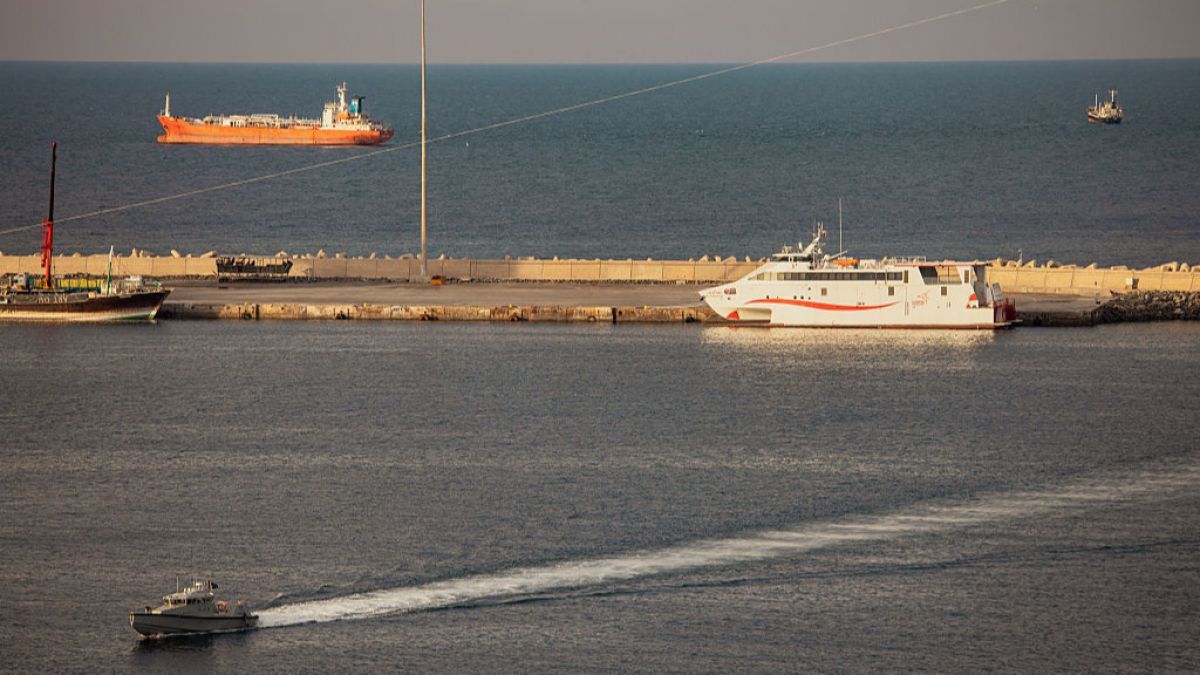
At present, traffic through the strait is operating in a limited mode. There are reports that Iran is allowing some ships to pass under certain conditions and may demand payment in its own currency. This appears to be Tehran’s attempt to show that it is not fully closing the sea route, but that it is the one setting the rules of passage. Such behavior creates uncertainty, and uncertainty in a strategic maritime corridor can be nearly as powerful as a direct closure. From a military standpoint, the situation has the characteristics of a stalemate. The United States has deployed significant naval power, including three carrier strike groups. This is a show of force on a scale the region has not seen in years. But Iran does not need to respond symmetrically. Its tools are far cheaper, simpler, and dangerous precisely because of their unpredictability.
Drifting mines, low-flying drones, coastal launch positions, small teams capable of launching inexpensive systems from shore all of these create serious risks even for a modern fleet. The problem is that an expensive military system is forced to react to a cheap threat. Sometimes the attack itself is not even necessary. The constant possibility of attack is enough to slow shipping, raise insurance costs, and force commanders to keep forces under constant strain. This is Iran’s strongest advantage. It does not have naval power comparable to that of the United States, but it can turn a narrow strait into a zone of risk. If a commercial tanker, military vessel, or merchant ship cannot be sure the route is safe, the economic effect is already in motion. For global markets, what matters is not only an actual blockade, but the sense that any voyage could become a problem. The United States, for its part, has shown no sign of quickly stepping back. The administration of Donald Trump does not appear to feel strong time pressure. Washington has publicly tied the end of the blockade to the reopening of the strait and Iran’s agreement to halt uranium enrichment. This means maritime pressure is being used as a tool of coercion, not as a temporary signal.
Iran also believes time may work in its favor. Tehran is closely watching domestic politics in the United States, oil prices, voter sentiment, and the approach of midterm elections. If the blockade drives prices higher or fuels fatigue over another Middle East crisis, Iran may calculate that political pressure on Washington will increase. This is the core logic of the current confrontation both sides believe they can endure longer. The United States has the advantage in military power, global logistics, and the ability to conduct large-scale operations. Iran has geography, cheap instruments of pressure, leverage over an energy corridor, and long experience in asymmetric confrontation.
A separate danger is that this war of endurance could spiral out of control because of a single incident. A drone, a mine, mistaken target identification, a strike on a ship, or military casualties could abruptly change the pace of the conflict. In a situation where forces are operating in close proximity and political stakes are high, even a small event could become the trigger for much wider escalation. The recent U.S. operation to rescue a pilot deep inside Iran is also revealing. It demonstrates that American forces are capable of conducting complex operations inside the country if necessary. This does not mean an immediate shift to a ground operation, but it shows the level of capability Washington could employ in the event of further escalation. The most sensitive possible marker of escalation is Kharg Island. It plays a critical role in Iranian oil exports. If the United States begins acting against this island, it would signal a shift from blockade and containment to a much harsher phase of pressure. A strike or operation against such a node would not simply be a show of force, but an attempt to undermine the regime’s ability to finance and sustain its security structures. In that scenario, economic pressure becomes a direct attempt to weaken the internal support base of the Iranian regime. If access to oil revenues is constrained, the payment of security forces becomes more difficult, and resupply is disrupted, Tehran may face not only external pressure, but also internal instability.
Such a scenario remains dangerous and far removed from a diplomatic resolution. For now, both sides still leave room for negotiations over the nuclear program. But the very fact that military assessments are already discussing scenarios for further pressure on Iran’s oil nodes shows how high the stakes have risen. An important factor remains the condition of Iran’s leadership. If decision-making in Tehran is in fact slowed by the isolation of the supreme leader and fragmentation between the Islamic Revolutionary Guard Corps, parliament, and the clerical establishment, that could delay negotiations. In a crisis, the speed of communication can matter as much as military power. When decisions move slowly, the risk of error or delayed reaction rises.
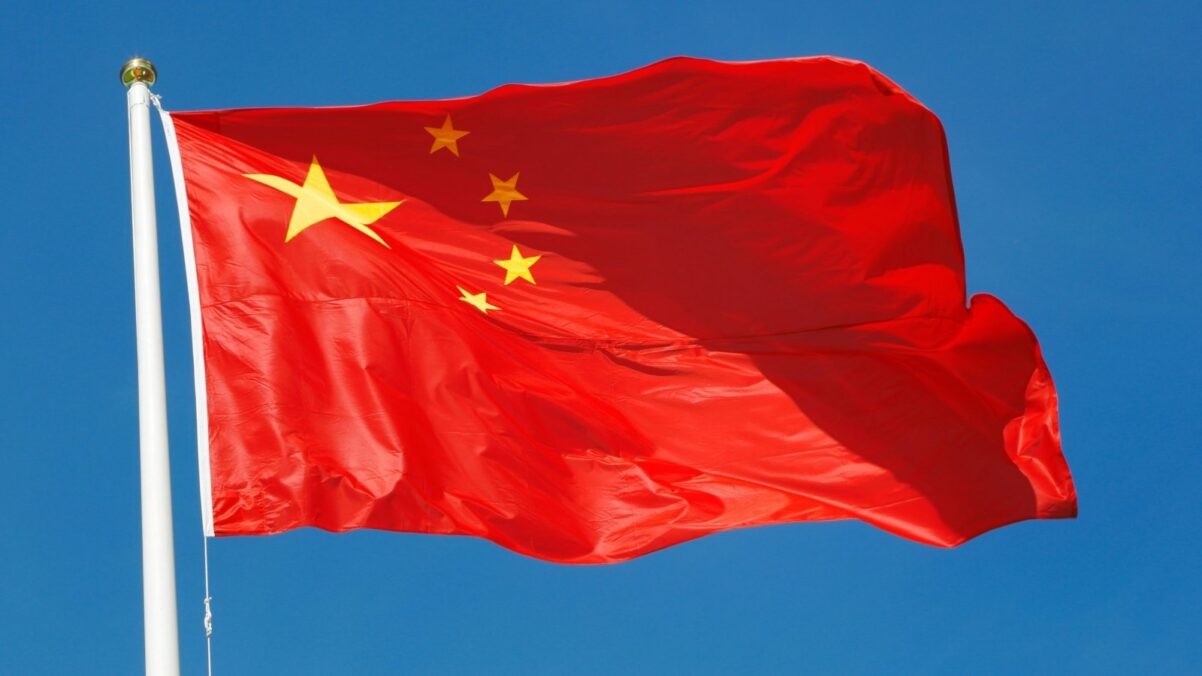
External actors also matter. Iran maintains contact with both Russia and China. China may have the greatest external influence, though even that influence is limited. For Tehran, what matters is not only political signaling, but also the possibility of receiving military technology, including air defense systems. Russia also remains relevant, especially given the deepening relationship between Moscow and Tehran in recent years. But no outside partner removes Iran’s central problem the blockade is already hitting maritime trade and oil revenues. For the global economy, the danger lies in the combination of military uncertainty and energy dependence. When one of the world’s key maritime corridors is operating under severe restrictions, every report of mines, drones, delayed ships, or possible strikes on oil infrastructure can move markets. Even without full-scale war, the fear of such a war already carries an economic price. For the United States, this is a test of force and political endurance. Washington is showing that it is willing to pressure Iran not only through sanctions and diplomacy, but also through military presence. But a blockade cannot remain a neutral action indefinitely. The longer it continues, the greater the risks of incidents, political criticism, price volatility, and the need to explain to the public why the United States must remain in this crisis.
For Iran, this is a test of economic survival. The halt in maritime trade and oil exports constrains the regime’s resources. But Tehran is trying to offset this by controlling the Strait of Hormuz and creating risk for others. Iran’s logic is simple: if pressure on it becomes painful, it must make the cost of the crisis painful for everyone else as well. That is why the Strait of Hormuz has become the central pressure point in the current confrontation. It is where military power, energy, trade, nuclear negotiations, and domestic politics in several states have converged into a single knot. There is no quick solution here, because any concession by either side can be interpreted as weakness.

The most dangerous part of this situation is that both sides may be right in their calculations only until the first major mistake. The United States truly has the advantage in military power. Iran truly has leverage in the form of the Strait of Hormuz. But the longer this game continues, the greater the chance of an event that can no longer be contained within the limits of controlled pressure. For now, the conflict remains in a phase of coercion rather than full-scale war. The United States is enforcing a blockade. Iran is restricting movement and threatening risk. Negotiations continue sporadically, but neither side is showing readiness to step back first. That makes the situation appear stable only on the surface. Beneath it, it remains highly explosive. If diplomacy fails, the next phase could be far harsher. And then the question will no longer be only whether the strait reopens, but how far the United States and Iran are willing to go to prove which of them can endure longer.
About the Author

Related posts:
 Russia–Iran Alliance Has Moved Beyond Convenience: Why It Threatens Ukraine, the Middle East, and the United States
  Strait of Hormuz and Global Trade: How the Blockade Hits Fertilizers, Aluminum, Helium, and Basic Needs
  Oil Under War Pressure How the Conflict Around Iran Is Changing Global Prices and What It Means for Ukrainian Drivers
  US-Iran Truce: Why the Pause in War Already Looks Fragile