Belarusian Direction: What the Threat Means for Kyiv and Northern Ukraine
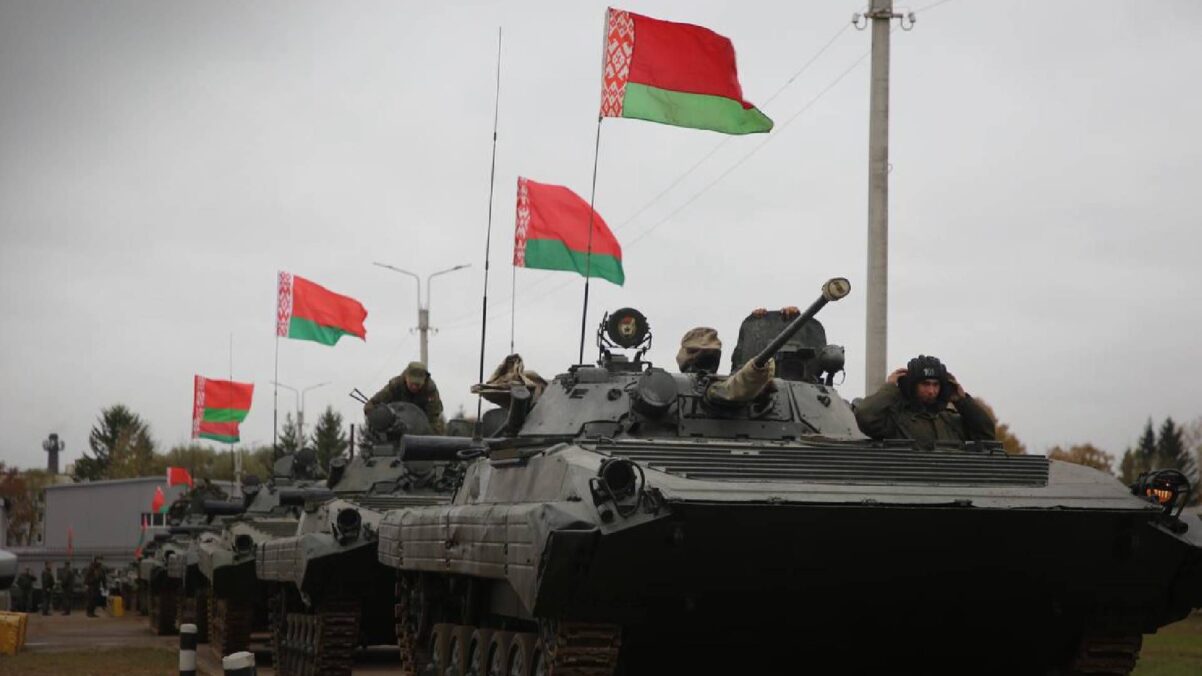
The threat from Belarus has again returned to the center of attention because of statements by the Ukrainian leadership, the activity of the Belarusian army, and the memory of February 2022. It was from Belarusian territory that Russia then used one of the key footholds for its attack on Ukraine, so any movements in the north are now perceived especially sharply.
Time for Action has analyzed why the current situation cannot be ignored, but also cannot be automatically equated with preparations for a new march on Kyiv. Here it is important to separate three things: the political threat, military activity, and real readiness for a major offensive operation. They may exist at the same time, but they do not mean the same thing. As of mid-May 2026, the threat from the Belarusian direction is real. President Volodymyr Zelenskyy stated that Russia is trying to pull Belarus deeper into the war and may be considering operations from its territory in particular toward Chernihiv – Kyiv or against one of the NATO countries. After that, he instructed that the defense of Ukraine’s northern regions be strengthened. This means that the Ukrainian authorities are not dismissing the risk and are acting ahead of time. But a warning about a threat is not the same as confirmation that an offensive is already ready. A large operation requires not only a political decision, but also a visible accumulation of troops, equipment, fuel, ammunition, engineering units, artillery, air defense, medical support, and command infrastructure. So far, open assessments do not show the formation of such a grouping. A limited presence of Russian troops is being recorded in Belarus, without signs of a large infantry corps near the Ukrainian border. A permanent presence of Russian aviation is also not visible, while Russian aviation activity remains episodic.
This is the key point. Belarus remains a dangerous platform for Russia, but at present it does not look like a territory from which a large-scale offensive on Kyiv could start tomorrow. Its roads, training grounds, airfields, warehouses, and dependence on Moscow remain a resource that Russia can use. But a resource is not yet a ready operation. At the same time, preparation inside Belarus itself is indeed ongoing. Lukashenko speaks about combat readiness checks, the actions of units under wartime conditions, mobilization measures, and testing of the command system. Such actions cannot be considered a minor matter. They show that the regime is checking how quickly it can raise units, manage reserves, and carry out orders.
But such preparation may have several goals. It may be a signal of loyalty to Moscow, a way to pressure Ukraine, an element of internal mobilization, defensive preparation, or the creation of infrastructure that Russia could use if needed. This increases the risks, but in itself does not prove a plan for an immediate offensive on Kyiv. The most realistic risk now is not a large column of armored vehicles heading for the capital, but actions below the level of a full-scale invasion. These may include sabotage and reconnaissance groups, provocations at the border, demonstrative exercises, the transfer of equipment, information operations, drone and missile strikes, and the use of Belarusian infrastructure or airspace. Such a scenario is useful for Russia because it is cheaper and more flexible. It allows Moscow to keep Ukraine under pressure, force the Armed Forces of Ukraine to hold forces in the north, distract attention from other sections of the front, and psychologically pressure Kyiv, Chernihiv, Zhytomyr, Volyn, and Rivne region.
It is especially important not to reduce the entire assessment to the question of whether tanks will go to Kyiv. Russia is already actively using massive air strikes as a way to exhaust Ukrainian air defense. If demonstrative activity in Belarus is added to this, the pressure effect grows even without a real offensive. Ukraine is forced to take all directions into account, and this is exactly what Moscow wants. A repeated major operation on Kyiv would require time. Provocations or actions by sabotage and reconnaissance groups can be organized within a few days or weeks. A limited escalation in the north to distract Ukrainian forces would require more preparation. A full-scale offensive toward Chernihiv – Kyiv would require at least months, counting from the current situation, when no large Russian grouping in Belarus is openly visible.
Kyiv is not a target for a short raid. An offensive on the capital means long logistics, heavy losses, complex command, the need for constant supplies of ammunition and fuel, protection from strikes, engineering work, evacuation of the wounded, and protection of rear areas. If this is absent, the offensive quickly turns into a risky adventure. The experience of 2022 showed two things. Russia is capable of making reckless decisions. But it also showed that poor logistics, strikes on columns, resistance from the terrain, intelligence mistakes, and weak command can break even a large plan. That is why the February 2022 scenario cannot be mechanically transferred to 2026. The argument about a fortified border is important, but it cannot be treated as a complete guarantee of security. Minefields, prepared positions, natural obstacles, and defense experience significantly raise the price of an attack for Russia and Belarus. But they do not remove the risk of provocations, local breakthroughs, or strikes on infrastructure.


The most likely scenario for the near future is continued psychological pressure, exercises, border provocations, and air attacks. A less likely but possible option is a limited escalation in the north to force Ukraine to move reserves. The most dangerous scenario a new major offensive on Kyiv does not currently look like the nearest one, because there are no open signs of sufficient preparation for it. The main indicators of a change in the situation will not be Lukashenko’s statements, but the mass transfer of Russian infantry and armored vehicles into Belarus, the creation of fuel and ammunition depots, field hospitals, artillery, engineering units, pontoon equipment, the strengthening of aviation and air defense, and the closure of areas near the Ukrainian border. As of May 17, 2026, the threat from Belarus must be taken seriously, but without panic. The risk of provocations, strikes, and attempts to distract Ukrainian forces is much more realistic than an immediate large-scale march on Kyiv. At the same time, the very fact of Belarus’s dependence on Russia means that the northern direction will remain dangerous as long as Moscow has the ability to use Belarusian territory in its war against Ukraine.
About the Author

Related posts:
 Sumy or Donbas: Where Is Russia Really Preparing Its Summer Offensive?
  Belarus on the Edge: Sanctions, Military Signals, and Kyiv’s New Formula
  Imperial Ambitions Disguised as “Peace Talks”: What Russia’s Summer Offensive Really Aims to Achieve
  An Assassination Attempt or a Signal? What Stands Behind the June 6 Attack on Kyiv