The Yermak Case and “Dynasty”: Why Suspicion Against the Former Head of the Presidential Office Has Become a Political Test for the Authorities
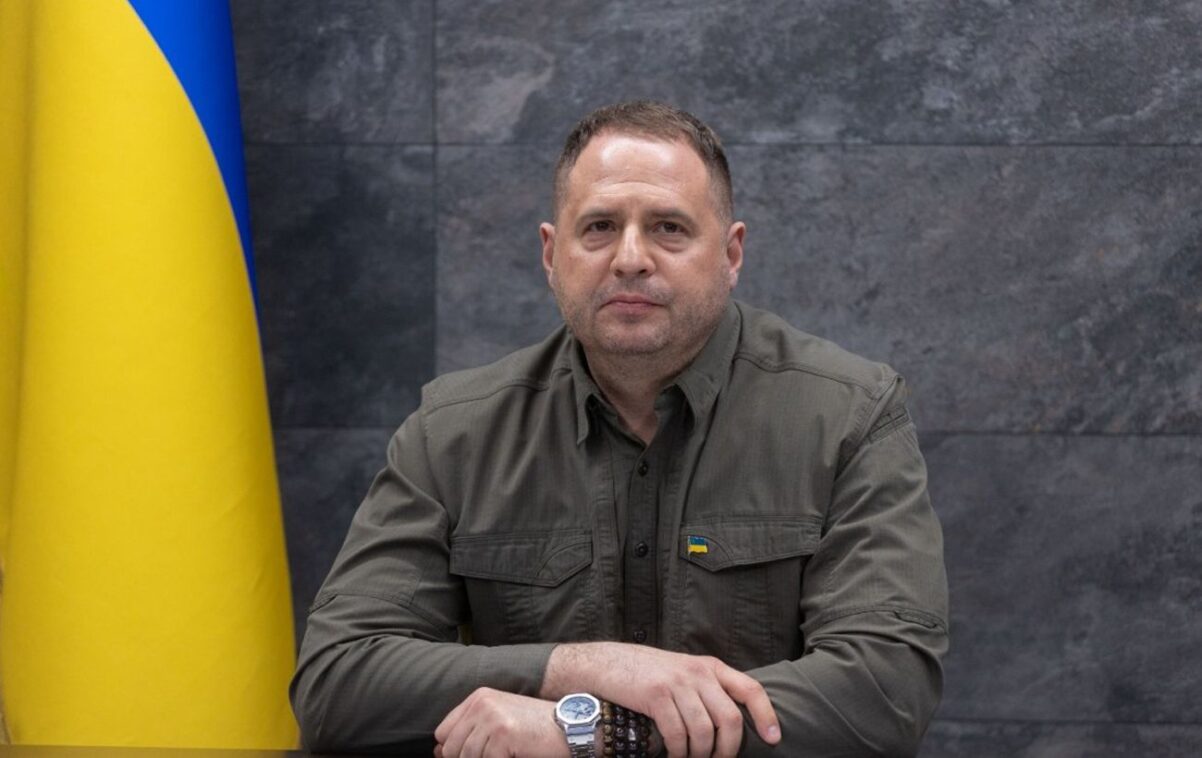
The High Anti-Corruption Court did not impose a preventive measure on former Head of the Office of the President Andriy Yermak on May 12. The hearing will continue on May 13. This decision does not close the case and does not remove the suspicion, but it shows that the process is moving into a phase where every step by investigators, the court, the defense, and the authorities will carry not only legal but also political weight.
Time for Action has analyzed why the case on the legalization of 460 million hryvnias through elite construction near Kyiv has become one of the most sensitive for the Ukrainian authorities. This is not only about a possible corruption scheme. At the center is a figure who for years was among the most influential in the state, had direct access to President Volodymyr Zelenskyy, and effectively embodied the political weight of the Presidential Office.
Andriy Yermak has been notified of suspicion in a case concerning the legalization of funds through the construction of elite real estate in Kozyn, Kyiv region. According to the investigation, the project involves the “Dynasty” cooperative, where several private residences of about 1,000 square meters each were to be built, along with auxiliary facilities and a shared residence with a spa area, swimming pool, and gym. According to anti-corruption bodies, seven individuals have received suspicions. Among them are Andriy Yermak, Oleksiy Chernyshov, and Timur Mindich. Case materials refer to residences marked as “R1,” “R2,” “R3,” and “R4.” According to media reports, “R2” is allegedly linked to Yermak, “R3” to Mindich, and “R4” to Chernyshov. The greatest political tension surrounds “R1,” which, based on published transcripts, may have been intended for a person referred to as “Vova.” The Specialized Anti-Corruption Prosecutor’s Office and NABU have not commented on who this might be. This uncertainty has created the main political intrigue. NABU Director Semen Kryvonos stated that President Volodymyr Zelenskyy did not and does not appear in the pre-trial investigation. This is an important legal boundary. It separates assumptions, public speculation, and political interpretations from the official position of the investigation. At the same time, public attention to the issue remains, as the case involves individuals from the closest circle of power. After the court hearing, Andriy Yermak denied all accusations. He emphasized that since the morning of February 24, 2022, he had been almost constantly present and living in the Office of the President, during the very period mentioned by the prosecution. Earlier, when asked about the “Dynasty” cooperative, he stated that he owns no houses and has only one apartment and one car.
“Starting from 5 a.m. on February 24, 2022, I was practically constantly at and living in the Office of the President. Calculate that time. That is exactly the period the prosecution was referring to,” Yermak said.
The defense position is also built on denying his involvement in the legalization of 460 million hryvnias. Yermak’s lawyer, Ihor Fomin, stated that the situation, in his view, is driven by public pressure. This is a predictable defense line in a case that has already grown far beyond a standard criminal proceeding.
According to NABU, the “Dynasty” story began before the full-scale war. In 2018, a person with the nickname “Che Guevara,” whom media link to Oleksiy Chernyshov, became a co-founder of BLOOM Development LLC. In 2019, the company acquired more than 4 hectares of land from the Kozyn village council. Later, after entering public service, the stake was transferred to his wife. By 2020, according to investigators, the concept of building private residences had emerged. The value of land in Kozyn, according to estimates cited by participants, ranged from $4,000 to $20,000 per hundred square meters. The total area for construction exceeded 8 hectares. The cost of building one residence was estimated at around $2 million. The active construction phase began in June 2021, but the project is currently suspended.
Investigators believe that part of the funds used for construction may have been routed through a so-called “laundering mechanism” controlled by a businessman who was expected to own one of the residences. The amount is about $9 million. The total amount allegedly legalized, according to NABU and SAPO, exceeds 460 million hryvnias. This case is part of a broader story linked to the “Midas” investigation, also known as “Mindichgate.” At its center was businessman Timur Mindich, associated with an alleged scheme involving the misappropriation of more than $100 million from Energoatom assets. Public outrage intensified because these alleged operations may have taken place during the full-scale war, when Ukraine was facing constant Russian strikes on its energy infrastructure and widespread blackouts. Andriy Yermak resigned on November 28, 2025, following searches at his residence. Before that, he had remained one of the most powerful figures in Ukrainian governance for years. His influence extended far beyond his formal position. That is why the suspicion against him is perceived not only as a case against an individual, but as a test of the entire model of political accountability surrounding the Presidential Office.
Political reactions have already shown differing approaches. MP Yaroslav Zhelezniak stated that he expects not communication from the president, but concrete actions, including dismissals of Security Service employees who, in his view, may have interfered with the investigation. Meanwhile, MP Serhii Demchenko stressed that the president must be very careful in public statements so as not to violate the right to defense. This reflects one of the key dilemmas for the authorities. Silence fuels suspicion and political interpretations. A sharp reaction may be seen as pressure on the investigation or the court. In a situation where the investigation is ongoing, every statement from the president or his team is assessed both legally and politically. Another issue is the possible obstruction of anti-corruption bodies. Previous recordings in the “Midas” case mentioned a figure with the codename “Ali Baba.” SAPO head Oleksandr Klymenko confirmed the presence of such a figure and stated that this person allegedly gave instructions to pursue NABU detectives. MP Yaroslav Zhelezniak previously claimed that this codename referred to Andriy Yermak. Yermak himself responded that his name is Andriy Yermak and he has no other names.
At this stage, the “Dynasty” case is at a point where legal facts must still be proven in court. A suspicion is not a verdict. The prosecution must present evidence, the defense must challenge it, and the court must assess the arguments. However, the political impact has already occurred. Ukrainian society sees investigations involving individuals who were extremely close to the highest level of power and expects clear accountability, not declarations. For the anti-corruption system, this is also a major test. NABU and SAPO must demonstrate that they can bring cases of this level to results regardless of the political weight of those involved. For the court, it is a test of independence and the quality of decisions. For the authorities, it is a test of whether they can refrain from protecting allies and avoid interfering in the process. The next decisions of the High Anti-Corruption Court will indicate the direction of the case. But one thing is already clear: “Dynasty” is no longer just a story about land, houses, and hundreds of millions of hryvnias. It is a case about the limits of influence, the accountability of the closest political circle, and trust in the state during wartime.
About the Author

Related posts:
 Yermak’s Resignation: How Anti-Corruption Investigations Changed the Office of the President
  Yermak’s Resignation and Corruption Scandal: How the US Position on Ukraine Is Changing
  NABU Searches in the Verkhovna Rada: What Is Known About the Bribery-for-Votes Case
  Operation “Midas”: How Anti-Corruption Authorities Exposed a Large-Scale Scheme in the Energy Sector