Record Security Assistance and Conditional Stability: What Ukraine Is Entering 2026 With
Time for Action has analyzed the volumes of international security and financial support Ukraine received in 2025 and the resources with which the country is entering 2026. The picture that emerges from the available data is far more complex than a simple increase in figures in reports. It combines record levels of assistance, new financing models, and at the same time a high dependence on the fulfillment of political commitments, decisions by partner parliaments, and legally unresolved issues related to frozen Russian assets.
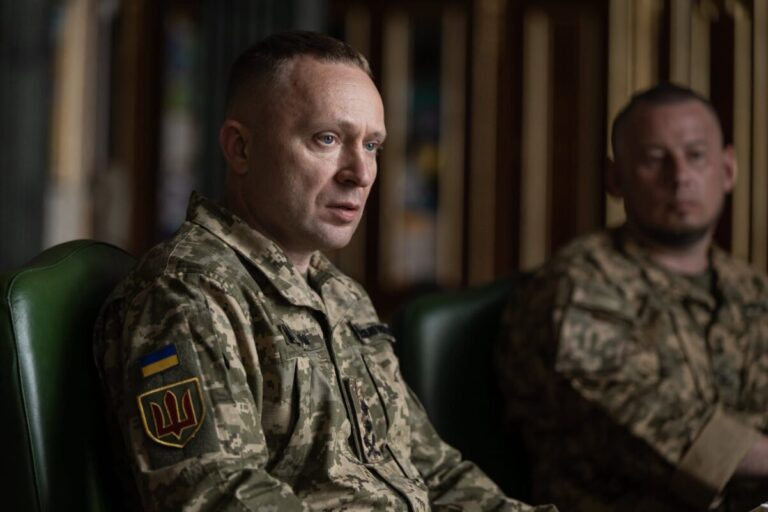
In 2025, Ukraine received more than $45 billion in international security assistance, nearly 30% more than in 2024. This was reported by Ukraine’s Minister of Defense Denys Shmyhal, who emphasized that 2025 became a record year for international security support to Ukraine. This figure includes not only direct financial inflows, but the total volume of resources encompassing weapons, ammunition, logistics, training, repairs, technical support, and investments in production.
The structure of this assistance demonstrates a fundamental shift in partners’ approaches. The main areas of military support in 2025 included weapons and ammunition, development of air and missile defense, investments in joint production and procurement for Ukraine’s defense-industrial complex, as well as training, repairs, technical support, and logistics. A separate and important component is more than $6 billion directed specifically to the development of Ukraine’s defense-industrial complex under the so-called “Danish model”, which предусматривает financing weapons production directly in Ukraine or in close cooperation with Ukrainian enterprises.
Another important source was almost $3 billion obtained through profits from frozen Russian assets in the European Union and the United Kingdom. These funds were used to procure weapons and develop the defense industry. The very existence of such a mechanism indicates a gradual erosion of previous taboos in European financial policy, although legally the issue of full-scale use of Russian assets remains unresolved.
At the same time, 2025 became not only a year of records, but also a transition point toward longer-term planning. In 2026, Ukraine plans to allocate nearly $120 billion to defense needs. Half of this amount the country intends to cover independently, while another $60 billion in assistance to Ukraine in 2026 has been planned within NATO under the PURL initiative. This was stated on November 4, 2025, by the Head of the NATO Representation in Ukraine, Patrick Turner.
The PURL – Prioritised Ukraine Requirements List initiative represents a fundamentally different logic of support. Its essence is that American weapons will be supplied to Ukraine, while financing will be provided by European allies, Canada, and other NATO partners. Thus, the United States retains its role as the key manufacturer, while the financial burden is distributed among allies. Within this initiative, four assistance packages have already been announced, although a significant portion of the sums remains in the status of commitments rather than actual disbursements.
In parallel, partners are locking in support within their own national budgets. The United Kingdom, in early June 2025, announced the transfer of 100,000 drones to Ukraine by April 2026 within the drone coalition established during the 19th Ramstein-format meeting. In addition, on September 10, the British government announced the signing of an agreement on joint development of advanced military technology. Besides the UK, the drone coalition includes Australia, Belgium, Canada, Denmark, the Netherlands, Germany, Poland, Sweden, Estonia, Latvia, Lithuania, the Czech Republic, Italy, France, New Zealand, Norway, and Turkey. Latvia, which initiated the creation of the coalition, will also allocate €15 million for drones in 2026.
Germany approved its 2026 budget on November 28, under which Ukraine will receive military assistance totaling €11.5 billion, including armored vehicles, artillery, and drones. Separately, Berlin allocated €100 million for the restoration of energy infrastructure. The Netherlands announced €700 million in additional military support in the first quarter of 2026, as well as €250 million for the purchase of American weapons for Ukraine under the PURL initiative.
Against this background, the decision of Denmark is particularly indicative. On December 4, Denmark approved its state budget and announced a reduction in support for Ukraine. In 2026, the country will provide approximately 9.4 billion kroner, or about €1.2 billion, nearly half of its 2025 level of 16.5 billion kroner. This is one of the first signals of a possible recalibration of support volumes by certain partners after years of exceptionally high spending.
The position of the United States also deserves separate attention. On December 18, 2025, U.S. President Donald Trump signed the “National Defense Authorization Act for Fiscal Year 2026”, which provides for annual military spending of $901 billion, of which $400 million will be allocated to Ukraine in 2026 and the same amount in 2027. These are significantly more modest sums compared to peak years of support, but they are enshrined at the level of federal law.
Beyond military assistance, financial support for the state budget remains no less important. On November 13, 2025, Norway’s Minister of Finance Jens Stoltenberg confirmed plans to provide Ukraine with €7.3 billion in 2026, with the amount already included in Norway’s state budget. On December 20, Sweden approved an additional 2 billion kronor, or about $176 million, through the Ukraine Facility program to help cover Ukraine’s budget financing gap.
A key decision was made at the European Union summit in Brussels on December 19, where EU leaders adopted a strategic decision to provide Ukraine with €90 billion in financial support for 2026–2027. The main feature of this package is that it is based on joint EU borrowing on capital markets, rather than directly on frozen Russian assets. The loan will be secured by the EU budget reserve, and Ukraine will repay the funds only after Russia pays reparations. Until then, Russian assets will remain frozen, and the EU reserves the right to use them to service the debt if the aggressor refuses to pay.
Post List



The context of frozen Russian assets remains one of the most sensitive issues. After the start of the full-scale war in 2022, Western countries froze around €300 billion in Russian reserves, of which approximately €210 billion are under the jurisdictions of EU member states. The largest share about €180 billion is held at the Euroclear depository in Belgium. Active discussions are ongoing within the EU regarding the legal mechanism for their use, and the issue remains unresolved for 2026.
Ukrainian President Volodymyr Zelenskyy reported on December 29 that over the next two years Ukraine may receive the first $100 billion in the form of a reparations loan funded by frozen Russian assets. If the war ends, these funds are planned to be directed toward the country’s recovery; if defense must continue, the financing may be used to ensure Ukraine’s protection.
Ukraine is entering 2026 not with a lack of support, but with a high degree of conditionality of that support. A significant portion of the funds is fixed on paper in budgets, parliamentary decisions, and declarations but real resilience will depend on the speed at which resources are delivered, Ukraine’s ability to finance its own share of defense spending, and the political will of partners to fulfill their commitments. The key variables remain the PURL initiative, decisions regarding Russian assets, and the willingness of Western societies to continue supporting Ukraine amid a prolonged war. These factors will determine whether 2026 becomes a year of stabilization or a year of new trials for Ukraine’s defense and economy.
About the Author

Related posts:
 Real Estate Under Pressure from Shortages: What 2025 Revealed and What Ukraine Is Entering 2026 With
  Budget, Reforms and Risks: The Key Financial Challenges Facing Ukraine in 2026
  Ukraine’s 2026 Budget: How the state plans to fund defense, education, healthcare, veterans, and business
  State Budget-2026: The Main Financial Document of the War