Cars for the Front Without Customs Duties: Why the State Wants to Allow Personal Vehicle Imports for Military Personnel and How It Could Change the Rules
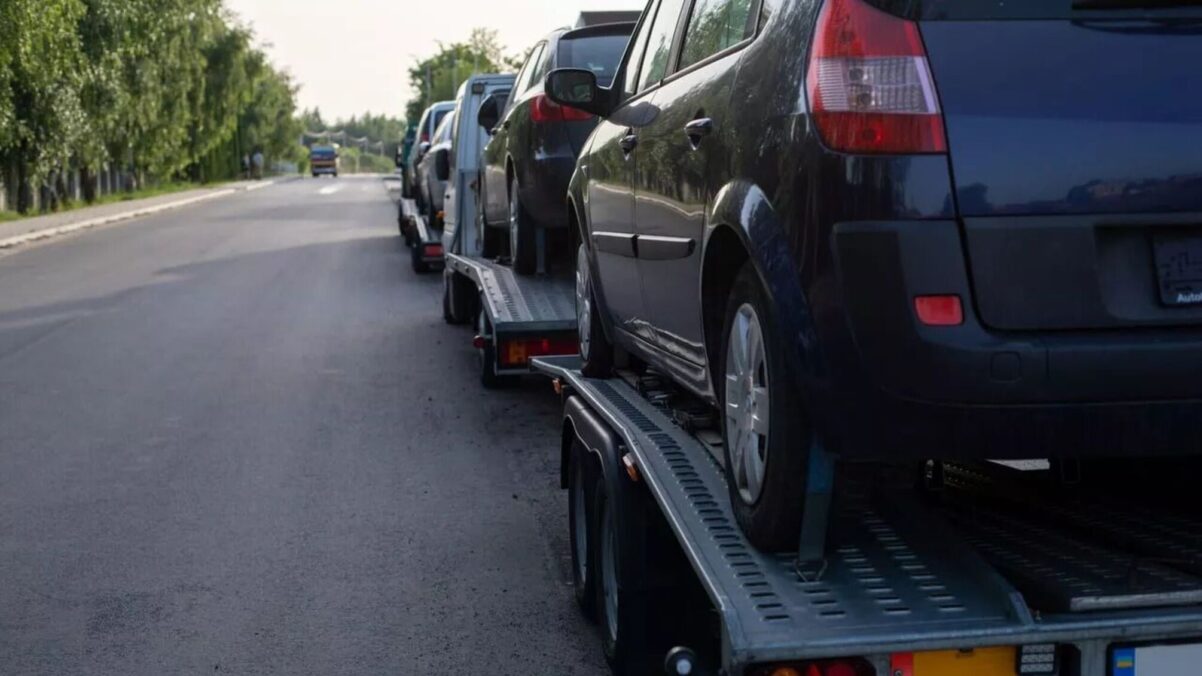
In Ukraine, in the fourth year of full-scale war, a vehicle for a servicemember is no longer a matter of convenience. At the front, it has become a consumable resource, used as quickly as fuel, drones, or communications equipment. Vehicles are destroyed, break down, burn out, are left under fire, and require constant replacement. That is why transport for the army is no longer a бытовий asset, but an element of operational mobility without which logistics, evacuation, ammunition delivery, and personnel rotation cannot function. “Time for Action” examined why the Verkhovna Rada has returned to the issue of duty-free vehicle imports, what exactly draft laws No. 15194 and No. 15195 propose, and how the state is trying to move frontline transport out of the gray zone between volunteering, customs, and criminal liability.
Since the start of the full-scale invasion, the mechanism for importing vehicles into Ukraine has changed several times. The simplest and fastest solution was the so-called zero customs clearance regime, which was in force from April to July 2022. During that period, citizens could import vehicles without paying import duty, excise tax, or value-added tax. Formally, this decision was intended to quickly saturate the market with transport under wartime conditions. In practice, however, it created a situation in which civilians made broad use of the benefit, while many servicemembers who were directly on the front line at the time had no physical opportunity to import a vehicle for their own needs. After the preferential regime was canceled in June 2022 under Law No. 2325-IX, the general procedure returned to the standard model importing a vehicle once again required full payment of customs duties, including import duty, VAT, and excise tax. For the front, this meant one thing: either a vehicle is imported through the volunteer mechanism under humanitarian aid status, or it is cleared under the standard regime with full taxation. This is where the systemic problem emerged.
Today, the main channel for duty-free vehicle imports for defense needs is humanitarian aid. Legally, this scheme allows customs duties to be avoided, but it has a different legal nature. In such cases, the vehicle is not registered as the private property of a servicemember, but as property imported to support defense needs, usually through charitable or volunteer organizations. That means the vehicle falls under a different legal regime of use. Formally, it is not private transport, but a humanitarian asset with a designated purpose. Any deviation from that declared purpose potentially creates grounds for qualification under Article 201-2 of the Criminal Code of Ukraine – unlawful use of humanitarian aid, charitable donations, or gratuitous assistance. In recent years, this article has become one of the main sources of legal tension surrounding frontline vehicles. Formally, the vehicle is imported for the army; in practice, it is used by a specific unit, crew, or servicemember, but the legal regime governing such use often remains vulnerable. In practice, this creates a constant conflict between the actual needs of the front and a legal framework that treats the vehicle not as an instrument of personal service, but as a humanitarian resource with a restricted circulation regime.
It is precisely this legal conflict that draft laws No. 15194 and No. 15195 are intended to resolve. Their core logic is to remove military transport from the semi-volunteer legal model and transfer it into a separate, legislatively regulated regime of personal import. The proposal is to grant active servicemembers the right to personally import one vehicle duty-free, without paying import duty, VAT, or excise tax. This applies specifically to individuals servicemembers not military units, charitable foundations, or volunteer organizations. The benefit is proposed for two categories of persons: those mobilized after February 24, 2022, and contract servicemembers who are in active service at the time the vehicle is imported. The key legal innovation is that in this case the vehicle is registered not as humanitarian aid and not as the property of a third party, but as the private property of the servicemember. That fundamentally changes the legal status of such transport. The vehicle ceases to be a humanitarian asset with a potentially disputed regime of use and becomes private property imported under special preferential conditions linked to military service. Legally, this is a much cleaner model. It reduces the burden on the volunteer sector, removes the need to use the humanitarian mechanism as a workaround, and partially eliminates the criminal-law risks created by the blurred regime of use for such vehicles. At the same time, the draft laws immediately introduce safeguards against abuse. The benefit is not universal. It does not reopen a new mass “zero customs clearance” regime and does not create a simplified channel for commercial vehicle imports. First, a clear quantitative restriction is established one vehicle per servicemember. Second, a three-year restriction on alienation is introduced. A vehicle imported under preferential conditions may not be sold, gifted, transferred for use, or otherwise alienated in favor of third parties, including by power of attorney, for three years from the date of state registration.
From a legal standpoint, this is a classic anti-abuse safeguard intended to prevent the use of the benefit for tax arbitrage that is, importing a vehicle tax-free and then reselling it on the domestic market. Third, the draft laws explicitly exclude from the preferential regime vehicles subject to transport tax. These are premium-segment vehicles that simultaneously meet two criteria they are no older than five years and have an average market value exceeding 375 minimum wages. In practical terms, this means the benefit will not apply to expensive premium-class vehicles included in the annual list published by the Ministry of Economy. In this way, the legislator is immediately cutting off attempts to use the provision for importing luxury models under the cover of military service. A geographic restriction is also included the preferential regime will not apply to vehicles imported from the aggressor state, the occupying state, or temporarily occupied territories.


From a legal standpoint, these draft laws do not propose a tax benefit in the classic sense. They propose a special legal regime for targeted import for a specific category of persons. That is the central distinction. This is not about liberalizing the vehicle import market. It is about creating a separate instrument to ensure the mobility of servicemembers within a wartime economy. This approach appears far more pragmatic than the current model, in which the frontline need for vehicles is effectively covered either at the expense of volunteer resources or through legally vulnerable schemes. By current estimates, the monthly need of the Defense Forces exceeds 3,000 vehicles. Under that level of demand, the volunteer mechanism has long been operating at its limit. That is why the main function of these draft laws is not to create a new privilege, but to legalize and simplify the supply channel without which the front has long ceased to function.
About the Author

Related posts:
 Car Imports to Ukraine in 2025: Tax Burden, Final Year of EV Benefits
  Electric Vehicles Without Tax Breaks: How VAT Will Change Import Costs in 2026
  VAT on electric vehicles: how a tax decision reshapes the market and pushes it into the secondary segment
  Monthly Reporting for Ukrainian Sole Proprietors: Why the Reform Failed and What Will Change in 2026