Ukrainian Beekeeping Is Losing Its Forage Base: Why the Industry Risks Producing Less Honey Each Year
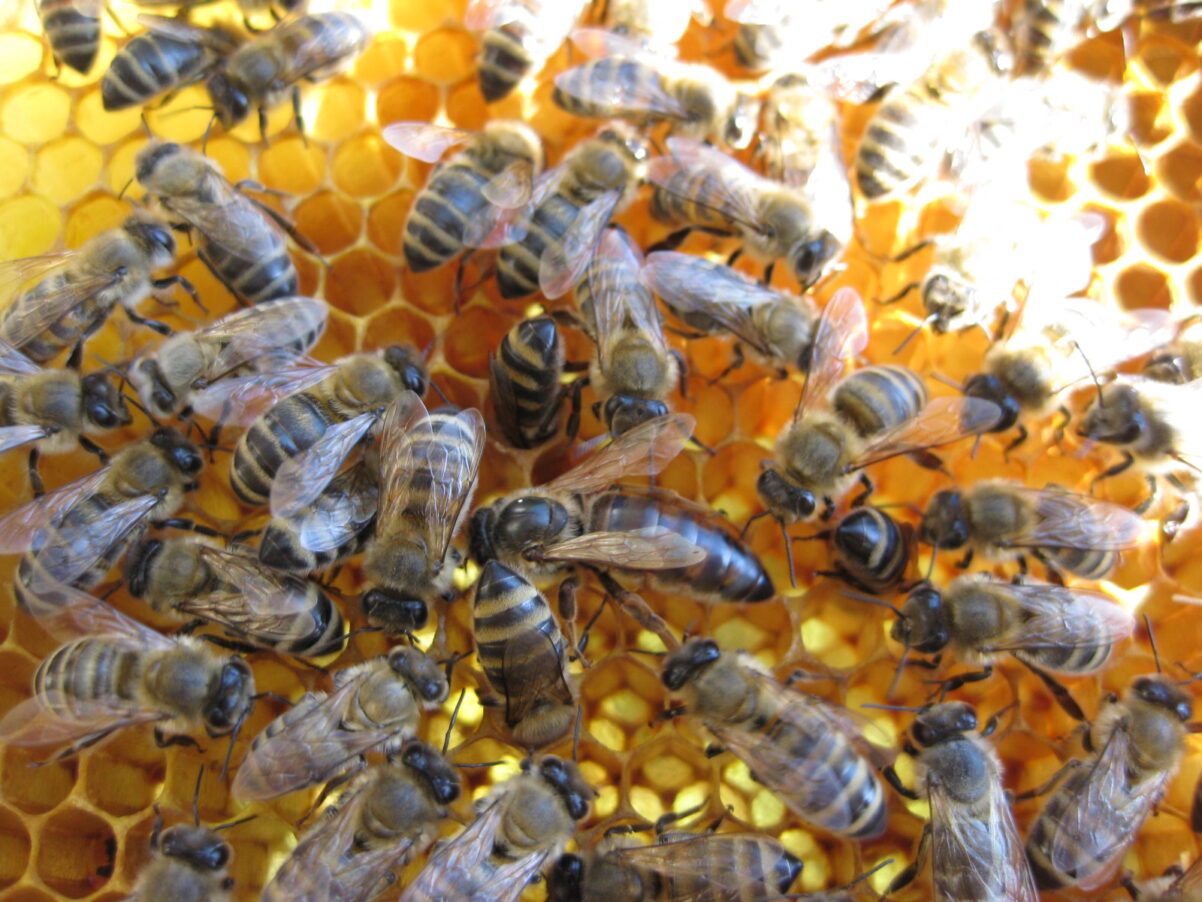
Ukrainian beekeeping remains an important part of the agricultural sector, but its stability increasingly depends not only on the work of beekeepers. Honey production is influenced by pesticides, war, deforestation and the destruction of shelterbelts, overwintering conditions, the accuracy of the apiary registry, weather, and the quality of seeds used for nectar-producing crops. A separate issue is the spread of varieties and hybrids with low nectar productivity. This factor is already leading to noticeable losses in honey yields.
“Time for Action” analyzed the situation in the beekeeping sector: Ukraine maintains strong export positions, but its internal production base is gradually weakening. Without changes in pesticide control, apiary records, and seed registration rules, losses may increase each year. One of the most acute challenges for beekeepers remains the use of pesticides. Some farmers continue to apply substances banned in the European Union and do not always comply with legal requirements. For beekeeping, this is not an abstract environmental issue, but a direct threat to apiaries. The use of hazardous chemicals can lead to bee mortality, weakened colonies, and financial losses for beekeepers, who often lack effective mechanisms for rapid protection. The situation is further complicated by restrictions on inspections. Regulatory bodies cannot operate in a full capacity and primarily respond to complaints. This means the system reacts after damage has already occurred, rather than preventing it. For beekeepers, this creates a situation where losses may happen before any official intervention.
Another critical factor is the shrinking forage base. Bees depend on nectar-producing plants, and beekeepers depend on stable access to such resources. When shelterbelts are cut down, forests are destroyed, territories burn, or fields are planted with crops that have low nectar productivity, the foundation for honey production declines. The war has intensified this problem. Part of the forests and shelterbelts has been destroyed due to hostilities, fires, and damage. Some apiaries have ended up in occupied territories or have been lost entirely. Even where apiaries remain intact, working conditions have become more difficult due to security risks, population displacement, economic challenges, resource shortages, and instability in agricultural production. Special attention should be given to the issue of entomophilous crops. These are plants that rely on insects for pollination. In a balanced system, the plant produces nectar, attracts bees, and bees ensure pollination. This is a взаимозалежний process: the plant benefits from pollination, and the bee receives a food source. However, when fields are planted with varieties or hybrids that have low nectar productivity, this mechanism weakens. The crop may remain economically beneficial for farmers, but it ceases to function as a полноценна forage base. For beekeepers, this means that a field may bloom, yet yield little or no honey.
According to preliminary estimates, this shift is already causing losses of around 10% in honey production. If the trend continues, these losses may grow annually. This is not a one-time seasonal decline that can be explained by weather alone. It is a structural change in which the forage base itself is becoming less productive. The problem is compounded by the absence of a legal requirement to assess nectar productivity when registering or importing seed varieties. Seeds can enter the market without clearly defined indicators relevant to beekeeping. As a result, beekeepers face the consequences only after fields have already been planted. This legislative gap creates a long-term risk. If requirements for declaring nectar productivity are not introduced, the market may increasingly fill with crops that do not support beekeeping. For crop production, this may be a technical characteristic. For beekeeping, it means a gradual loss of viable working space. The evaluation of such indicators should involve профильні institutions, including the Ukrainian Institute for Plant Variety Examination and the Prokopovych Institute of Beekeeping. This would allow seed quality to be assessed not only from an agricultural perspective, but also in terms of its impact on pollination and beekeeping. Another issue is statistical accuracy. Ukraine has maintained a Unified Apiary Register since 2021. At the time of its introduction, around 44,000 apiaries and up to 2 million bee colonies were registered. According to the latest available data, there are now 64,000 apiaries and 2.75 million bee colonies recorded. At first glance, this suggests growth.
However, these figures do not fully reflect reality. The registry still includes apiaries registered before the full-scale invasion that have since been occupied or destroyed. Preliminary estimates suggest that up to 10% of registered apiaries have been lost. The exact scale is difficult to determine, as one apiary can contain anywhere from 10 to 1,000 bee colonies. This means official statistics may overstate the actual condition of the sector. Without updating the data to reflect occupation, destruction, and real operating capacity, it becomes difficult to plan support measures, assess production potential, and forecast exports. The overwintering of bees in 2026 has also been challenging. The Cherkasy region and central areas were among the most affected. Central and southern parts of the country were insufficiently prepared for the season. For beekeepers, this results in additional losses, as each weakened or lost colony directly affects future honey yields. Despite these challenges, Ukraine maintains a strong position in the European honey market. The country remains one of the key exporters, and projected export volumes of around 80,000 tons appear achievable under favorable conditions. Domestic consumption is estimated at 20,000–30,000 tons and depends on household economic conditions.

However, export strength should not obscure the vulnerabilities of the sector. Honey production is highly dependent on weather. An unfavorable season will reduce output. Continued decline in the forage base will further limit production, even under good conditions. Rising prices due to shortages will also affect both domestic markets and export dynamics. The increase in procurement prices illustrates this tension. Prices have more than doubled, from 65–70 UAH per kilogram at the start of the season to around 130 UAH per kilogram. This reflects a temporary supply shortage and expectations of lower production volumes. While higher prices may support beekeepers in the short term, they signal instability in the market.
Ukrainian beekeeping is currently sustained by the experience of beekeepers, export demand, and natural potential. But this is no longer sufficient if structural problems continue to accumulate. The sector needs clear rules on pesticide use, effective enforcement, updated apiary records, protection of the forage base, and legal recognition of nectar productivity in seed regulation. Without these changes, Ukraine may remain a major honey exporter, but with an increasingly fragile production foundation. For beekeeping, stability does not begin at the point of sale. It begins much earlier in the field, in the shelterbelt, in the seed, in the health of bee colonies, and in rules that function in practice.
About the Author

Related posts:
 Imported Cheese and the Ukrainian Price: Why the Industry Is Caught Between Losses and Uncertainty
  Crimea as a UAV Training Hub, How Russia Is Building a New Military Base for Unmanned Systems
  The Global Economy in 2026: Growth Driven by a Technology Boom and Hidden Risks
  Crypto Market Liquidations: How the US-China Trade War Sparked Record Losses for Bitcoin