The Strait of Hormuz as a Point of Global Vulnerability: Why the Disruption of a Single Route Affects Food, Industry, and the Basic Needs of Millions
When the Strait of Hormuz is mentioned, the focus is usually on oil and gas. For years, they have been seen as the main symbol of the world’s dependence on this narrow maritime corridor. The current crisis reveals a much broader and more severe reality the Strait of Hormuz is not only an energy route. It is one of the key arteries of global trade, through which goods essential for industry, agriculture, transport, medical technologies, and everyday life are transported. Time for Action has analyzed how the war in Iran and the effective closure of the Strait of Hormuz have affected not only the supply of oil and liquefied natural gas, but also entire supply chains that directly impact cooking, harvests, industrial production, car manufacturing, packaging, medical equipment, and high-tech sectors.
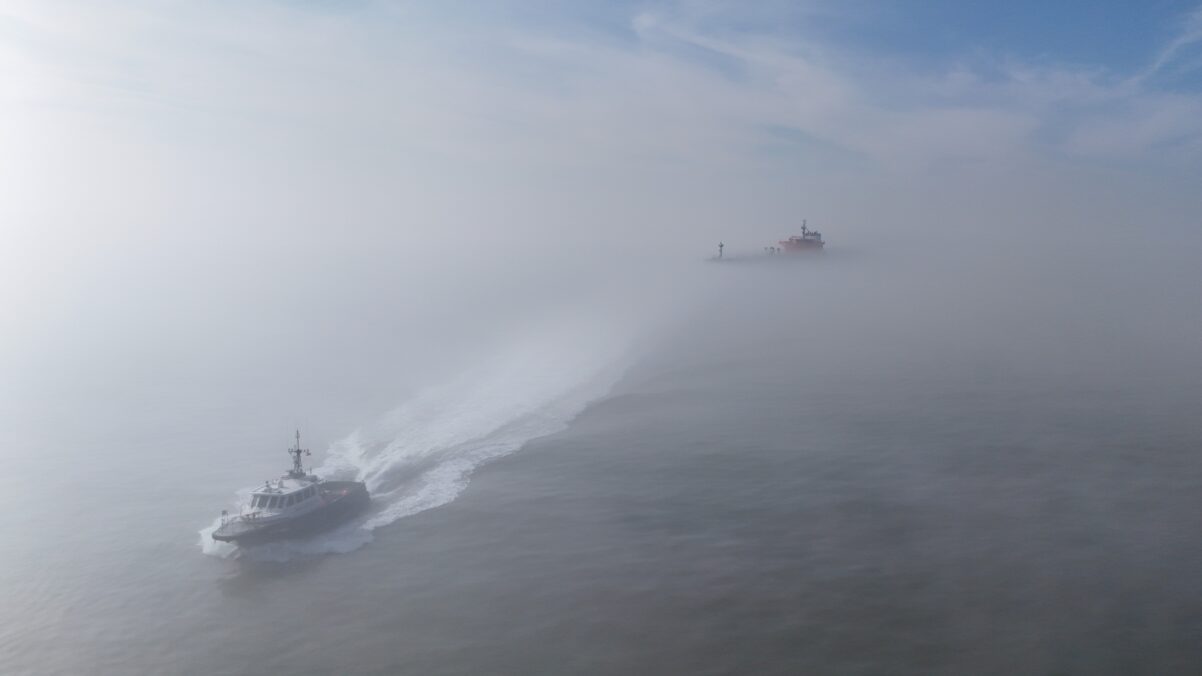
A symbolic yet alarming detail of this crisis has been the attention given to the movement of individual vessels. When an Indian tanker carrying liquefied petroleum gas passed through the Strait of Hormuz, its route was tracked in real time. Coordinates, speed, course, estimated time of arrival all became headline information. Later, footage appeared showing the vessel escorted by Indian Navy ships in the Gulf of Oman. This level of attention was not exaggerated. It reflected a reality in which even a single ship passing through the route is no longer routine, but a high-risk operation. The reason is clear. Following Tehran’s decisions that effectively blocked the strait, not only energy supplies were disrupted. A wide range of critical goods was affected. Even if hostilities end, this does not guarantee a rapid return to stability. Industrial infrastructure in the region has already suffered significant damage. At the same time, Iran insists on its sovereign rights over the strait, while the United States links the restoration of navigation to ceasefire conditions. This means that instability is driven not only by military factors, but also by political control over the route itself.
Among processed energy products, liquefied petroleum gas has been one of the most affected. LPG is a mixture of propane, butane, and other gases used for heating, cooking, transport fuel, and refrigeration. According to the latest monthly report from the International Energy Agency, this segment has been hit particularly hard by the disruption of the Strait of Hormuz. India has proven to be highly dependent on this route. Around 90% of its LPG imports come from the Middle East. The consequences are already affecting hundreds of millions of people. Shortages of cooking fuel have forced households to turn to alternatives such as coal, firewood, and even animal waste. This is one of the clearest examples of how a geopolitical crisis translates directly into everyday survival challenges.
The impact extends beyond India. China was the second-largest importer of LPG through the Strait of Hormuz in 2025, after India. Its demand has been shaped both by efforts to diversify supply and by attempts to reduce dependence on the United States amid trade tensions. A significant portion of China’s LPG imports comes from Iran, used both for household consumption and for petrochemical production. According to Argus, domestic LPG prices in China reached a 12-year high as of April 1. This indicates that the disruption is already affecting price stability in the world’s largest industrial economy. The most critical consequence lies in the impact on food security. According to the United Nations, around 30% of global fertilizer trade passes through the Strait of Hormuz. This shifts the issue from energy markets to agriculture and food supply. Fertilizers are a key input for crop production, and disruptions in supply immediately affect yields and prices. The World Food Programme has warned that countries heavily dependent on imports of food, fuel, and fertilizers are especially vulnerable to global price shocks. The situation is particularly acute in regions entering planting seasons without reliable access to inputs. In parts of Sub-Saharan Africa, farmers risk being unable to cultivate their land due to shortages or rising costs of fertilizers. Lower yields lead to higher food prices, and even small increases can push vulnerable households into crisis.
These concerns are supported by data from maritime intelligence company Windward, which reports that 86% of vessels transporting fertilizers from the Persian Gulf to East Africa have halted operations. This is not a minor disruption but a near breakdown of a key supply route. According to ING, a sharp increase in fertilizer prices will lead to reduced global production of wheat and corn. While producers in the Northern Hemisphere still have sufficient reserves ahead of the spring planting season, a prolonged crisis could influence future planting decisions. Asia and Africa remain particularly exposed due to their dependence on imports.

Another critical factor is sulfur. About 50% of global sulfur supplies pass through the Strait of Hormuz. As a byproduct of oil and gas processing, sulfur is essential for the production of phosphate fertilizers. This means that disruptions affect not only finished products, but also the raw materials needed to produce them. Potash is another key component. Russia is the second-largest producer in the world, accounting for a fifth of global exports, and is seeking to capitalize on market shifts caused by the disruption. Belarus, the third-largest producer, also remains significant, and recent changes in sanctions policy have added a political dimension to the market. However, no immediate large-scale stabilization of global supply is expected.
The aluminum sector has also been affected. Iranian strikes on major aluminum plants in the United Arab Emirates and Bahrain have intensified supply issues already caused by the disruption of maritime routes. Even without precise data on the extent of damage, it is clear that any interruption in production carries long-term risks. Restarting aluminum plants is expensive, technically complex, and time-consuming. Aluminum is a fundamental material used in automotive manufacturing, packaging, and industrial components. The United States imports more than a fifth of its aluminum from Persian Gulf countries, which account for nearly 10% of global supply. More than 80% of aluminum produced in the Gulf is exported, making the region a critical supplier to global markets. Since the start of airstrikes on Iran on February 28, aluminum prices have increased by around 11%, reaching their highest level since March 2022.
Helium represents another important element of the crisis. Approximately one-third of global helium supplies come from Qatar. It is essential for cooling in semiconductor manufacturing and for MRI scanners in the medical sector. While some Asian countries report sufficient reserves in the short term, the longer-term outlook remains uncertain. Damage to LNG facilities in Qatar, which are also used for helium production, may take up to five years to repair. This suggests a prolonged risk for both technology and healthcare sectors. The list of affected goods extends further. Products such as naphtha, aviation fuel, and iron ore pellets also pass through the Persian Gulf. However, even the sectors already described are enough to demonstrate the scale of the disruption. The closure of the Strait of Hormuz is not a narrow energy issue. It is a systemic shock affecting multiple layers of the global economy.
The crisis combines immediate and long-term effects. The immediate impact includes halted shipments, shortages, rising prices, and emergency adjustments in daily life. The long-term consequences involve reduced agricultural output, prolonged disruptions in industrial production, delayed recovery of damaged infrastructure, and sustained pressure on global markets. Even if the conflict subsides, recovery will take time. Infrastructure damage, disrupted logistics, and unresolved political tensions will continue to influence the situation. The Strait of Hormuz has become a point where a regional conflict quickly turns into a global economic challenge. The longer instability persists, the clearer it becomes that reliance on a single route is not just a logistical issue, but a structural vulnerability with consequences felt far beyond the region.
About the Author

Related posts:
 A New Wave of Trade War: How the US Is Changing the Rules of Global Trade
  Oil Under War Pressure How the Conflict Around Iran Is Changing Global Prices and What It Means for Ukrainian Drivers
  US-EU Customs Deal: How Trump and von der Leyen’s Agreement Reshapes Global Trade
  Bitcoin and War in the Middle East: Why Crypto Reacts First and Where It Leads