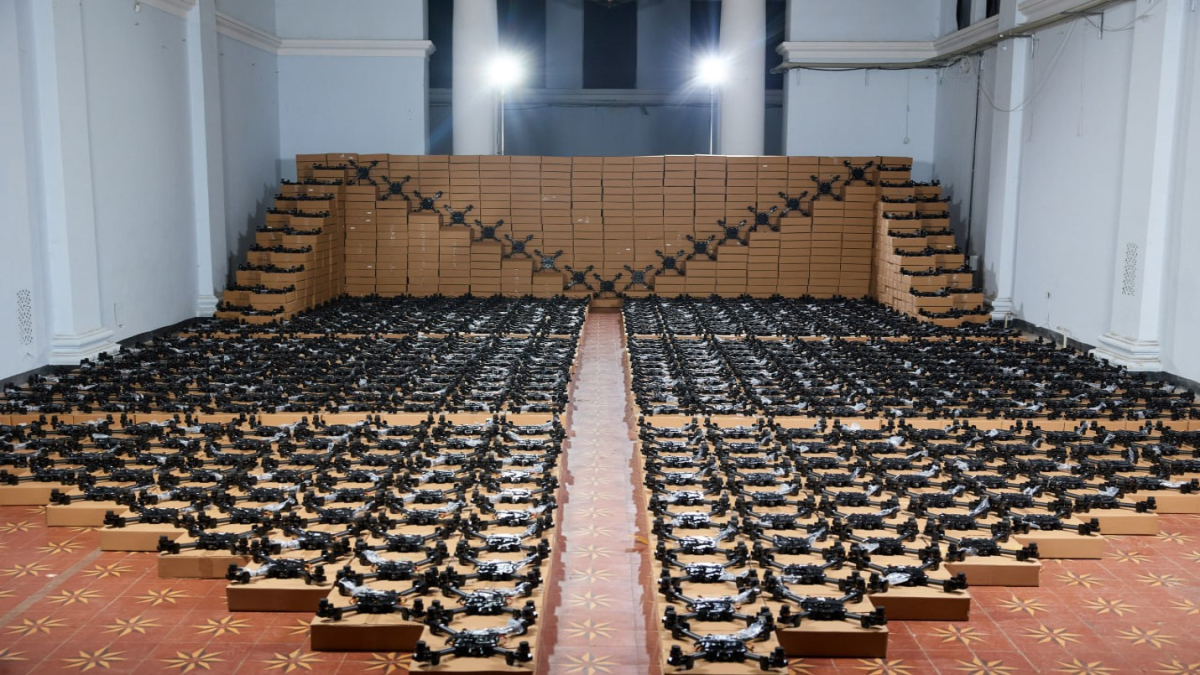
Arms Export from Ukraine in 2025: Potential, Taxes, and Technology
Ukraine’s defense industry enters 2025 with new potential for the state’s economy and unique risks. According to estimates from the Ukrainian Arms Manufacturers’ Council, arms exports could bring the state budget between $500 million and $1 billion in taxes per year, but the final figure will depend on sales volume, contract structures, and regulatory flexibility.
The Head of the Ukrainian Arms Manufacturers’ Council, Ihor Fedirko, explains: “This estimate is not official statistics, but only a working model of the Council. However, they rely on analytical data from previous years. In particular, in 2024, total production capacity was about $20 billion, with actual output around $10 billion.” In 2025, according to him, projected capacities exceeded $35 billion. “This means the industry is capable of doing more than what is currently confirmed by orders. Controlled exports allow us to monetize this surplus, lower costs thanks to longer production runs, and update the product line faster without risking the army’s supplies,” Fedirko emphasizes.
Under this model, exports of $3-5 billion could bring about $300-500 million in taxes per year. If volumes grow to $8-12 billion, potential receipts could reach approximately $0.7-1 billion per year. The exact sums, Fedirko stresses, will depend on the structure of contracts, degree of localization, service terms, and speed of export control decisions.
Safety Principles: Export Without Harming the Front
Leaders of the defense sector repeatedly emphasize: “For us, arms exports are not about ‘shipping out the surplus,’ but about maintaining production pace without harming the front. Export is allowed only where the Armed Forces are fully supplied, and stops at the slightest sign of a shortage.”
Revenues from the export of surplus types of arms can be used to purchase scarce categories: air defense, interceptor missiles, artillery ammunition, explosive components, electronics, and sensors. These positions remain untouchable for sale and are directed exclusively to the army’s needs.
Ukrainian Weapons: Why There Is Demand on the Global Market
Ukrainian weapons have a number of competitive advantages that set them apart internationally:
- Combat-proven all products are tested in real combat.
- Optimal price-to-performance ratio.
- Fast production and delivery cycles Ukrainian manufacturers can quickly launch serial production lines.
- Interoperability: Ukrainian solutions are compatible both with NATO and post-Soviet platforms, which is critical for many countries in Asia and Africa.
As Fedirko states, “We also offer not just supplies, but partnership localization, service, and on-site training. And finally, a transparent export control regime: single-use licenses, end-user certificates, a ban on re-export, and post-shipment control remove risks for partners.”
Export Flagships: Naval Drones and Anti-Tank Weapons
Key export items include naval drones and anti-tank weapons. “Naval drones of Ukrainian production have proven their effectiveness during operations against enemy targets in the Black Sea. This type of weapon is already being mass-produced and is currently in surplus,” Fedirko emphasizes.
Exports are opened only for surplus production, when the needs of the Armed Forces are fully covered.
At the same time, if private manufacturers cannot sell their surplus on foreign markets, production lines risk shutting down: engineers will leave, and shortages at the front will grow. “Controlled exports solve this problem: international contracts preserve jobs, attract investment and technology, and create a source of funding for the army. If a conditional export duty of 10% is applied, this allows the state to finance the purchase of at least several dozen high-quality FPV drones for the army,” Fedirko concludes.


AI for Defense: A New Level of Technology
Ukrainian companies are implementing artificial intelligence in military equipment. Most often, it is used for computer vision, sensor fusion, and onboard computing. This enables navigation without GPS, drone detection, target prioritization, and accurate fire control.
Oleksiy Markhovskyi, co-founder of Frontline, explains: “AI is mainly used for computer vision and sensor fusion combining data from different sensors for calculations directly onboard. This includes navigation without GPS, detection of drones using acoustic, visual, and radio-physical methods, target prioritization, and fire control predicting trajectories, accounting for all delays.”
AI also reduces cognitive load on operators and commanders, and enables the creation of “digital twins” of the battlefield detailed 3D maps for realistic planning of missions in real time. The third category is automatic mission execution even under EW (electronic warfare) conditions, when drones must act autonomously without a signal.
Ukraine’s arms market today has real export potential, which could become a strategic source of income for the budget and a catalyst for technological change in the defense sector. Controlled export of surplus products helps to preserve production lines, engineering potential, and fund the development of the most critical segments for the Armed Forces. At the same time, the key condition is clear prioritization of frontline needs, transparency in export control, and rapid response to changing circumstances.
True success for the export model is not just about billions for the budget, but a guaranteed advantage for the Ukrainian army on the battlefield and confidence in Ukraine as a strong player in the global arms market.
About the Author

Related posts:
 New Export Rules for Soybeans and Rapeseed: Will the Cabinet’s Resolution Unblock the Market?
  Utility Tariffs in Ukraine: Economic Inevitability, Debt, and Challenges for Ukrainian Families
  Ukrainian Game Development Giants and AI Startups: How Digital Industries Shape the Country’s Economic Reputation
  Russia’s Widespread Use of Chemical Weapons: What We Know