US Tariffs Against Europe Over Greenland: Donald Trump’s Political Ultimatum
Donald Trump’s statements about imposing tariffs on European countries if they refuse to “hand over” Greenland to the United States go far beyond trade policy. This is not an economic dispute and not even classic diplomatic pressure. It is an attempt to use economic instruments as a form of direct political coercion against allies, which constitutes a fundamentally new and dangerous signal for the entire system of transatlantic relations.
In the first wave of statements, Trump merely outlined intentions. He publicly spoke about Greenland’s strategic importance for U.S. national security, referred to the presence of Russia and China in the Arctic, and allowed for various scenarios of gaining control over the island from purchase to the use of force. At that stage, there was still room for maneuver, interpretation, and diplomacy. Formally, it was about interest, not coercion. The second phase, announced now, changed the nature of the situation. Trump did not simply reaffirm U.S. claims to Greenland; he tied them to a concrete and explicit mechanism of punishment. The announcement of 10 percent tariffs starting on February 1, 2026, followed by an increase to 25 percent from June 1, is directly linked to the demand for the “full and final purchase of Greenland.” This is no longer rhetoric, but a publicly stated ultimatum. The core issue here is not even the tariffs themselves, but the logic proposed by the White House. The sovereignty of an allied state’s territory is, for the first time, openly made conditional on trade concessions. In effect, Trump is offering Europe an exchange: access to the U.S. market in return for a territorial decision that does not fall within the competence of either the United States or other European capitals, but solely of Denmark and Greenland itself.
The American president’s argumentation rests on several claims. The first is that the United States has allegedly “subsidized” Europe and Denmark for decades and now has the right to demand compensation. The second is that Denmark is supposedly incapable of defending Greenland on its own. The third is that Russia and China pose a threat that Europe cannot control. None of these claims withstand serious legal scrutiny, yet all of them resonate well with a domestic U.S. audience. Europe’s response was swift and indicative. France, Sweden, the United Kingdom, and the European Union took a coordinated position, clearly labeling such actions unacceptable. Importantly, the response was not emotional but systemic: an emphasis on sovereignty, international law, and collective security within NATO. The position of Greenland itself was also voiced separately and unambiguously, stating its choice in favor of Denmark, the EU, and the North Atlantic Alliance.
Post List
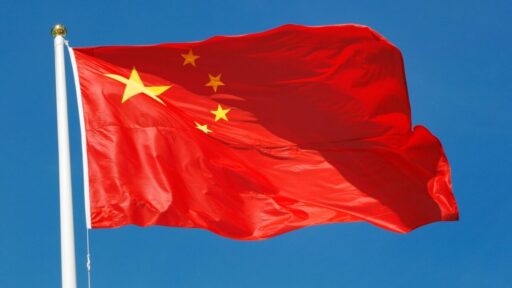
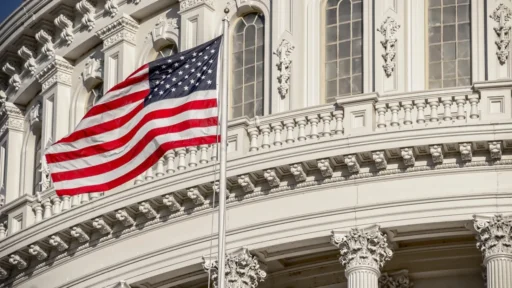

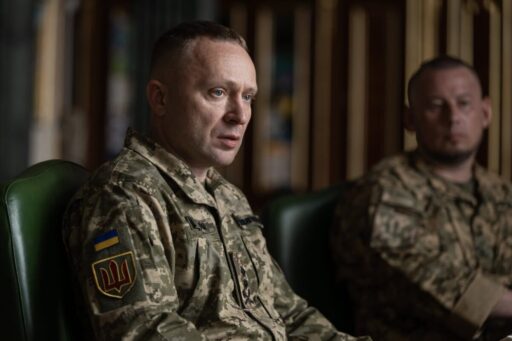
Time for Action has analyzed all publicly available information and statements from both sides, and the key conclusion lies not in the fate of a specific island. If economic sanctions begin to be used as a tool to force changes in borders, this creates a precedent that extends far beyond the Arctic. This is precisely why the conflict is being closely watched not only in Brussels, but also in Moscow and Beijing.
Even if the introduction of tariffs is postponed, revised, or used merely as leverage for bargaining, the damage has already been done. For the first time in many decades, transatlantic relations have entered a situation where one of the key players openly applies the logic of ultimatums toward allies. This undermines trust, weakens collective security, and alters perceptions of the predictability of the Western world. In this story, Greenland serves more as a pretext than as the true objective. What is really at stake is a test of the limits of what is permissible. And while Europe is demonstrating unity, the central question is not whether Greenland will be handed over, but whether the principle can be preserved that territories are not sold under pressure, and security is not built on trade ultimatums.
About the Author

Related posts:
 New Signals of War: What Putin’s Threats and Trump’s Silence Really Mean
  Putin, Trump, and the Peace Plan: What Lies Behind the New Negotiations and Why Kyiv Responded with a Firm “No”
  Russia warns Europe over frozen assets: legal threats, geopolitical stakes, and financial risks
  US-EU Customs Deal: How Trump and von der Leyen’s Agreement Reshapes Global Trade