Artificial intelligence in Ukraine: why today it is not a decisive skill, but tomorrow it will be a factor of career, income, and influence
Time for Action has analyzed how artificial intelligence is already transforming Ukraine’s economy, labor market, defense, and public services, and why the real value of AI today lies not in the technology itself, but in the person who knows how to apply it.
At first glance, the topic of artificial intelligence in Ukraine may seem secondary. War, a damaged economy, lack of funds, instability. Under such conditions, AI indeed is not a decisive factor for employment and does not determine whether a person will get a job today. But this is only a surface-level view. Beneath it, another reality is taking shape AI as a tool of future competition, recovery, and redistribution of opportunities.
At present, Ukrainian business thinks pragmatically. The main focus is survival, liquidity, team retention, and risk minimization. Large-scale investments in complex AI systems are constrained by the war, declining purchasing power, and high uncertainty. In such conditions, artificial intelligence does not become a priority at the level of strategies, and this is logical. When basic processes are unstable, high-level technologies do not produce immediate returns.
At the same time, global experience clearly shows something else: AI does not work on its own. Massive investments in artificial intelligence worldwide have not always delivered the expected results. The reason is not algorithms and not computing power. The reason is that AI is a tool which, without a prepared person, without digital culture, without the ability to think in processes and make decisions, does not create value. This is a key lesson Ukraine is learning even before mass implementation.
That is why the greatest effect for Ukrainian companies today comes not from complex AI architecture, but from basic AI literacy. The ability to work with automation tools, language models, digital assistants, and workflows increases employee productivity by up to 35%, and in some tasks reduces execution time severalfold. This is not about replacing people, but about speed, scale, and reducing routine workload.
This is an important shift in understanding. AI today is not about efficiency, but about productivity. A person does the same work, but much faster, with less energy expenditure and more room for analysis and creativity. In a wartime economy, this is especially valuable.
For now, AI skills do not bring a direct “salary premium”, especially outside the IT sector. Companies pay within market rates, without singling out artificial intelligence as a separate compensation item. But these skills already strengthen a candidate’s position, help retain a role within a team, adapt faster, and take on more complex tasks. This is a hidden, but very real competitive advantage.
Radical changes will begin after the war ends. In the recovery phase, artificial intelligence will cease to be an “additional tool” and will become part of managerial thinking. The advantage will go not to those who simply use AI, but to those who know how to embed it into processes, teach others, and change the logic of how teams and organizations work. These people will define the new hierarchy of income and influence.
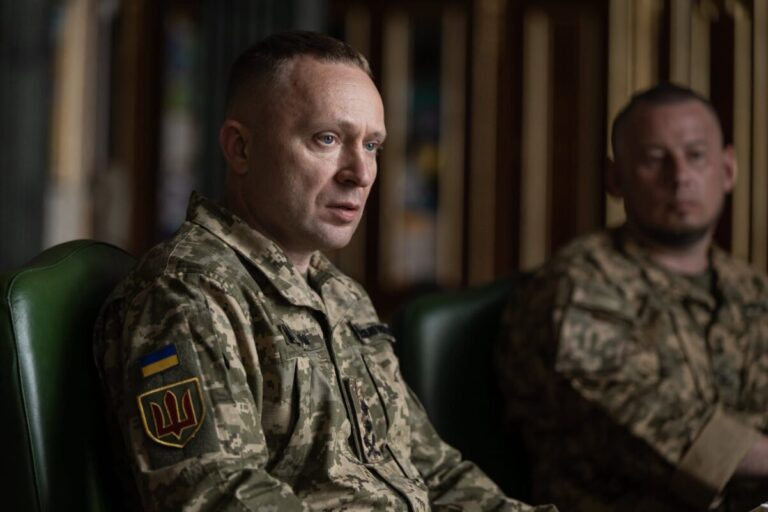
A separate, but fundamentally important direction is the military application of artificial intelligence. Here Ukraine is already operating not at the level of experiments, but at the level of practice. Computer vision, sensor fusion, autonomous navigation without GPS, target prioritization, fire control all of this is already working on the battlefield. AI reduces cognitive load on operators, enables action in conditions of electronic warfare, and creates digital models of the battlefield for real-time planning. This is not futurism, but a requirement of modern warfare.


At the same time, Ukraine is making a quiet but fundamental breakthrough in language technologies. Solving the problem of correct stress placement in Ukrainian speech synthesis is not a minor detail. It is the key to creating natural Ukrainian-language digital services, virtual assistants, navigation systems, and accessibility tools for people with visual impairments. Low error rates and high accuracy mean that the Ukrainian language is no longer a technical barrier for AI.
At the state level, artificial intelligence is also ceasing to be an experiment. A high level of digitalization, the launch of national AI projects, the creation of a domestic language model, the integration of AI into public services and defense are forming a coherent ecosystem, not a set of fragmented initiatives. This indicates strategic thinking, even amid war.
The extended conclusion of Time for Action is that artificial intelligence in Ukraine today is not a requirement, but preparation. Not a must-have, but a tool for those who think several years ahead. While the war continues, AI helps survive faster and work smarter. After the war, it will become a filter of opportunities, separating executors from leaders, and the adaptive from those stuck in old models. Ukraine has already taken the first steps, and now the key question is not whether AI will be part of the future, but who will be able to use it first and best.
About the Author

Related posts:
 Artificial Intelligence in Government: How Diia.AI Works and Why It’s More Than Just a Chatbot
  Artificial Intelligence and Layoffs: How Amazon, Microsoft, and Intel Reshape Work
  How Artificial Intelligence Is Changing the Labor Market: Analytics on Layoffs, New Professions and Challenges in 2025
  Organoid Intelligence: Scientific Frontier or the Beginning of a New Era in Artificial Minds?