The Belarusian Direction Becomes a Risk Zone Again: Why Ukraine Is Preparing for the Worst-Case Scenario
The threat of a new strike from the territory of Belarus does not currently look like an inevitable offensive in the coming days. Ukrainian border guards state directly there is currently no concentration of troops near the border. But this does not mean that the danger has disappeared. The Belarusian direction remains one of the most tense for Ukraine, because it was from there that the offensive on Kyiv began in 2022, and now this territory is again being used by Russia as a military and psychological lever. Time for Action analyzed that the current tension consists of several elements: Russian-Belarusian nuclear exercises, the closure of border forests, the activity of Russian drones in Belarusian airspace, Lukashenko’s statements, warnings from Ukrainian intelligence and the strengthening of defensive measures on the Ukrainian side. The visit of Sviatlana Tsikhanouskaya to Kyiv also separately influenced the situation, becoming a political signal to Minsk.
The main point in this story is that Belarus does not necessarily have to officially enter the war in order to remain a danger to Ukraine. Its territory was already used by Russia for the invasion in 2022. Missiles flew from there, logistics operated there, and Russian troops passed through. Now there is no direct concentration of troops near the border, but Ukrainian services see another problem: Russia can quickly use Belarusian bases, training grounds, supply routes and military infrastructure if it makes such a decision.
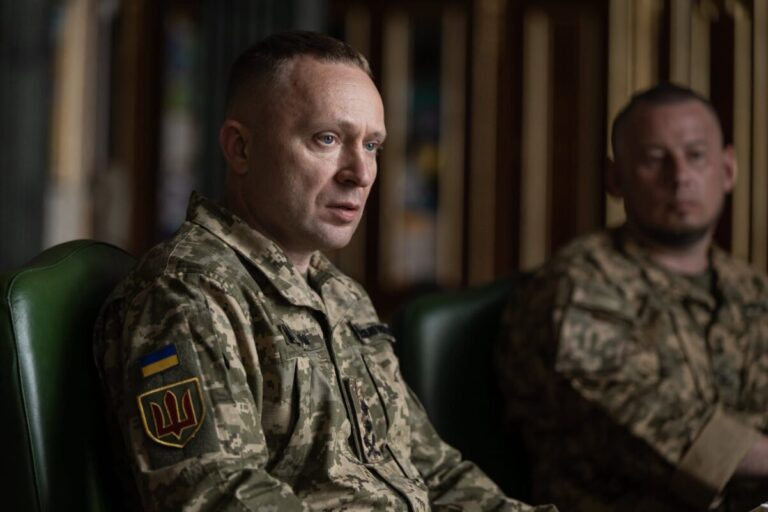
Andriy Demchenko, spokesperson for the State Border Guard Service of Ukraine, explains that Russia continues to pressure Minsk, trying to pull it deeper into the war. According to him, Belarus is developing military infrastructure, logistics routes and facilities that can be used against Ukraine. This means that Ukraine is forced to assess not only what is happening directly near the border, but also what is being prepared deeper inside Belarusian territory. That is why the statement “there is no troop concentration” does not equal the statement “there is no threat.” Modern war does not always begin with columns of equipment at the border. The threat may look different: missile launches, aircraft flights, drone attacks, sabotage attempts, airborne landings, artillery shelling or provocations. The head of the border unit, Anton, directly says that equipment does not necessarily have to be accumulated near the border. Troops can be transferred by air, helicopters can be used, missiles can be launched or shelling can be organized.
This is the fundamental difference between the current situation and the classic idea of preparation for an offensive. Ukraine must monitor not only tanks or battalions, but also drones, aircraft, training grounds, repeaters, warehouses, roads, closed forests and information statements. Separately, all these things may look like fragments, but together they form a dangerous picture. The role of Russian drones looks especially alarming. According to Ukrainian border guards, Russian Shaheds often enter through Chernihiv region and then move along the border, including through Belarusian airspace. Ukrainian air defense cannot shoot down targets over the territory of another state until they enter Ukraine. This is exactly what Russia uses. In fact, Belarusian airspace is becoming a protective corridor for Russian drones. Minsk, meanwhile, does not condemn Russia’s actions and does not inform Ukraine about such flights. Moreover, Ukrainian border guards speak of Belarusian troops deploying repeaters that may strengthen the signal for Russian UAVs. If this is happening, Belarus’s role can no longer be described as neutral. This is not direct entry into the war, but it is assistance to Russian strikes against Ukraine.
Against this background, statements by Belarusian officials about the alleged fall of 116 Ukrainian strike drones on Belarusian territory look like a dangerous information element. No evidence has been provided for such claims, and Ukraine called them absurd. But the very appearance of such statements may be used to create a pretext. In hybrid warfare, an information accusation often appears first, and only then a political or military action is adjusted to fit it. Lukashenko is also playing on raising the stakes. On the one hand, he denies preparations for an invasion. On the other, he threatens that in the event of an attack from any territory on Belarus, the war in Ukraine will acquire “an absolutely different quality.” Such rhetoric creates room for maneuver: Minsk supposedly does not attack, but reserves the right to sharply change its behavior in response to an event that it itself can interpret as a threat. Ukraine’s response has also become tougher. Commander of the Unmanned Systems Forces Robert Brovdi, call sign Madyar, stated that Ukraine has identified 500 potential targets in Belarus in the event this country enters the conflict. This is not so much an emotional statement as a signal of deterrence. Kyiv is showing Lukashenko that if Belarusian territory becomes a bridgehead for a direct strike, responsibility will not be abstract, but very specific.
For border communities, this tension is not political theory. People who live near Belarus remember February 2022 not as news, but as personal experience. Nadiia Raiska from a border village says that local residents are waiting every day for that scenario to repeat. Her fear is not only in the drones flying over villages toward Kyiv and Chernihiv. Most of all, people fear a ground entry, the appearance of soldiers in villages, violence, occupation and the loss of control over their own lives. This is an important detail. For rear regions, the threat from Belarus often looks like a map or a military forecast. For the border area, it is the sound of drones, memories of shaking fences and houses, fear for children, gardens, livestock, the possibility of harvesting crops and simply living the next day without an invasion. War at the border is felt not only through shelling, but through the constant expectation that danger may come on foot again.
That is why the actions of Ukrainian border guards have not only military, but also psychological significance. The border is patrolled by boats, the territory is monitored by drones, and units observe the activity of the Belarusian side. Border guard Oleksandr reports that no concentrations have been detected so far, and ordinary activity of the Belarusian border service is being observed. But at the same time, Ukraine is mining border areas, digging anti-tank ditches and building fortifications. This is not panic, but cold calculation. If the threat does not materialize, the fortifications will remain an element of defense. If the threat grows, a prepared line can buy time, complicate the enemy’s advance and reduce the risk of a sudden breakthrough. After the experience of 2022, Ukraine cannot afford to treat the Belarusian direction as secondary. The nuclear exercises of Russia and Belarus add another layer to this situation. They do not mean automatic preparation for a nuclear strike, but they perform a function of pressure. Moscow and Minsk are demonstrating readiness to speak the language of maximum escalation. The closure of forests near the borders with Ukraine, Lithuania, Latvia and Poland also looks like a step that increases the secrecy of military activity and limits observation of what is happening in border areas. In this sense, the Belarusian direction is not only a military, but also a political instrument of Russia. It forces Ukraine to keep part of its forces in the north, strengthen the border, spend resources on defending a potential direction, even if the main fighting is taking place in other regions. This is the classic logic of pressure it is not necessary to attack, it is enough to force the opponent to constantly prepare for an attack.


For Moscow, Belarus is also convenient as a zone of uncertainty. Russia can use its territory while maintaining formal distance as if Belarus makes its own decisions. Lukashenko, in turn, is trying to balance between complete dependence on the Kremlin and fear of dragging the country directly into the war. But this balance is becoming increasingly fragile, because the more Belarusian infrastructure works for Russian military needs, the less convincing Minsk’s statements about non-involvement sound. Sviatlana Tsikhanouskaya’s visit to Kyiv also matters in this situation. Ukraine accepted the Belarusian opposition leader in exile for the first time precisely after the escalation around the nuclear exercises. This is a political signal Kyiv sees the difference between Belarusian society and Lukashenko’s regime. Ukraine is not at war with Belarusians as a people, but it is increasingly harshly assessing the role of the regime that allows Russia to use the country’s territory against Ukraine.
The main conclusion is that a repeat of February 2022 is not currently confirmed by direct signs near the border. But the danger from the Belarusian direction is real precisely because it is not limited to one scenario. It may not be a large column of equipment, but drones, missiles, sabotage groups, a provocation, logistical deployment, an information operation or an attempt to force Ukraine to stretch its defense. Ukraine is acting as a state should act after experiencing an invasion it is not waiting for obvious signs at the last minute, but preparing in advance. The Belarusian border is now a line of constant observation, fortification and deterrence. And as long as Minsk allows Russia to use its territory, Ukraine cannot perceive this direction as safe. Belarus may not launch a new invasion tomorrow. But it already remains part of the military task for Ukraine. That is why the border is being mined, ditches are being dug, drones are being launched every day, and border villages live in tension. In this situation, readiness for the worst-case scenario is not an exaggeration. It is the only logic that has the right to exist after 2022.
About the Author

Related posts:
 The Belarusian Direction: Is There a Real Threat of a New Offensive on Kyiv
  Russia and Belarus’s Nuclear Exercises: What Stands Behind the New Pressure on Ukraine’s Northern Borders
  Belarus Factor and “Zapad-2025”: What Lies Behind the Exercises and What Ukraine Should Expect
  Belarus on the Edge: Sanctions, Military Signals, and Kyiv’s New Formula