Russia and Belarus’s Nuclear Exercises Increase Pressure on Ukraine’s Northern Borders
The joint nuclear exercises of Russia and Belarus have become another signal that the Kremlin and Alexander Lukashenko’s regime are trying to keep Ukraine and NATO’s eastern flank under constant pressure. Formally, this concerns the training of strategic and tactical nuclear forces, checking the readiness of units, simulated launches and work with Russian weapons which, according to Moscow and Minsk, may be deployed on Belarusian territory. In reality, the meaning of these maneuvers is broader: it is military, political and psychological pressure at the same time.
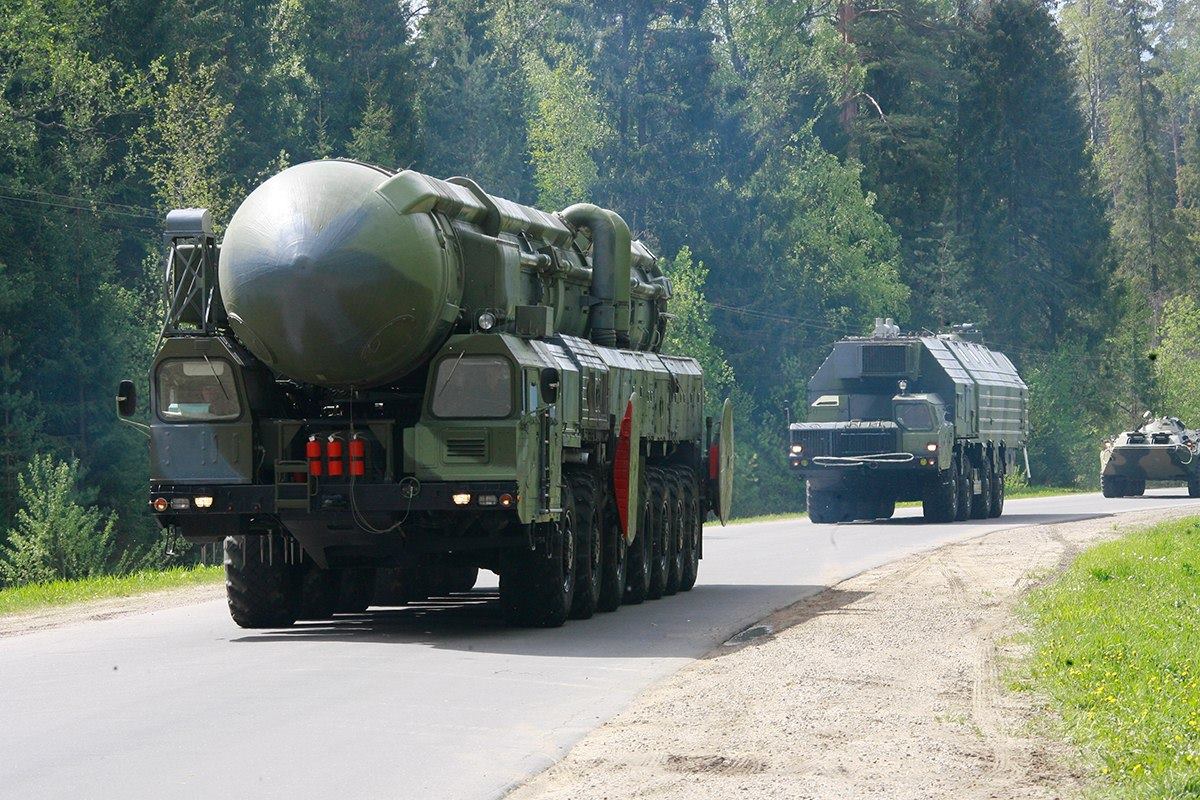
Time for Action analyzed why these exercises cannot be perceived as ordinary annual activity of the Russian army.Russia regularly conducts similar maneuvers, but this time the participation of Belarus, the demonstrative use of the nuclear topic, the closure of forests in border areas and the parallel strengthening of security in Ukraine’s northern regions are important. All this creates the feeling not just of exercises, but of a controlled escalation. Russia has Iskander-M missile systems in Belarus, capable of carrying nuclear warheads. The personnel, according to official statements, underwent the relevant training. During the current maneuvers, the Belarusian Defense Ministry reported the delivery of nuclear munitions to field storage points on Belarusian territory. The Russian side announced the practice of joint preparation and possible use of Russian nuclear weapons. The very fact of such statements already works as an instrument of pressure. Moscow and Minsk are demonstrating readiness to talk about nuclear weapons as a working element of military policy. This is meant to affect not only Ukraine, but also Poland, Lithuania, Latvia and other NATO countries. Russia is trying to show that it can raise the stakes where Western partners are especially sensitive to the risk of escalation. The scale of the exercises also matters. According to available data, tens of thousands of troops, aircraft, ships, submarines and elements of the nuclear triad are involved. This creates the image of a great force capable of acting simultaneously on land, in the air and at sea. But in such maneuvers, real combat training is not the only thing that matters. An equally important task is to demonstrate the possibility of a rapid transition from political pressure to a military scenario.
A separate element is the closure of forests in 19 districts of Belarus, most of which border Ukraine, Poland and Lithuania. Formally, such restrictions may be explained by exercises or security measures. But under current conditions, they look both like a way to hide the movement of forces and like an additional signal to neighbors: something is happening near the borders that is not meant for outside eyes. That is why Ukraine’s reaction looks logical. The Security Service of Ukraine announced strengthened measures in the Chernihiv, Kyiv, Zhytomyr, Volyn and Rivne regions. This concerns counterintelligence and counter-sabotage protection, checks in border areas, vehicle inspections, control over possible attempts by enemy groups to infiltrate and prevention of subversive activity. This is not a panic reaction, but preventive work under conditions in which the threat from the north has become more visible again.
For Ukraine, the Belarusian direction has special significance because of the experience of 2022. Belarus does not officially take direct part in the war, but it was its territory that was used for the Russian invasion and strikes against Ukraine. Therefore, any accumulation of forces, closure of border territories or joint exercises with Russia cannot be perceived neutrally.
Commander-in-Chief of the Armed Forces of Ukraine Oleksandr Syrskyi directly emphasized that possible operations from the north are a real risk. According to him, the Russian General Staff is calculating and planning options for offensive actions in this direction. This does not mean that an offensive will necessarily begin in the near future, but it does mean that Ukraine has no right to ignore such a scenario. At the same time, it is important to distinguish real military danger from information pressure. Representatives of BELPOL, who monitor the situation in Belarus, do not have confirmed data on the actual deployment of Russian tactical nuclear weapons on Belarusian territory. According to their assessments, real maintenance of such weapons would require a significant presence of Russian military specialists, equipment and infrastructure, which would be difficult to completely hide. This does not remove the threat, but it shows another side of the situation. Part of the current actions may be an information and psychological operation. Russia and Belarus may exaggerate the level of readiness, demonstrate nuclear rhetoric and create the feeling of an imminent danger, even if the real military part is limited to training, simulations and movement of units.
However, it is dangerous to reduce everything only to a psychological effect. Belarus has noticeably militarized in recent years. Legislation is changing, military infrastructure is being strengthened, legal norms related to actions by the population during emergencies are being introduced, and service by non-citizens in the Belarusian armed forces is being allowed. Military infrastructure is being built on the country’s territory with Russian money. This does not look like preparation of a state for peaceful life.

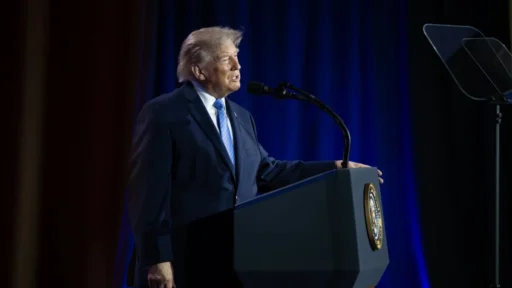
Lukashenko is politically tied to the Kremlin and has less and less room for independent decisions in the military sphere. Belarus already lost a significant part of its military sovereignty after February 24, 2022, and further agreements with Russia only fixed this dependence. If the Kremlin decides to use Belarusian territory for a new stage of pressure or operations, Minsk is unlikely to be able to fully refuse. Lukashenko’s statements about preparing for war also work within this logic. They may be part of a political game, a way to show loyalty to Moscow and put pressure on neighbors. But alongside real changes in the army, legislation and infrastructure, such words cannot be written off as propaganda alone. The current nuclear exercises do not mean an inevitable strike or a new offensive from Belarus. But they increase risks, create room for provocations, allow Russia to test the reaction of Ukraine and NATO and keep additional tension in the northern direction. This is the main danger the exercises may be both a show of intimidation and a cover for practical military actions. For Ukraine, the right response under such conditions is not to give in to panic, but to act as if the threat may move into a real phase. Strengthening the northern regions, the work of the SBU, coordination of security forces, control of the border area and preparation for different scenarios are necessary steps. Russia has repeatedly used exercises as a screen for aggressive actions, so there are no grounds to trust formal explanations from Moscow and Minsk.
The main conclusion is that Russia and Belarus are again using the nuclear topic to expand the field of pressure on Ukraine and the West. Part of this demonstration may be calculated to create fear, but the military threat in the northern direction remains real. That is why Ukraine must respond firmly, carefully and without illusions nuclear rhetoric may be a method of intimidation, but Russian-Belarusian military activity near the borders requires full readiness.
About the Author

Related posts:
 Belarus Factor and “Zapad-2025”: What Lies Behind the Exercises and What Ukraine Should Expect
  Belarus on the Edge: Sanctions, Military Signals, and Kyiv’s New Formula
  When the Aggressor Doesn’t Stop: Why Russia Is Moving Troops Toward NATO Borders
  Russian Drones over Poland and “Zapad-2025” Exercises: How NATO Reacts to a New Challenge