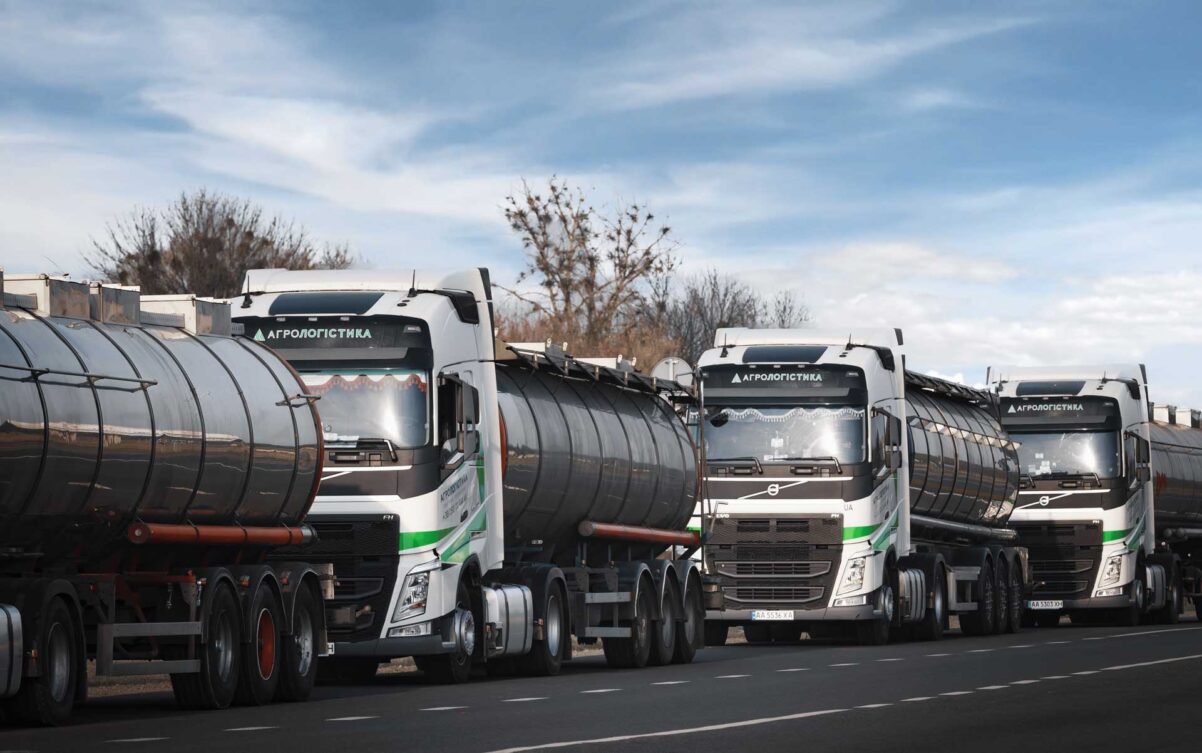
Hormuz Crisis Hits Agricultural Logistics: Why Product Delivery in Ukraine Became 15%-35% More Expensive
The escalation around the Strait of Hormuz quickly reached Ukraine’s agricultural sector through fuel, carriers, and logistics tariffs. For farmers, this means a new cost shock at a time when exports already depend on a difficult route from field to port, the condition of infrastructure, railway operations, and the mood of the global energy market.
Time for Action analyzed why a conflict far from Ukraine near one of the key oil routes has already affected the cost of transporting agricultural products. The reason is not only the actual increase in fuel prices. Business expectations played an important role carriers and logistics operators began adding a reserve to tariffs in case of new jumps in oil prices. This protective calculation became one of the factors that pushed the cost of road delivery up by 15%-35%. For the agricultural market, such figures are very sensitive. Before the increase, the average cost of road delivery of products from field to port was about $23-40 per tonne, depending on the distance. When another 15%-35% is added to this amount, the economics of the entire route change. The producer gets less room for profit, the trader revises calculations, and the final price of the product becomes more dependent on logistics than on the work of the field itself. The Strait of Hormuz matters not only for oil traders, but also for Ukrainian exports. Before the start of hostilities, roughly one-fifth of the world’s energy resources passed through it. When there is a risk of blockage or supply disruptions, the global market reacts quickly: oil becomes more expensive, fuel companies prepare for instability, and carriers transfer risks into their tariffs. Ukrainian agricultural logistics is especially vulnerable to such fluctuations. A significant share of agricultural products needs to be transported over long distances. Road delivery depends on diesel almost directly. If fuel becomes more expensive or the market expects a new jump, the carrier cannot work at the old price without the risk of losses. Because of this, the tariff rises not only after an actual fuel price increase, but also in advance as protection against future costs.
In this situation, the farmer pays not only for kilometers, but also for uncertainty. If negotiations between the United States and Iran move forward, oil may decline, and the fuel market may gradually calm down. If the risk of escalation returns, logistics companies again keep an additional reserve in prices. That is why cheaper fuel does not always immediately return tariffs to their previous level. Business first watches whether the market has really stabilized, and only then is ready to lower transportation costs. The railway could partially ease the pressure on road logistics, but the situation here does not look ideal either. Before the period of massive attacks on infrastructure, the cost of railway logistics could fall to $18 per tonne, which made it noticeably more profitable than road transportation. However, the railway also has its own problems: worsening wagon turnover, rising daily rental rates for grain hoppers at Ukrzaliznytsia auctions, dependence on the condition of infrastructure, and load on routes.
That is why agricultural business does not have a completely safe alternative. Road delivery becomes more expensive because of fuel and risks. The railway remains an important channel, but its cost is also rising due to technical and market factors. As a result, logistics becomes one of the main sources of pressure on the cost of Ukrainian agricultural products. Export competition has separate importance. For a Ukrainian farmer, every additional dollar per tonne can be critical. In the global market, the buyer is interested in the final price, not in why exactly delivery in Ukraine has become more expensive. If logistics takes a larger share of the margin, the producer becomes weaker in negotiations, and traders plan purchases more cautiously.
The fuel market is now sending mixed signals. On the one hand, there are signs of a possible price decrease if negotiations between the United States and Iran reduce tensions. On the other hand, traders fear a new escalation and therefore are in no hurry to fully abandon insurance surcharges. In such conditions, even relative stability in the Ukrainian fuel market does not guarantee a quick return of logistics tariffs to the previous level. As of May 29, 2026, the price of Brent oil was $90.99 per barrel, WTI – $88.11, Urals – $86.38. For the agricultural sector, not only the quotations themselves matter, but also the direction of the market. If oil continues to become cheaper and tensions around the Strait of Hormuz decrease, gradual easing of pressure on fuel and transportation can be expected. If negotiations reach a dead end or the region again faces the risk of blocked supplies, logistics will remain expensive.


For Ukraine, this story shows a larger problem agricultural exports depend not only on the harvest, ports, and domestic infrastructure, but also on global energy crises. Events in the Strait of Hormuz may have no direct relation to a Ukrainian field, but through oil and diesel they quickly affect the cost of delivering grain, potatoes, and other products. In the near future, the key issue will be not only the oil price, but also the behavior of carriers. If the market sees a real reduction in risks, part of the insurance reserve in tariffs may disappear. If uncertainty remains, farmers will continue to pay more for delivery, even if fuel on the domestic market temporarily becomes cheaper.
The main conclusion for the agricultural sector is clear logistics is becoming not an auxiliary cost, but one of the decisive factors of profitability. As long as the global oil market depends on the Strait of Hormuz, and Ukrainian delivery depends on fuel, any geopolitical crisis can quickly turn into a new price per tonne of products from field to port.
About the Author

Related posts:
 The Strait of Hormuz Is Letting Tankers Through Again, but the Energy Market Has Not Returned to Calm
  Strait of Hormuz and Global Trade: How the Blockade Hits Fertilizers, Aluminum, Helium, and Basic Needs
  The Ukrainian Fuel Market: Price Stability Amid Global Fluctuations and New Logistics Challenges
  Oil Under War Pressure How the Conflict Around Iran Is Changing Global Prices and What It Means for Ukrainian Drivers