Ukrainian Travel Trends in 2026: How the War Changed Holiday Habits and Boosted Domestic Tourism
The war has significantly changed how, where and for how long Ukrainians travel for leisure, but it has not eliminated the need for a holiday itself. Trips have become more cautious, shorter and better planned, yet for most people they remain an important part of life. The results of a study conducted by Ribas Hotels Group and Ribas Invest show that some respondents have started travelling less often, while demand for summer holidays in 2026 remains high. Priorities have also changed. Today, people are looking not so much for exciting entertainment as for an opportunity to reduce tension for at least a few days, get enough sleep, spend time closer to nature and restore their strength.
People Travel Less Often, but Do Not Give Up Holidays
Because of martial law, 45.3% of the study participants began taking holidays less often. Another 34% said their habits had not changed. At the same time, 20.8% of respondents began travelling more often. At first glance, the last figure may seem surprising. However, it reflects the different ways in which people respond to prolonged stress. For some, the war became a reason to save money, postpone trips and avoid unnecessary risks. Others, on the contrary, began to feel a stronger need for a change of environment. For them, a holiday has become not a luxury, but a way to preserve their ability to work, emotional balance and a normal rhythm of life. Despite the difficult economic situation, 75.5% of respondents said they take a holiday every year. Another 9.4% travel once every two years, while 5.7% do so once every three years. Only 9.4% had not taken a summer holiday during the past three years. These figures indicate that holidays have not disappeared from the lives of most Ukrainians surveyed. They may have become shorter, simpler and closer to home, but the need for them remains.
Ukraine Has Become the Main Destination for Summer Trips
92% of survey participants plan to take a holiday in the summer of 2026. Almost 70% are considering travelling within Ukraine, 22.6% are planning a trip abroad, while 7.5% do not intend to travel anywhere. The growth of domestic tourism has several causes. For a significant proportion of men, travelling abroad remains restricted. For others, international trips have become more difficult because of the absence of civilian air travel from Ukraine, longer routes, additional transfers and general uncertainty. However, it would be incorrect to explain the growth of domestic tourism only through restrictions. Ukrainians are increasingly viewing holidays within the country as a full-fledged choice rather than a forced substitute for travelling abroad. For this to happen, the tourism product must meet expectations by offering comfortable accommodation, clear service, a good location and reasonable value for money. After the war ends and the borders fully reopen, some demand will probably return to traditional foreign resorts. However, domestic tourism has already gained experience, an audience and infrastructure that it did not have before. Therefore, a return to the pre-war model, when holidays in Ukraine were often viewed as a secondary option, is unlikely.
The Sea and the Mountains Remain the Main Summer Scenarios
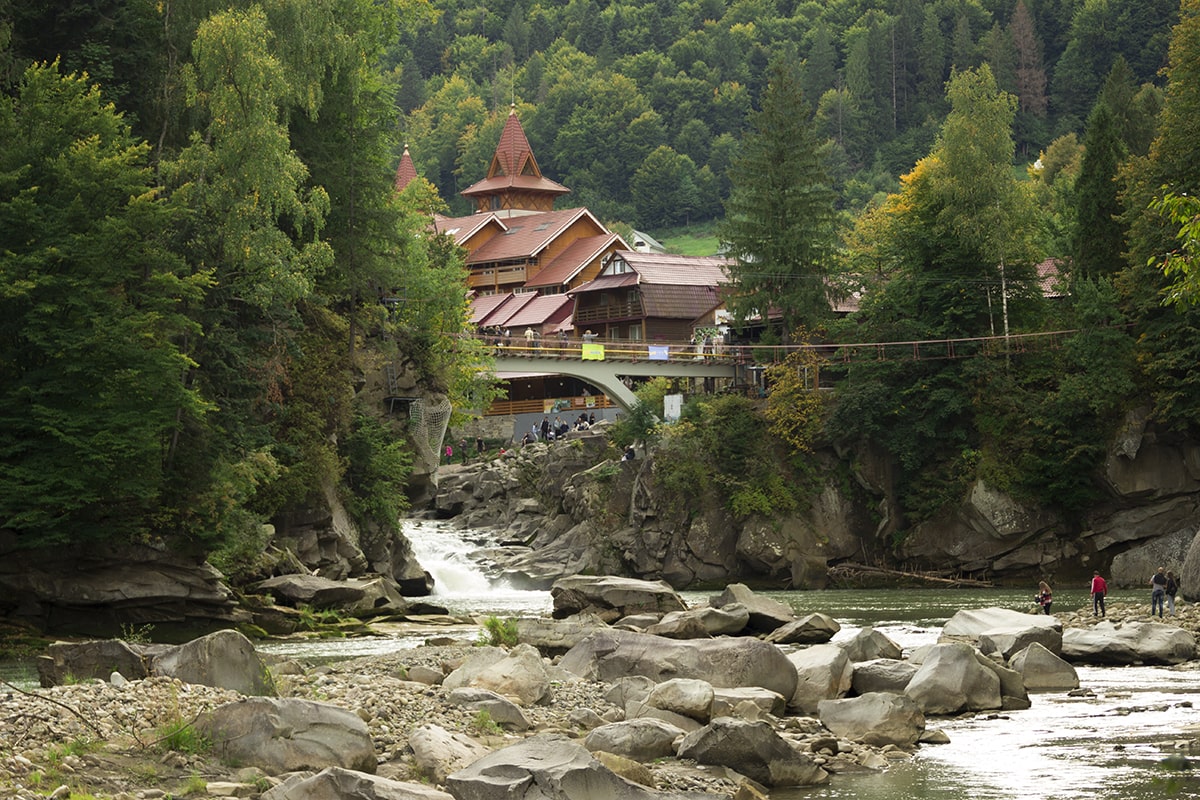
The most popular destinations among the study participants remain Odesa and the coast, considered by 69.8% of respondents, as well as the Carpathians, which interest 52.8%. These are two traditional formats of summer holidays that satisfy different needs. A seaside destination is associated with beaches, sunshine and the familiar rhythm of summer. The Carpathians offer nature, a cooler climate, walking routes, SPA complexes and the opportunity to get away from large cities. At the same time, the popularity of a particular destination does not guarantee that a trip will actually take place. During wartime, the final decision depends not only on the traveller’s wishes, but also on the security situation, accommodation prices, transport accessibility and the risk of attacks.
The Main Purpose of a Trip Is Recovery, Not Entertainment
One of the most noticeable changes has been people’s motivation. Before the full-scale war, summer holidays were often built around entertainment, new experiences, events and a busy programme. In 2026, physical and emotional recovery is increasingly coming to the forefront. Walks in nature became the most popular activity, chosen by 71.7% of respondents. Beach holidays interest 67.9%, restaurants and cafés 62.3%, and SPA treatments 47.2%. This shows that people are not simply trying to change location. They want to reduce the level of daily tension, restore their sleep, spend less time dealing with household tasks and briefly regain a sense of normal life. Constant air-raid alerts, attacks, electricity supply problems, information overload and financial instability create accumulated fatigue. In such circumstances, several days in a calmer environment may be seen not as entertainment, but as a necessary pause. This may explain the growing demand for wellness services. At Ribas Hotels Group, the number of requests for SPA and wellness services in 2026 increased by 44% compared with the previous year, while the average amount spent rose by 31%.
It is important, however, to remember that these are figures from one hotel group, not the entire Ukrainian tourism market. Still, they complement the broader trend: guests are increasingly willing to pay for services that help them recover physically rather than simply fill their time with entertainment.
A Short Weekend Is No Longer Enough
The duration of trips is also changing. The most popular format remains three to five nights, chosen by 45.3% of respondents. One in four plans a holiday lasting between six and ten nights. Another 11.3% want to arrange several short trips during the summer. At Ribas Hotels Group, the average duration of confirmed bookings for the summer of 2026 is 3.8 nights, compared with 3.1 nights in 2025. Family bookings average 4.6 nights, while group bookings average 5.4 nights. This may indicate a gradual move away from the “arrive for the weekend and immediately return” format. Travel has become longer and more complicated because of wartime logistics. When people already spend a significant amount on transport and accommodation, they want to get more from the trip. Several additional days make it possible not only to change the surroundings, but also to genuinely feel rested. At the same time, a long holiday remains unaffordable for many families because of cost, work and security risks. Therefore, the most realistic compromise is a short but complete trip lasting several nights.
Price Remains the Main Constraint
Demand for holidays remains, but booking decisions have become much more rational. 83% of respondents named high prices as a factor that could affect their choice of holiday destination. For 75.5%, the level of comfort is important, while 62.3% pay attention to location. The largest share of guests, 43.4%, are prepared to spend between UAH 3,000 and UAH 6,000 for one night for two people. Another 39.6% are looking at the range between UAH 1,500 and UAH 3,000. Therefore, the bulk of demand is concentrated within the range of UAH 1,500 to UAH 6,000 per night. The premium segment remains narrow. Only 5.7% of respondents are prepared to pay between UAH 7,000 and UAH 12,000, while just 1.9% are ready to spend more than UAH 12,000. These figures show that most guests do not completely abandon travel, but carefully assess what exactly they are paying for. It is no longer enough simply to receive a room in a tourist location. Travellers expect comfortable conditions, meals, access to leisure facilities, a convenient location, good service and the opportunity not to deal with household matters during the holiday. A sense of fair pricing is particularly important. If accommodation becomes more expensive, guests expect the quality of the service to improve along with the price. This is a serious challenge for domestic tourism. During the current season, according to the information provided, total spending on summer holidays in Ukraine rose by 25–40% compared with 2025. Accommodation may account for up to half of all expenses.
Safety Has Become a Condition That Is Not Always Mentioned
The study results appear contradictory at first glance. Only 1.9% of respondents directly named safety as an important criterion when choosing a destination. At the same time, 45.3% identified safety concerns as one of the barriers to travel. This difference can be explained by the fact that safety is no longer seen as an additional advantage. It has become a basic condition. A person may not name the presence of a shelter or a relatively calm region as the main reason for booking. However, if those conditions are absent, they may simply decide not to travel. Therefore, the tourism industry must work not only on comfort, but also on clear safety communication. Guests need to know where the nearest shelter is located, how staff act during an air-raid alert, whether there is backup power, water and communication, and whether basic services can continue during outages.
Safety in wartime tourism is not an advertising advantage, but part of the minimum service standard.
Domestic Tourism Has a Chance to Become Established for the Long Term
The growth of demand for holidays in Ukraine creates considerable opportunities for the industry. At the same time, the fact that people remain within the country does not itself guarantee stable market development. After the borders reopen, Ukrainian resorts will once again compete with Turkey, Bulgaria, Greece, Egypt and other familiar destinations. Foreign resorts often offer package holidays, clear service standards and predictable prices. To retain part of the demand, the Ukrainian market must move from the temporary advantage created by restrictions to competition based on quality. This means professional service, fair prices, modern accommodation, accessibility for families with children, the development of wellness services, convenient booking, safety standards and honest communication with guests. If these conditions are met, domestic tourism will be able to retain a significant share of its audience after the war. If not, consumers will quickly return to foreign destinations as soon as international travel becomes easier again.
Holidays Have Become More Deliberate
The travel behaviour of Ukrainians in 2026 is not a return to the pre-war norm. It is already a new model of leisure, shaped by war, economic caution and accumulated fatigue. People have not stopped travelling, but they have become more careful when choosing the destination, duration and format of a trip. They make spontaneous decisions less often, compare prices more closely and expect clear value from every hryvnia spent. The main product of the tourism market is no longer a room, a swimming pool or a set of entertainment options. The main value is the opportunity to breathe out for a few days, restore one’s strength and regain at least part of a normal life. This demand will shape the development of domestic tourism in the coming years. The winners will not necessarily be the most expensive or most visible hotels, but those able to provide people with comfort, calm, predictability and honest value for their money.
About the Author

Related posts:
 Should Ukraine Shorten Summer Holidays and How Can the School Year Be Changed Without Taking Away Children’s Rest?
  Explosive Growth and New Challenges: How the Market for International Bus Transportation for Ukrainians Has Changed
  Holidays During War: Safety Rules a Child Should Know Before the First Summer Walk
  The Tourism Market Reacts to the War in the Middle East: Demand Falls and Holiday Prices Decline