Patriot for Ukraine: Why Permission to Produce Missiles Could Become a Strategic Decision
On the day when Russia carried out another massive attack on Kyiv, the president of Ukraine was far from the capital and was speaking about weapons that directly determine how many such strikes the country will be able to withstand. This was not about symbolic support, not about another aid package, and not about a political declaration. Ukraine was asking for permission to produce interceptor missiles for the Patriot system one of the few instruments capable of countering Russian ballistic missiles. This issue has become critical precisely now. Ukraine has been resisting Russia’s full-scale invasion for the 53rd month, and its weapons needs remain broad. But among them there is one that directly affects the security of major cities: the ability to shoot down ballistics. Ukraine has learned to intercept Russian drones and cruise missiles much more effectively. Ballistic missiles remain the most difficult and most dangerous category of threat.
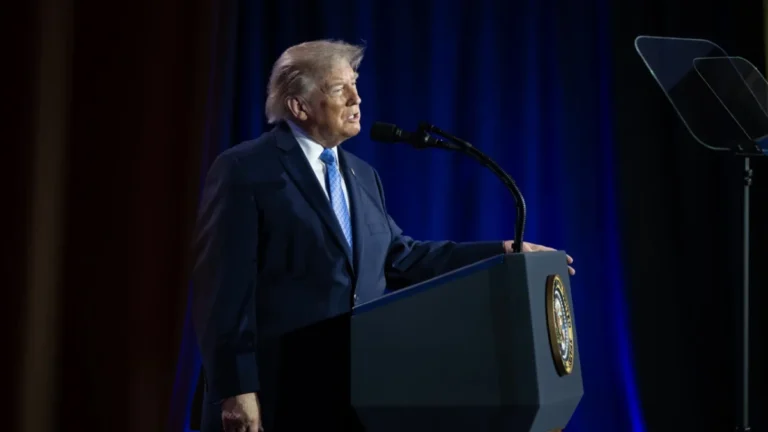
Time for Action analyzed why permission to produce Patriot could become a strategic decision for Ukraine, but not a quick answer to current Russian attacks. The key problem of Ukrainian air defence today lies not only in the number of systems, but in stable access to interceptor missiles. Until recently, Patriot was considered the only reliable way to intercept ballistic missiles. But Ukrainian stocks of missiles for this system are shrinking. At the same time, U.S. stocks have also decreased, including because American forces in the Middle East were repelling Iranian attacks. That is why Kyiv wants not only to receive missiles for Patriot, but also to produce them. This requires an American license. On July 8, Ukrainian President Volodymyr Zelenskyy received public consent from U.S. President Donald Trump.
“We will give them the right to produce Patriot”
After that, Trump clarified the logic of such a decision:
“We will provide you with a license to produce Patriot, – he said. – This way you will not be able to complain that we are giving too few of them. I will say: ‘Well then, produce them yourselves.’”
Politically, this statement looks strong. It shifts the conversation from the plane of constant requests for supplies to the plane of production capacity. For Ukraine, this is important because dependence on external stocks has an obvious weakness: missiles can be delayed, partners themselves may lack them, and political decisions on deliveries can change. Domestic or licensed production gives another logic — not waiting for the next batch, but gradually forming a long-term defence base.
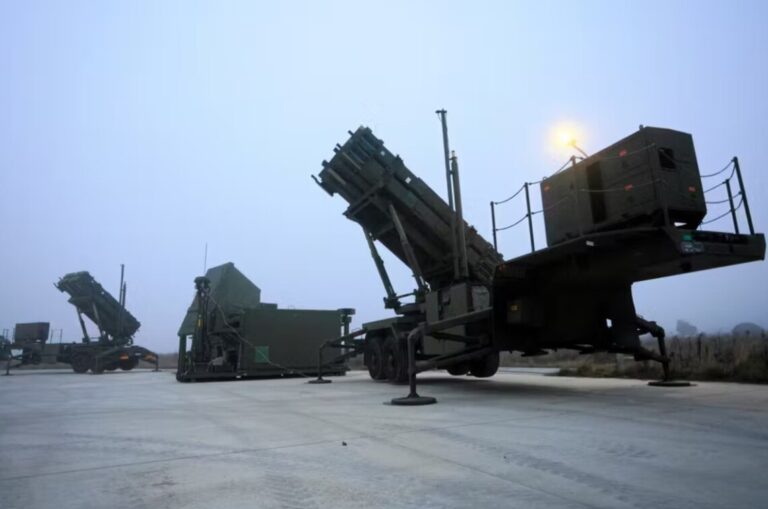
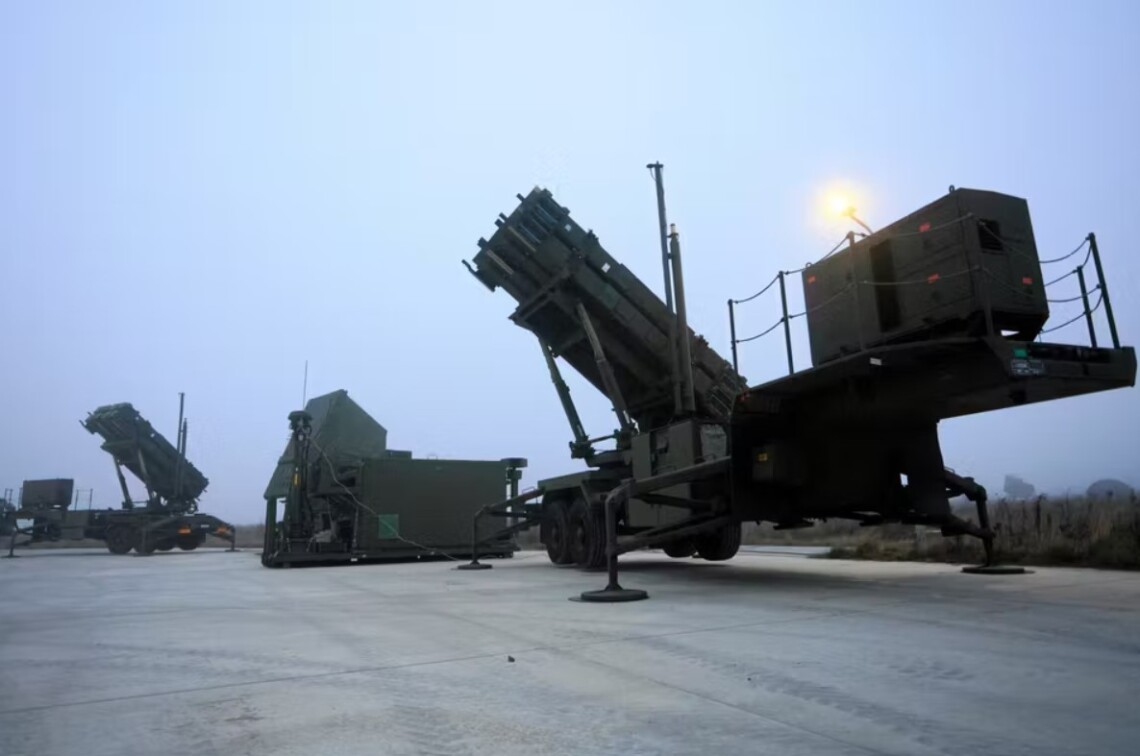
But this is where the most difficult part begins. A statement about a license is not a ready missile in storage and not an instant strengthening of air defence. Patriot production is an extremely complex technological, legal, and industrial process. A Patriot battery, created by Lockheed Martin and Raytheon, consists not only of interceptor missiles. It includes a launcher, radar, high-frequency antenna, control station, and power generator. According to the Center for Strategic and International Studies, the total cost of the system is about $1.1 billion: $400 million goes to the launcher and other components, while another $690 million goes to missiles. Ukraine, according to available estimates, has at least seven Patriot systems: three were provided by the United States, three by Germany, and at least one by a group of European allies. But even this does not mean that all of them are constantly operational. Some systems undergo maintenance, and the main shortage is precisely PAC-2 interceptor missiles and the newer PAC-3. The problem has become especially visible against the backdrop of the latest attacks. Ukrainian air defence has strengthened significantly over the course of the war: the Air Force has learned to effectively shoot down Russian drones and cruise missiles, while the defence industry is developing new weapons systems. According to the London-based Centre for Information Resilience, since January Ukraine has intercepted 90% of Russian long-range drones and 80% of the 722 cruise missiles launched at Ukraine. But the statistics for ballistics look much worse. Of the 522 Russian ballistic missiles launched this year, 70% reached their targets. This is the main vulnerability: Ukraine already has more effective answers to drones and cruise missiles, but it does not have enough means to systematically stop ballistic strikes. Russia sees this and uses it. Its main ground-launched ballistic missile the Iskander-M has a range of about 500 kilometers and can reach speeds of up to Mach 7, hitting targets within minutes. During the July 6 attack, Ukrainian air defence, according to the Air Force, did not shoot down any of the 23 Iskander-M missiles. Six Zircon hypersonic cruise missiles also hit their targets. The reason again comes down to a shortage of interceptor missiles. Air Force spokesman Colonel Yuriy Ihnat explained this directly after the July 2 attack:
“To shoot down ballistic missiles, appropriate means are needed. There are enough systems, stable missile supplies are needed”
Another of his points shows the logic of Russian tactics:
“The Russians are using the factor that in Ukraine, and in the world as well, there is a serious shortage of interceptor missiles [for Patriot], – he said. – That is why they are focusing more on ballistic strikes.”
This is an important point. Russia is not simply increasing strikes chaotically. It is adapting to the weak points of Ukrainian defence. If drones and cruise missiles are being shot down more often, then ballistics become a way to break through air defence where the shortage of interceptors is felt most strongly. That is why the Patriot issue is not only a question of another weapons system. It is a question of the ability to close the most dangerous type of threat. At this level, a production license looks strategically logical. If Ukraine can produce its own interceptor missiles, it will reduce dependence on external stocks and gain more room for planning. But between political consent and real production lies a difficult path. Ukrainian officials have been lobbying this issue in the U.S. administration for several months and are trying to secure the support of European allies. According to a senior NATO diplomat, the Ukrainian side says it can develop an interceptor in less than a year that would effectively be the equivalent of PAC-2 and produce it in large quantities.
“The Ukrainians tell us that they can develop an interceptor in less than a year that would effectively be the equivalent of PAC-2, and that they will be able to produce them in large quantities, – a senior NATO diplomat told Radio Free Europe/Radio Liberty. – If they can do it, we welcome it.”
This position opens an important window of opportunity for Ukraine, but experts are cautious about a quick scenario. Valeriy Romanenko, a former Ukrainian air defence officer who now teaches at the National Aviation University in Kyiv, doubts Ukraine’s ability to quickly establish licensed production of PAC-3.
“First, all our enterprises are under strikes by Russian ballistic missiles, and we cannot protect them now, – he said. – Second, we will have the same problems as the manufacturer, that is, a shortage of components.”
This argument shows the fundamental contradiction: Ukraine needs interceptor production to better protect its enterprises, but the enterprises themselves may be under attack while such protection is still lacking. Added to this is the problem of components. If even manufacturers have shortages, simply moving part of production to Ukraine does not guarantee a quick result. Jennifer Kavanagh, senior fellow and director of military analysis at Defense Priorities, is also skeptical about the prospect.
“Trump may have given his consent, but this plan is still unrealistic, – said Jennifer Kavanagh, senior fellow and director of military analysis at Defense Priorities, an American think tank. – Ukraine will still have to build production facilities that meet [export] requirements, overcome component shortages, and go through numerous layers of legal procedures in the United States.”
Her conclusion on timing is even harsher:
“If Ukraine produces Patriot missiles, these will be small volumes and it will happen in a year or more. This is not something that will help Ukraine in the short term”
This does not deny the strategic value of the license. But it clearly shows its limits. In the short term, Ukraine still needs ready interceptor missiles. Licensed production will not replace urgent supplies, will not close the sky in the coming weeks, and will not remove the immediate threat to Kyiv and other cities. Its significance lies in a longer war, where stock depletion becomes no less important a factor than the number of systems on combat duty. There is another dimension technological security. Patriot is not simply an expensive munition, but a system with sensitive technologies. The transfer of licenses means risks of control, information leakage, and possible access by adversaries to technological solutions. Kavanagh points directly to this threat:
“The transfer of this technology to Ukraine carries enormous risks. In my opinion, it is very likely that if Ukraine is granted licenses, this technology will eventually end up in the hands of Russia and China”
This is the part of the discussion that Washington will inevitably take into account. Even if the political decision has been announced, its implementation will depend on legal procedures, export control, security requirements, technical protection of production, and the level of trust between partners. That is why the Ukrainian strategy cannot be reduced only to Patriot. Romanenko believes that a better line for Ukraine would be to receive more long-range missiles for strikes against Russian defence enterprises, including American Tomahawks. His logic is active defence: not only intercepting missiles, but also reducing Russia’s ability to produce and launch them.
“I am a supporter of active defence … We need to strike Russian missile manufacturers and missile units that launch this ballistics, – Romanenko said. – But for effective strikes on Russian military enterprises we need powerful long-range missiles”
This approach does not cancel the need for air defence, but changes the balance. If interceptors are scarce, Ukraine must look for ways to reduce the number of launches themselves. For this, long-range strike assets are needed, capable of hitting Russian missile infrastructure, manufacturers, and launch units. Last year, the U.S. Department of Defense approved the delivery of Tomahawks to Ukraine, but the final decision has still not been made in the White House. At the same time, Ukraine is developing its own solutions. Ukrainian arms company Fire Point, which produces long-range strike drones and the Flamingo cruise missile, is developing its own air defence system intended to complement or even replace Patriot. Last month, the company announced a successful test of the system called Freya. At the same time, analysts warn that months will pass before the company can deploy a combat-capable battery. This once again shows the main challenge: Ukraine is moving in several directions at once, but none of them provides an instant answer. The Patriot license is a strategic chance. Long-range missiles are a method of active defence. Domestic air defence systems are a path toward technological autonomy. But all these solutions require time, resources, and the political will of partners. That is why the situation with Patriot is not only military, but also political. It shows how a long war changes the very nature of assistance to Ukraine. At the beginning of the full-scale invasion, the main question was what exactly partners were ready to transfer. Now another issue is becoming increasingly important: what Ukraine will be able to produce, repair, scale, and sustain itself or in cooperation with allies. This is a transition from the logic of supply to the logic of industrial resilience. And this is the main meaning of the discussion about Patriot. If Ukraine remains dependent only on ready-made deliveries, every new wave of Russian attacks will run into partners’ stockpiles. But if the country receives real production capabilities, even limited ones, this will gradually change the balance of a long war. For the near term, however, the conclusion is harsh: Ukraine needs ready interceptor missiles right now. Trump’s public consent to a license may become an important political decision, but it does not close the shortage that Russia is exploiting today. Until production is launched, ballistics will remain the main threat to Ukrainian cities.
Ukrainian air defence has become stronger, but Russian ballistics remain the instrument that most often breaks through the defence. That is why Patriot, PAC-2, PAC-3, long-range missiles, and domestic air defence systems are not separate topics, but parts of one strategy. Ukraine must not only shoot down what is flying, but also build a model in which Russia loses the ability to launch new strikes with impunity. A Patriot license can become part of such a model. But only if the political statement turns into real legal decisions, production facilities, protected component chains, and stable support from allies. Otherwise, it will remain a strong signal without a quick military result. There is no simple solution in this story. Ukraine needs three things at the same time: immediate supplies of interceptors, access to long-range weapons for active defence, and the development of its own defence industry. Only the combination of these directions can reduce vulnerability to Russian ballistics. That is why the conversation about Patriot is not only a conversation about missiles. It is a conversation about whether Ukraine, in a long war, will be able to move from dependence on other countries’ warehouses to its own ability to produce critically important weapons. And the answer to this question will determine not only the effectiveness of air defence, but also the overall resilience of the state against the next waves of Russian strikes.
About the Author

Related posts:
 Patriot for Ukraine: How Allies Are Changing the Approach to Air Defense
  Zelensky-Trump Talks: How Patriot Deliveries and U.S. Ultimatums Are Changing the War in Ukraine
  Russian Air Defense Under Pressure: How Ukrainian Drones Exposed the Kremlin’s Weak Spot
  Will the U.S. transfer Russian assets to Ukraine? Trump’s new strategy and prospects for military aid