Fuel Crisis in Russia: How Strikes on Refineries Affect the Economy, Logistics and the Kremlin’s Military Needs
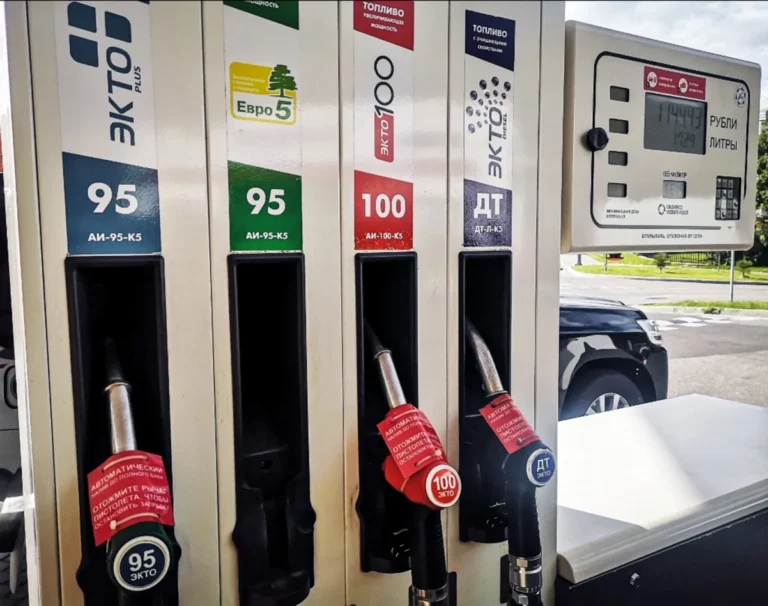
The fuel crisis in Russia and in the occupied territories of Ukraine has been going on for the second month and is gradually turning from a problem of individual regions into a broader challenge for the Russian economy. Gasoline shortages, queues at filling stations, rising transportation costs and possible restrictions on diesel fuel show that strikes by Ukraine’s Defense Forces on Russian oil infrastructure have not only a military but also an economic effect. Time for Action analyzed why the Kremlin’s official statements about a “non-critical” situation do not match the signs of a real crisis, how damage to refineries affects the fuel market, and why the shortage may hit prices, transportation and the supply of occupation structures.
Vladimir Putin admitted for the first time that Ukrainian strikes on Russian oil infrastructure caused a fuel shortage in Russia. In an interview released on June 28, he called the situation “not critical.” However, on the same day, during a meeting with the heads of major energy companies, he effectively confirmed the existence of problems: queues at filling stations, limited availability of certain grades of gasoline and difficulties for business. This admission is important precisely because of what it contains. The Kremlin has long tried to show that Ukrainian attacks on oil refining infrastructure do not have a noticeable impact on the domestic market. But when the Russian authorities talk about using fuel reserves, the need to bring refineries out of repairs faster, arranging imports and strengthening air defense, this no longer looks like a short technical failure.
The problem is not only that some oil refineries were damaged. The main question is whether Russia is capable of quickly restoring the production of finished fuel, not just launching separate elements of the technological chain. Mykhailo Honchar, president of the Center for Global Studies “Strategy XXI,” draws attention to the fact that statements about gasoline reserves and production volumes do not reflect the real state of affairs. According to him, it is enough to look at the situation in Russian regions and on social media to see the gap between official figures and what is happening at filling stations.
“No. There is no need for any figures here; it is enough to look at social media to understand that the situation is not at all the way it looks on paper or from Putin’s words.”
The Kremlin’s official logic is based on the fact that part of the damaged primary oil refining units is expected to come out of repair at the end of June or at the beginning of July. This is how the Russian authorities explain the expected easing of the situation. But primary processing does not produce finished gasoline. It only separates oil into fractions. To obtain a quality petroleum product, the next stages of processing are needed.
If not only primary processing units but also secondary capacities were damaged, a quick recovery of the gasoline market becomes much more difficult. It is at the secondary units that finished fuel with the required characteristics is formed. Therefore, launching part of the equipment after repairs does not automatically mean the return of normal gasoline volumes to the market. The return to the use of octane-boosting additives has also become a sign of a deeper problem. These are substances that allow the octane number of low-quality gasoline to be increased and brought to the level of 92 or 95 gasoline. Some of these additives had previously been banned in Russia because of their harmfulness in terms of emissions, but the government has again allowed their use. Such a decision does not look like normal market practice in a stable system. Rather, it indicates a shortage of quality gasoline, which they are trying to compensate for through administrative and technological easing. If fuel needs to be “brought up” to standards with the help of additives, it means that production is not coping with the usual load.
“This practice is exactly what shows that the situation is actually very bad. So one can talk about reserves as much as one wants, but reserves have the property of running out.”
A separate detail is the use of “Rosrezerv” stocks. Putin spoke about 1.7 million tonnes of gasoline reserves, but these volumes may refer to the commercial stocks of oil companies. Large Russian companies such as Rosneft, Lukoil, Gazprom Neft and Surgutneftegas have such reserves. They are needed for the current operation of networks across Russia. State strategic reserves are another matter. If the authorities move to using “Rosrezerv” stocks, it means that ordinary mechanisms are no longer enough. Such a step is not taken under conditions of a mild shortage. It shows that the problem is broader than officials are trying to present in public statements.
The fuel crisis has already begun to affect the transport sector. This means that its consequences are gradually moving into the prices of goods, food products and logistics. When fuel becomes more expensive or less available, carriers include additional costs in tariffs. Then these costs move to businesses, retail chains and end consumers. According to the Russian outlet Kommersant, because of the shortage and rise in fuel prices, road carriers are raising tariffs by at least 10% from July 1. Market participants report that rates for domestic routes have already increased by 5%, while cargo road transportation from China has become more expensive by an average of 700 dollars per trip. For the Russian market, this is a serious signal. If carriers refuse long-distance trips, limit themselves to a radius of 100–150 kilometers or do not accept orders at all, the problem stops being only about fuel. It becomes logistical. And logistics directly affect store shelves, delivery times, the cost of goods and the availability of products in certain regions.
“This is a cascading effect. Of course, when a gasoline shortage appears, they try to overcome it one way or another. We see that gasoline offers have appeared, but the price is sometimes many times higher than usual.”
The greatest danger for Russia may be connected not with gasoline, but with diesel fuel. Gasoline painfully hits the population, small businesses and part of the transport sector. But diesel has broader importance for freight transportation, industry, agriculture and military logistics. If the shortage moves into the diesel segment, the consequences will be much deeper. During the meeting on June 28, Putin said that a complete ban on diesel fuel exports was being considered. Earlier, from June 1, the Russian government had already temporarily and completely banned the export of aviation fuel in order to ensure the domestic market. Such decisions show that the authorities are trying to hold the situation through administrative restrictions, not through stable production.
Export restrictions are an attempt to keep more fuel inside the country. But they do not remove the main cause of the problem: damage to oil refining capacities and a shortage of finished product. If production is not restored in full, an export ban only redistributes the shortage and temporarily reduces pressure on the domestic market. In the occupied territories, the situation looks even harsher. In Crimea, according to Mykhailo Honchar, fuel is primarily being provided to vehicles connected with carrying out the tasks of the occupation authorities. This shows the Kremlin’s main principle under conditions of shortage: military and administrative needs are supplied first, while the civilian population receives fuel on a residual basis. Such distribution may increase tension in the occupied territories. Logistics there already depend on limited supply routes, and any shortage quickly affects everyday life. If fuel is directed as a priority to the needs of occupation structures, the civilian sector becomes even more vulnerable. According to Reuters, Ukrainian strikes stopped the operation of major refineries in central Russia. As a result, by mid-June, Moscow had lost about 25% of gasoline production compared with the average daily figure in June 2025. This explains why the crisis is not limited to isolated complaints at filling stations but appears in several areas at once from queues to transportation and reserves.

Strikes on refineries create a problem for Russia that is difficult to close quickly. Oil refining infrastructure requires complex equipment, time for repairs and stable operation of the entire production chain. If damage repeats, the system does not have time to return to normal operation. That is why July may become a revealing month. If the Kremlin manages to partially bring refineries out of repair, pressure on the market may temporarily decrease. But if the shortage remains and the problem reaches diesel fuel, the consequences will be more noticeable for the economy and military logistics. Putin is trying to calm the population and businesses with statements about reserves, imports and quick improvement. However, queues at filling stations, more expensive transportation, the use of additives, the involvement of reserves and a possible restriction on diesel exports say something else. The Russian authorities are no longer simply reacting to an isolated failure they are forced to manually restrain a crisis that is spreading to related sectors.
The main conclusion is that Ukrainian strikes on Russian oil infrastructure have begun to affect not only refineries, but also Russia’s ability to maintain stability in the domestic fuel market. This hits transportation, prices, reserve stocks and the supply of occupation structures. The Kremlin may temporarily soften the consequences through repairs, export bans, imports and the use of reserves, but such measures do not guarantee a quick way out of the crisis. Fuel is the basis for transport, trade, the army and everyday life. If the shortage continues, it will increasingly show the weak point of the Russian economy: even a large resource state can face an internal crisis when its refining infrastructure systematically loses capacity.
About the Author

Related posts:
 Strikes on Oil Refineries Increase Fuel Pressure on Russia: Why Shortages Are Already Spreading Beyond Individual Regions
  Fuel Crisis in Russia: Why Moscow Turns to Belarus for Supplies as Refineries Halt and Regions Impose Limits
  The Ukrainian Fuel Market: Price Stability Amid Global Fluctuations and New Logistics Challenges
  Strikes on Russian Oil Refineries: Black Rain in Tuapse and Pressure on the Oil Sector