Polish MEPs Want to Bring the UPA and Volyn Issue to the European Parliament
A group of Polish MEPs wants to bring the topic of the Volyn tragedy, the Ukrainian Insurgent Army and the commemoration of victims, who in the Polish political tradition are called victims of genocide committed by the UPA, to the European Parliament. The initiative provides for debates and a possible resolution, that is, an attempt to move a complicated Ukrainian-Polish historical dispute from the bilateral level to a broader European platform. For Ukraine, this is an important signal. Such an initiative in itself is unlikely to be able to legally stop negotiations on accession to the European Union. The European Parliament does not make the key decisions on opening or closing negotiation clusters this is done at the level of the Council of the EU, where member states act. But the political risk lies not only in legal consequences. The risk is that the historical topic may gradually become an instrument of pressure on Ukraine’s European integration.
The reason for the new escalation was the announcement about the creation of the Ukrainian National Pantheon a place to honor Ukrainians who, in different centuries and eras, fought for Ukraine. In the Polish political reaction, special significance was given to the possibility of including figures of the Ukrainian nationalist movement of the 20th century, in particular Stepan Bandera, in such a pantheon. This is where the main line of the conflict arises. In Ukraine, a significant part of society perceives figures of the Ukrainian liberation movement as a symbol of the struggle for independence and resistance to Soviet domination. In Poland, for a large part of society and the political class, these same figures are associated above all with the Volyn tragedy, which the Polish parliament recognized as genocide of the Polish population. One and the same historical figure or organization can be part of the memory of resistance for some and part of the memory of losses for others. This is what makes the topic so explosive.
Polish MEPs from the party of President Karol Nawrocki, Law and Justice, are trying to use this topic at the European level. This is not only about honoring memory. It is about a political formulation that may закрепити the Polish assessment of the UPA’s actions in the European space and put Ukraine in a position where it will have to explain its own historical policy before a wider EU audience. This is especially sensitive right now, when Ukraine is moving along the negotiation path toward membership in the European Union. Under such conditions, any dispute with an EU member state can gain more weight than it would have in an ordinary period. Historical issues in themselves do not belong to the formal accession criteria. But they can influence the political atmosphere, government decisions, voter moods and the readiness of individual capitals to support faster movement for Ukraine.
Formally, the European Parliament has limited influence on the negotiation process. Decisions there are made by majority, not by consensus of all member states. Over the past years, most members of the European Parliament have consistently supported Ukraine. Therefore, even if debates take place and a resolution is put to a vote, this will not mean an automatic blow to accession negotiations. But a resolution or even the debates themselves may create informational and political pressure. They may strengthen the internal Polish discussion, give additional arguments to forces that oppose Ukraine’s rapid European integration, and create in the European space an image of an unresolved historical problem between Kyiv and Warsaw. That is why the danger of this initiative lies not in one vote, but in longer political dynamics. If the topic of the UPA and Volyn begins to appear regularly in European institutions, it may become part of a broader package of reservations about Ukraine. To the already existing questions about agricultural competition, the transport market, corruption and Ukraine’s future influence inside the EU, historical policy may also be added.
Polish Defense Minister Władysław Kosiniak-Kamysz has already linked the historical issue to Ukraine’s future accession to the EU, saying that Kyiv will have problems with European integration if it does not change its approach to historical policy. Such a position shows that part of the Polish political class is ready to move the topic of memory into the field of current European decisions. For Kyiv, this is a difficult situation. Ukraine cannot simply abandon its own memory of the liberation movement, especially during a war, when the topic of resistance, independence and struggle against imperial pressure has become even sharper. At the same time, Ukraine cannot ignore the fact that for Poland the Volyn tragedy is a painful historical wound that has a strong political sound. The problem is deepened by the fact that Polish domestic politics makes this topic even sharper. The Law and Justice party and more right-wing forces have long used historical memory as a way to mobilize voters. In such logic, harsh rhetoric toward Ukraine can become not only a matter of principle, but also an instrument in the fight for the electorate. When history enters an election struggle, compromise becomes more difficult, because politicians begin speaking not with a neighbor, but with their own voter. That is why even Polish politicians who generally support Ukraine may find themselves under pressure. If a significant part of society expects a tougher position on historical issues, it becomes harder for the government or individual political forces to openly promote the rapid opening of all negotiation stages for Ukraine. This is how a historical dispute can influence European integration not directly, but through the domestic politics of an EU member state.
MEPs from other countries who commented on this situation emphasize a different approach. For them, Ukraine’s accession to the EU should be assessed through current criteria: the rule of law, the fight against corruption, judicial reform, and the ability to follow the Union’s rules. Historical issues are recognized as complicated, but they should not become grounds for slowing enlargement. This position is important. European integration was born not as a project of countries without a difficult past, but as a way to overcome the consequences of wars, mutual claims and long conflicts. France and Germany became a symbol of such reconciliation after the Second World War. Therefore, for the EU, historical disputes should not automatically be an obstacle to future coexistence. On the contrary, the European project itself is built on the idea that former enemies can create common rules and a common future.
But this does not mean that history can be postponed or silenced. Ukraine and Poland really do have to talk about difficult pages of the past, involve historians, work with archives, and look for forms of memory that do not humiliate victims and do not destroy the modern partnership. The problem is not in the dialogue itself, but in where and how it takes place. If a conversation about historical trauma turns into a political instrument in the European Parliament during a war, this may work not for reconciliation, but for a new wave of mutual irritation. That is why some MEPs doubt whether the European Parliament is the right platform for such debates. If one country brings one historical dispute to the European level, other states may want to do the same with their own old conflicts. Europe has many painful historical lines, and almost every state has pages of the past where heroes for some are antiheroes for others. This is where the danger of a “Pandora’s box” lies. The European Parliament may find itself facing a wave of historical claims that have no simple political solution. Such logic can complicate not only the Ukrainian issue, but also the work of the EU itself, where many decisions already require difficult compromises between countries with different national memories.
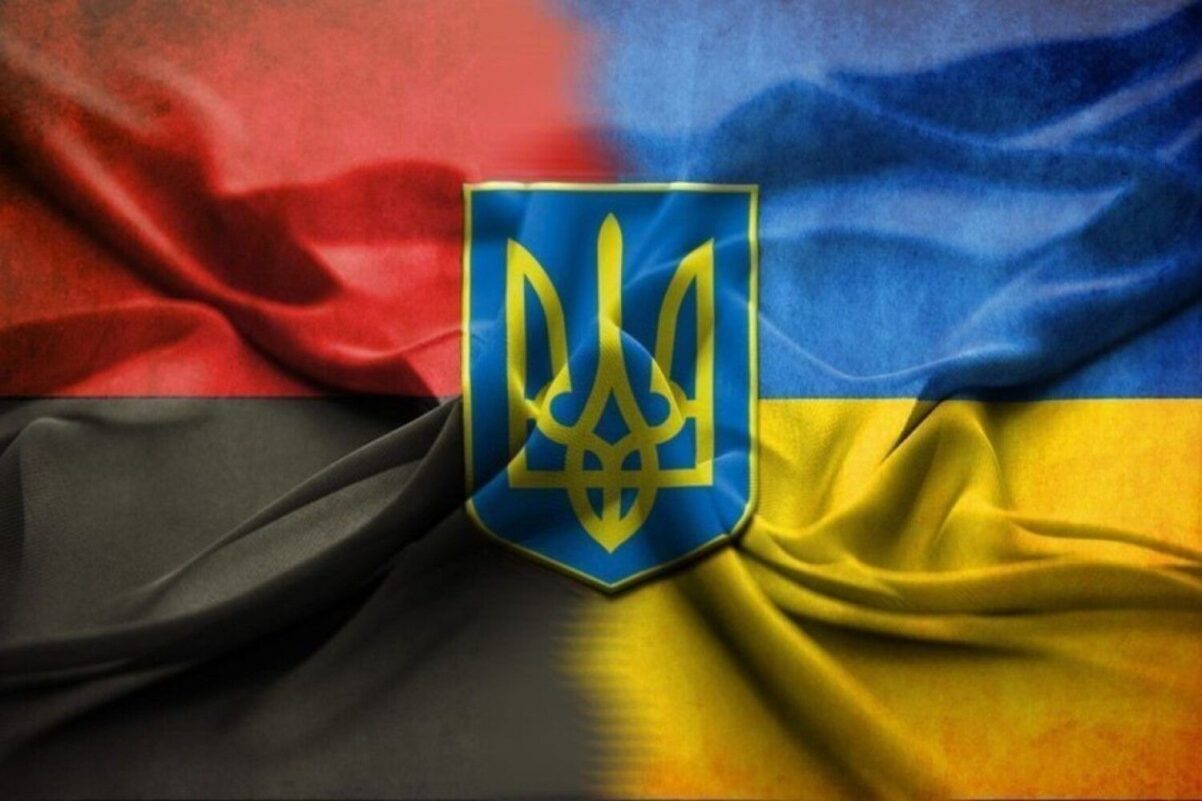
For Ukraine, it is especially important to understand that the Polish initiative did not arise out of nowhere. In Ukrainian society after independence, the UPA was perceived differently. Some saw it as fighters for independence, others as a controversial legacy of the war. After the Revolution of Dignity and especially after Russian aggression, recognition of the UPA as a symbol of resistance began to prevail. Since 2015, UPA soldiers have had the status of fighters for Ukraine’s independence in the 20th century, and since 2018, the status of combatants. At the same time, a negative attitude toward the UPA prevails in Poland because of the Volyn tragedy. In 2016, the Polish parliament qualified the actions of UPA soldiers against the Polish population in Volyn as genocide. Data on the number of victims also differ significantly depending on the sources. Ukrainian documents provide one set of figures for Polish and Ukrainian losses in Western Ukraine, while the Polish Institute of National Remembrance speaks of a much larger number of Polish dead. This is not simply a difference in historical assessments. It is a difference in memory, which is transmitted through politics, education, family histories, monuments, laws and public moods. For Ukraine, the UPA is increasingly becoming part of the tradition of the struggle for independence. For Poland, Volyn remains a symbol of an unhealed tragedy. Without acknowledging this difference, any political conversation quickly turns into mutual accusations.
At the same time, Russia’s war against Ukraine makes the moment especially sensitive. Ukraine needs the support of allies, including Poland, which played a major role in assistance after the beginning of the full-scale invasion. Poland, for its part, remains one of Ukraine’s key neighbors in the EU. A worsening of the political atmosphere between Kyiv and Warsaw may benefit primarily Russia, which is interested in splits between Ukraine and its partners. That is why historical issues now require extremely careful policy. They should not disappear from the agenda, but they should not be used in a way that weakens Ukraine’s position during the war or creates additional lines of tension inside Europe. For Ukraine and Poland, this is a test not only of memory, but also of political maturity. The European Parliament may become a platform for symbolic pressure, but not the main place of real blocking of Ukraine. However, symbols matter in politics. If the Polish right manages to закрепити the topic of the UPA as a regular European argument against Ukraine, this may gradually complicate the negotiation atmosphere. Not because one resolution will stop accession. But because it may add another layer of distrust to a process that will already be long and complicated. The main conclusion for Ukraine is that historical memory is becoming part of the struggle for political space around its future EU membership. The formal accession criteria remain connected to reforms, law, institutions and the ability to follow the Union’s rules. But the real politics of enlargement also depends on the moods of member states, their voters and the topics that politicians are able to turn into instruments of influence. Ukraine cannot allow historical disputes to become a convenient tool for slowing down its European path. But it also cannot simply ignore Polish memory of the Volyn tragedy. There are no simple solutions here. There is only difficult work: to speak with Poland without abandoning its own historical memory; to recognize the pain of the other side without allowing this pain to be used against modern Ukraine; to keep the European course without turning the past into a permanent trap for the future.
The attempt to bring the topic of the UPA and Volyn to the level of the European Parliament shows that Ukraine’s path to the EU will pass not only through reforms and negotiation clusters. It will also pass through difficult questions of memory, political emotions of neighbors and the struggle to ensure that the past does not become an obstacle to the future.
About the Author

Related posts:
 Ukraine and Poland on the Brink of a Historical Crisis Over the UPA: How the Dispute Affects the Alliance
  Ukraine and Poland Clash Over the UPA Again: Why a Historical Dispute Has Become a Political Risk for Kyiv
  The Volhynia Question in 2025: How Poland and Ukraine Seek Reconciliation Through Truth
  Poland’s New President Opposes Ukraine’s NATO Bid: Who Is Karol Nawrocki — and Why His Election Matters