Fish Restocking in Ukraine 2026: Key Water Bodies, Recovery Plans, and Business Opportunities
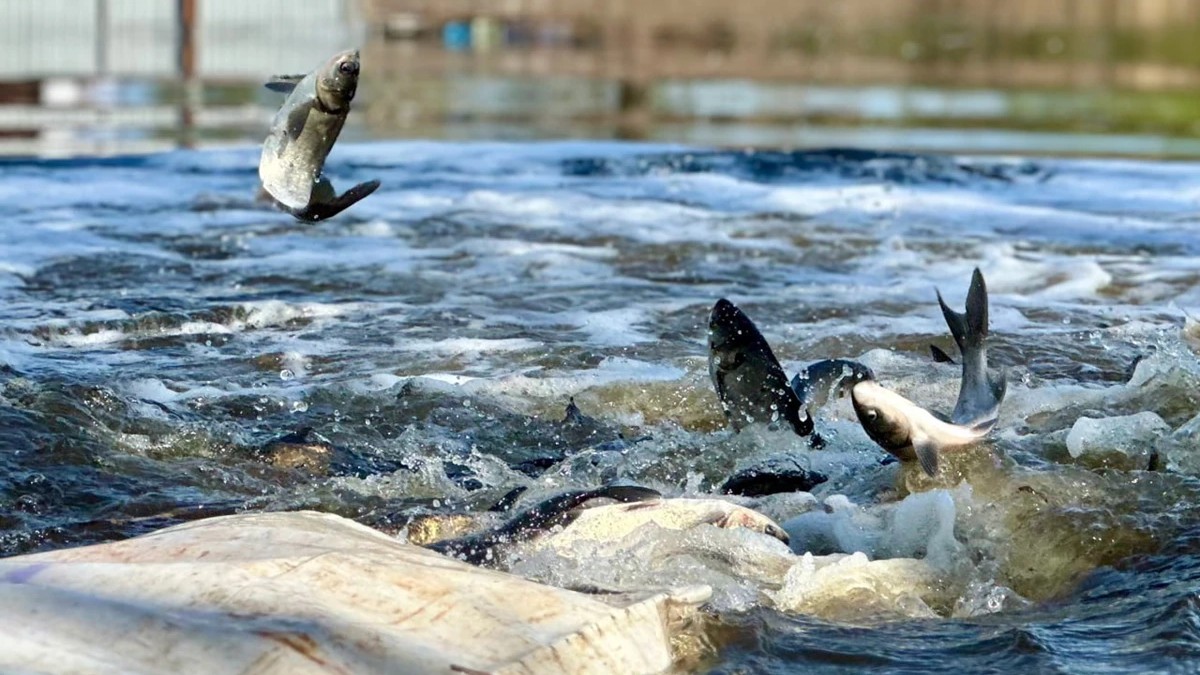
In 2026, Ukraine plans a large-scale restocking of key water bodies, including the Kyiv, Kremenchuk, Kamianske, and Dnipro reservoirs, as well as the lower Dniester and the Dniester estuary. This is a systematic attempt to restore fish populations in strategic water areas that are important both for ecosystems and for commercial fishing. The program focuses on native species, including pike, zander, and catfish. This decision is not accidental. These species play an important role in maintaining balance in water bodies. Their restoration means not only an increase in fish numbers, but also an attempt to stabilize natural processes in aquatic systems.
At the same time, the release of herbivorous fish species is planned, which serve another function improving water quality and supporting the overall condition of ecosystems. This approach shows that the program is aimed not only at fishing, but also at the quality of the aquatic environment. An important detail is how the restocking process is organized. The work is divided into two stages: in spring, one-year-old fish will be released into water bodies, and in autumn – young-of-the-year and two-year-old fish. This structure increases survival and adaptation rates. It means the focus is not on a formal outcome, but on the actual restoration of populations.
The program’s financing is built on a separate principle. Funds will be directed from auctions for the sale of commercial fishing rights, including through increased starting prices for such lots. In this way, the sector partially finances its own recovery. This changes the approach to resource management, linking extraction and restoration into a single system. A separate direction of the program is business involvement. Fish farming enterprises can participate in state tenders, supply stocking material, and carry out restocking work. For private companies, this creates practical opportunities rather than formal participation. This approach is reinforced by decisions on aquaculture support. The state has expanded the compensation program, allowing enterprises to receive up to 20% reimbursement of costs for fish breeding and cultivation across the entire territory of Ukraine. Previously, such support was limited to certain regions. Now access has been broadened to all enterprises for which aquaculture is the main activity.
Compensation applies both to the costs of producing stocking material for sale and to the cost of its purchase for restocking water bodies for further commercial production. This means the state is stimulating not only the restoration of natural resources, but also the development of the production segment. Applications for support can be submitted through the State Agrarian Register until November 1. They will then be reviewed by regional commissions, after which consolidated data will be submitted to the Ministry of Economy. This procedure formalizes business participation and makes the process more structured.

A separate role in this model is played by the government’s decision to direct part of the funds from electronic auctions for the special use of aquatic bioresources specifically to restocking. This creates a direct link between resource use and its restoration. As a result, a model is being formed in which the state sets the rules and financial incentives, while business receives tools for participation. At the same time, water bodies are expected to receive systematic restoration of fish populations. The outcome of this program depends not on declared plans, but on how they are implemented. If all stages from tenders to actual restocking work effectively, it can influence both the condition of ecosystems and the development of the fishery sector. If the process remains formal, the effect will be short-term and will not change the situation in water bodies.
About the Author

Related posts:
 Operation “Midas”: How Anti-Corruption Authorities Exposed a Large-Scale Scheme in the Energy Sector
  Notre Dame de Paris – Le Concert in Kyiv: A Large-Scale Ensemble, a Grand Stage, and Music That Demands Space
  Record Security Assistance to Ukraine: What Resources the Country Is Entering 2026 With
  Cascade failure between power systems: how the January 31 outage left Kyiv without water and electricity