Musk vs. Trump: PDF Accusations and the Battle for Political Legitimacy
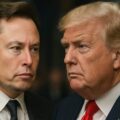
In early June, the American media landscape was rocked by an unexpected accusation. Elon Musk, one of the most influential tech leaders in the world, publicly named President Donald Trump in connection with the infamous “PDF case” — a euphemism many associate with sealed court documents and high-profile names tied to Jeffrey Epstein. Musk’s statement came without warning, delivered in his characteristic manner — blunt, public, and deliberately vague. But the consequences went far beyond headlines.
That single statement triggered what is now being called the loudest political clash in modern U.S. politics — a confrontation between two power centers with loyal audiences, vast influence, and very different visions of the country’s future.
How It Started
The conflict began with criticism. Musk publicly attacked a new economic bill promoted by the Trump administration, calling it “a disaster disguised as reform” that, in his view, would cripple the U.S. economy. The response was immediate: Trump announced the suspension of all federal contracts with Musk’s companies — including SpaceX and Tesla.
But that wasn’t the end of it.
Soon after, Musk escalated the dispute by alluding to the “PDF case.” He claimed Trump’s name appeared in private documents related to Epstein’s guest lists — closed-door events that have long remained a subject of speculation and silence in American politics. Musk didn’t offer details or evidence, and he avoided saying the full term out loud. But his audience understood the reference.
It wasn’t a legal accusation. It was a public warning shot.
When Power Collides with Power
Officially, Musk and Trump are not political rivals. But in practice, both are figures of enormous power. Musk speaks to a generation that sees Silicon Valley as the engine of progress. Trump commands a political movement built on distrust of institutions and a promise to “drain the swamp.”
Their conflict isn’t just a personality clash — it’s a reflection of deeper systemic fractures. Musk has begun calling for a “third political force” that actually represents people, not what he calls the “two-party cartel.” Against this backdrop, the PDF accusation becomes more than personal. It’s a direct attempt to delegitimize Trump on moral grounds.
And it hit a nerve.
Revelant




Fallout
Tesla’s stock fell sharply. Trump doubled down, cutting off cooperation between federal agencies and Musk-led ventures. Musk turned to Twitter (X), issuing a stream of statements about looming economic recession, political corruption, and the need to reset America’s democratic structures.
Supporters of both men mobilized online. One side accused Musk of political manipulation. The other praised him for speaking out where others stayed silent. But the most striking element is the lack of hard evidence. The accusations are loud, public, and legally unproven.
This isn’t a legal case. It’s a power struggle — reputational, informational, and strategic. And the battlefield is public perception.
Why It Matters
This confrontation raises fundamental questions about American governance. Can a tech mogul influence national policy as much as — or more than — a sitting president? Can unproven public accusations reshape the political landscape before any courtroom is involved?
Both Trump and Musk shape the national conversation. But now, with morality, reputation, and legitimacy on the table, the stakes are higher than ever.
What’s unfolding is not just another media controversy. It’s a test of who commands the future in a country where trust in institutions is wearing thin — and where people are looking for someone, anyone, to believe in.
About the Author

Related posts:
 Elon Musk vs. Trump: What’s Wrong With the “Beautiful” Bill
  New Signals of War: What Putin’s Threats and Trump’s Silence Really Mean
  Three Nights Under Fire: 355 Drones, Trump’s Warning, and Putin’s Brush with a Drone Strike
  Poland’s New President Opposes Ukraine’s NATO Bid: Who Is Karol Nawrocki — and Why His Election Matters