Atlas Festival 2026 in Kyiv: More Than 100 Artists and a UAH 150 Million Fundraiser for Air Defence
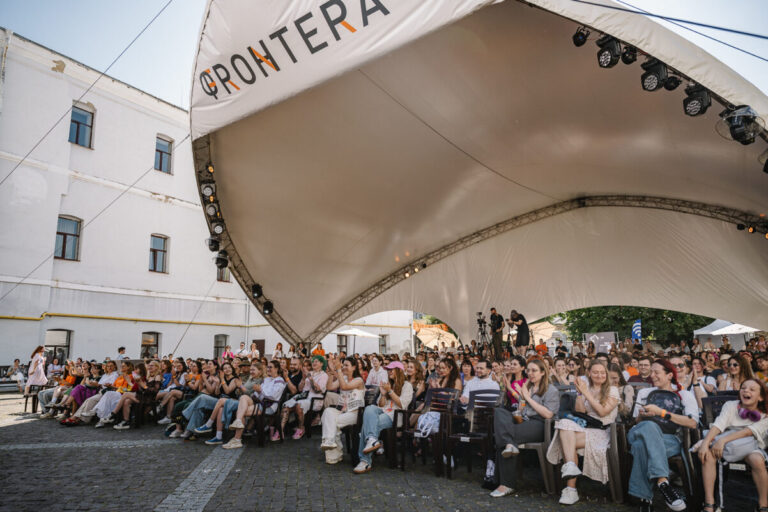
From 17 to 19 July, the grounds of Kyiv’s Blockbuster Mall shopping and entertainment centre will turn into a separate festival city. For three days, six music stages, 70 interactive zones, food courts and recreation areas will operate there, while more than 100 artists will perform in front of thousands of visitors. However, Atlas Festival 2026 is already much more than a major open-air summer concert. During the full-scale war, the festival combines music, charity, support for the Ukrainian military, an introduction to defence technologies and people’s desire to regain a sense of normal life for at least a few days. This year, the organisers have set an ambitious goal to raise UAH 150 million to protect Ukraine’s skies. In this way, one of the country’s largest music events is also becoming a major platform for supporting the Defence Forces.
Six Stages and Music Without Genre Boundaries
The Atlas Festival 2026 programme covers virtually the entire spectrum of contemporary Ukrainian music from pop, rap and indie to rock, alternative music and theatrical musical projects. Performances will take place across six venues: Main Stage, Prom Stage, Atlas Stage, Coca-Cola Stage, Shelter Loko Stage and B-Mall Stage. Such scale allows the festival to work with different audiences at the same time. Some visitors will come for performances by the biggest stars, while others will look for new names, a more intimate atmosphere or music that is rarely heard on major commercial stages.
On the first day, 17 July, MONATIK, Ivan Liulenov, OTOY, Zhadan i Sobaky, Palindrom, Phil It, LATEXFAUNA, Lipatova, DYKYI, SKVER, FAKTYCHNO SAMI, VADYM OLIINYK and other performers will take the stage.
The programme on 18 July will bring together SKYLERR, KOLA, Artem Pivovarov, Kazhanna, Dity Inzheneriv, KHAYAT, Dakh Daughters, Odyn v Kanoe, zhenya kudryk, Mulenko, REMEZ, warniakannia, Davnia Kazka, The Elliens and other artists.
The final day, 19 July, will be one of the most eventful. DREVO, Bez Obmezhen, Boombox, Teoriia Rozbytykh Vikon, Nytso Potvorno, KURHAN & AGREGAT, the Australian band Breathe., MUR, Druha Rika, Lovera Breaux, sestro and others will appear on the stages.
The line-up demonstrates an important change in Ukrainian festival culture: today, a major event can build a strong programme almost entirely around Ukrainian music. Only a few years ago, organisers of large-scale festivals relied heavily on foreign headliners. Today, Ukrainian artists both established names and those who are still building their own communities of listeners are capable of sustaining the main interest of the audience.
A Separate Stage for MEGOGO MUSIC AWARDS Artists
On 19 July, B-Mall Stage will host a stage featuring winners and nominees of the MEGOGO MUSIC AWARDS. The programme will bring together seven artists working in different styles from indie and R&B to contemporary pop music. This format is important not only as an additional musical segment. It creates a platform for performers who find it more difficult to compete for the public’s attention with major stars on the main stage. Since 2022, the MEGOGO MUSIC AWARDS have recognised Ukrainian releases, bands and solo artists. At the same time, the project combines musical recognition with support for Ukrainian defenders. For the festival, this is another way to show that the contemporary Ukrainian music scene is not limited to a few of the most popular names. It consists of dozens of genres, independent musicians, local communities and new projects that need large platforms to develop.
UAH 150 Million to Counter Russian Drones
The central charitable goal of Atlas Festival 2026 will be to raise UAH 150 million to protect Ukraine’s skies. The funds will support Dronefall, the flagship project of the Come Back Alive Foundation. It provides the necessary equipment to units that intercept and destroy Russian strike and reconnaissance drones. For Ukraine, this is one of the most important areas of defence. Russia systematically uses drones to attack cities, critical infrastructure and military positions. Reconnaissance UAVs pose a separate threat because they help the enemy identify targets and adjust subsequent strikes. Therefore, the festival fundraiser is not symbolic charity, but an attempt to address a specific need of units whose work directly affects the safety of both military personnel and civilians. To encourage donations, the organisers will hold a draw for a car and an apartment among those who contribute at least UAH 300. This mechanism may provoke different reactions, but it has already become part of Ukraine’s modern fundraising culture. Large charity campaigns increasingly use prizes, business partnerships and gamification to engage a broader audience and increase the number of smaller donations. The festival’s main task is to exceed the previous year’s result. During Atlas 2025, organisers managed to raise UAH 122 million for Ukrainian defenders. This year, the target has been increased by another UAH 28 million.
Why Charity Has Become Part of Festival Culture
Before the full-scale invasion, the charitable component was often an addition to major music events. Now it has become one of the main reasons for holding them. Large festivals bring together tens of thousands of people, popular artists, major brands and media platforms in one place. This creates an opportunity to achieve a significant financial result within just a few days. A visitor buys a ticket, listens to music, takes part in activities and contributes to the fundraiser at the same time. Artists use the stage to speak about the needs of the military, while companies provide money, technical support or prizes. Atlas Festival effectively turns an entertainment event into a mechanism for the collective mobilisation of resources. It also helps reduce fatigue from constant fundraising campaigns. When charity is integrated into a clear and emotionally engaging event, it is easier for people to participate than when they simply see another set of payment details on social media.
Visitors Will Be Shown How Military Technologies Work
A separate part of the festival will be the public avenue with 70 interactive zones. It will open at 1:00 p.m., before the start of the main concert programme. The organisers present this territory as a full-fledged space with its own atmosphere, programme and activities. It will feature public, commercial and military locations. One of the most noticeable will be the area of the 7th Rapid Response Corps of the Air Assault Forces. Visitors will be able to put on a parachute system and be suspended from the lines. The installation imitates the position of a person during a parachute jump and allows visitors to experience a sensation of flight and weightlessness. Of course, the festival installation does not reproduce a real airborne operation, physical strain or combat risk. However, it gives civilian visitors at least a partial understanding of the specifics of paratrooper training and draws attention to the unit itself. At the Air Assault Forces location, visitors will also be able to try a VR drone-combat simulator, operate ground robotic systems using a training platform and purchase the corps’ branded merchandise. Proceeds from sales will go towards the needs of its units. Such zones perform several functions at once. They introduce people to the modern military, demonstrate how technologically advanced warfare has become, support recruitment and create an additional channel of financial assistance for the armed forces.
The Military Is Becoming a Visible Part of Public Space
The presence of military personnel at a music festival might have seemed unusual in peacetime. In present-day Ukraine, it appears entirely natural. The Defence Forces no longer exist separately from civilian society. Military personnel take part in public events, explain their work, demonstrate equipment, organise fundraisers and communicate with potential recruits. For visitors, this is an opportunity to see not an abstract image of the army, but specific people, technologies and tasks. For military formations, it is a chance to explain to society what they need and how they operate. It is especially important that this interaction takes place not only through tragic news or reports from the front. The military theme is integrated into a living cultural space filled with music, young people, businesses and civic organisations. This does not erase the boundary between war and entertainment. On the contrary, the festival reflects the reality of a country where cultural life continues alongside the constant need to support national defence.
A Festival as a Full-Fledged City for Three Days
In addition to music stages and the public avenue, Atlas Festival will feature a food court, lounge areas, quests, gaming spaces and other activities. This is an important part of the modern festival model. Visitors no longer buy a ticket only for a specific performance, but for an entire day or several days within a carefully designed environment. People move between stages, discover new artists, visit partner locations, make donations, take part in competitions and rest between concerts. For organisers, this format makes it possible to keep the audience on the site for longer and distribute visitor flows between different areas. For partners, it creates an opportunity for direct contact with tens of thousands of potential customers. For civic and military projects, it provides access to people who might never attend a separate thematic presentation.
Why Atlas Matters for Ukrainian Music
A major festival is not simply a series of concerts. It is part of the infrastructure of the music market. For popular performers, Atlas is an opportunity to appear before an audience of many thousands. For lesser-known artists, it is a chance to find new listeners. For technical crews, sound engineers, stage designers, managers and producers, it is a major professional commission. The festival also supports related businesses, including catering, transport, security companies, equipment rental, advertising and retail. During the war, the cultural industry has been operating under enormous pressure. Some of its workers are serving in the military, have moved abroad or changed professions. Concerts depend on air-raid alerts, security restrictions and the financial capacity of the audience. Therefore, the very ability to organise an event of this scale demonstrates the resilience of the Ukrainian music market, although it does not eliminate all of its risks and problems.
Culture During Wartime Is Not an Attempt to Forget Reality
Any major entertainment event in a country at war inevitably provokes debate. Some people may consider festivals inappropriate while soldiers remain on the front and cities continue to face attacks. However, culture does not necessarily mean escaping reality. People need spaces where they can meet, listen to music, experience shared emotions and recover their strength. This is especially true after years of constant stress, loss, alerts and uncertainty. The question is not whether Ukrainians should completely abandon concerts. Far more important is what responsibility the organisers of large events are prepared to assume. In the case of Atlas Festival, this responsibility is reflected in the large-scale fundraiser for defence, the participation of military units, support for Ukrainian artists and the creation of space for civic initiatives. The festival therefore does not pretend that the war does not exist. It builds its programme around the reality of a country that is simultaneously fighting, working, donating and continuing to create culture.

Atlas Festival 2026 as a Reflection of Modern Ukraine
This year’s Atlas Festival combines things that only a few years ago might have seemed incompatible: a large-scale music show, military technology simulators, an interactive paratrooper zone and a UAH 150 million fundraiser to destroy enemy drones. Yet this combination most accurately reflects modern Ukraine. Here, music is not separated from war, charity is not separated from everyday life, and recreation is not separated from responsibility. More than 100 artists and six stages remain the main reason people will come to the grounds of Blockbuster Mall. However, the true scale of the festival will not be determined only by the number of performances or visitors. The main measure will be whether the event can turn the attention of thousands of people into tangible support for the units that protect Ukraine’s skies every day.
About the Author

Related posts:
 Atlas Festival 2025 in Kyiv: lineup, program, and charity goal
  Land of Dreams: Festival of Ukrainian Culture and Music
  Month of Ukraine Festival in Prague 2026 Highlights Kharkiv and Art During Wartime
  Four Days of Sport, Energy, and New Experiences as the “Active Country With Kernel” Festival Comes to Kyiv