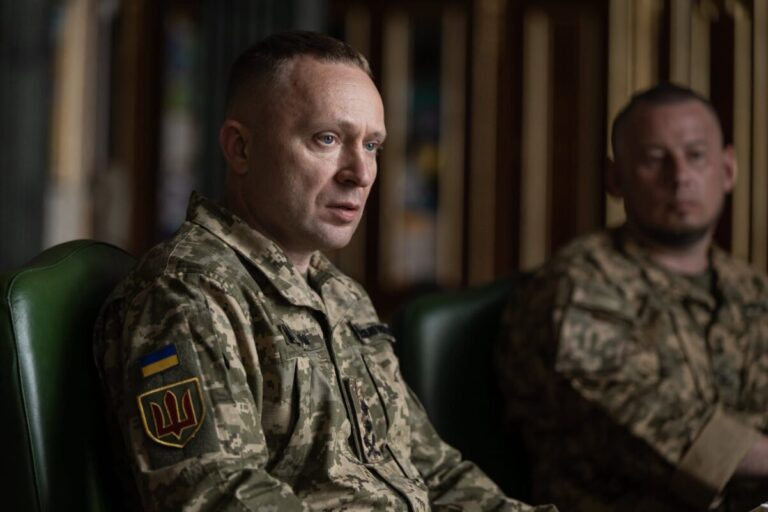
Mental Health During War: How Chronic Stress Changes the Brain, Productivity and Daily Life
War changes a person not only at the moment of direct danger. It gradually restructures the functioning of the nervous system, sleep, memory, the ability to concentrate, tolerate uncertainty and recover after strain. These changes do not always look like an obvious psychological crisis. More often, they manifest much more quietly: a person takes longer to fall asleep, wakes up more frequently, thinks more slowly, finds it harder to make decisions, reacts more sharply to minor irritants and needs more effort to complete familiar tasks. That is why mental health during a prolonged war cannot be assessed solely by whether a person continues to work, study, care for their family or perform daily responsibilities. External functioning does not yet mean internal well-being. A person may remain disciplined, responsible and professional while spending an increasing amount of physiological resources on ordinary activity.
In peaceful life, the stress response usually has a completed cycle. The body detects a threat, mobilises, reacts and, after the threat disappears, returns to a relatively stable state. During war, this cycle often remains unfinished. The threat may not be continuous, but it remains constantly possible. An air-raid alert ends, but the nervous system already knows that the next one may begin at any moment. Shelling stops, but the brain continues to monitor sounds. A person goes to bed, yet part of their attention remains directed outward.
In this state, the nervous system is dealing not only with real danger but also with the expectation of it. This is fundamentally important because for the body, prolonged readiness for a threat is also a form of strain, even when nothing is happening externally.
Stress itself is not a pathology. It is a normal survival system that helps a person react more quickly, mobilise energy, intensify attention and temporarily push secondary needs aside. The problem begins when the mobilisation mode stops being temporary.
The body is not designed to live for years as though danger may appear within the next few minutes. It can compensate for such strain for a certain period, but this compensation has a cost. A person often continues to appear functional for a long time, even though a deficit of recovery is already accumulating internally.
Sleep becomes one of the first indicators. It is not a passive pause between working days. During sleep, the brain processes information, stabilises emotional responses, restores attention, consolidates memory and regulates the functioning of many systems in the body.
When sleep is shortened or fragmented, a person does not merely feel tired. The brain’s ability to distinguish what is important from what is secondary, restrain impulsive reactions, switch flexibly between tasks and assess risks adequately gradually deteriorates.
That is why, after several sleepless nights, a person may not only be slower but also less accurate in assessing their own condition. They may underestimate the number of mistakes, overestimate their concentration and believe that they have already adapted to sleep deprivation. In reality, the body often adapts not by fully restoring its functions, but by reducing subjective sensitivity to exhaustion.
This is one of the most dangerous characteristics of chronic stress. A person becomes accustomed not to a normal condition, but to the gradual deterioration of their own functioning. What would previously have been perceived as an alarming signal becomes routine: headaches, heaviness in the body, irritability, forgetfulness, emotional emptiness, difficulty concentrating, a constant sense of rushing or, conversely, general slowing down.
In wartime reality, this is particularly easy to overlook because the symptoms have logical explanations. A person is tired because they did not sleep during an air raid. They find it difficult to concentrate because they are worried about their loved ones. They have become sharp because they are under constant pressure. Each individual explanation sounds convincing, but together they may indicate that the nervous system has been operating at the limits of compensation for a long time.
At the same time, it is important not to confuse different phenomena. Stress, exhaustion, anxiety symptoms, a depressive state and a mental disorder are not interchangeable concepts. A person may experience severe fatigue without having clinical depression. They may have periods of anxiety without having an anxiety disorder. They may sleep poorly because of external danger without having a separate illness.
A diagnosis is determined not by one symptom but by its duration, severity, combination with other symptoms and impact on daily life. That is why statistics concerning mental health problems must be interpreted carefully. Reports of anxiety, exhaustion or sleep disturbances do not mean that every such person has a mental disorder. However, this does not make the problem less important.
The widespread prevalence of subclinical symptoms that do not yet meet the criteria for illness can have enormous consequences for society. The economy loses not only when a person takes sick leave. It also loses when an employee is formally present but their cognitive abilities are already limited by exhaustion.
This condition is known as presenteeism. A person comes to work, responds to messages, participates in meetings and even completes tasks, but does so more slowly, with more mistakes and at a higher internal cost.
Presenteeism is difficult to notice because it disguises itself as normal employment. Unlike an employee’s absence, it does not create an obvious gap in the schedule. Yet its consequences accumulate: decisions become less accurate, communication becomes more conflict-prone, strategic thinking becomes more superficial, and creativity becomes more cautious.
Forms of activity that require not mechanical repetition but complex thinking become particularly vulnerable. A person may still perform familiar operations, but cope less effectively with new tasks, ambiguity, responsibility or rapidly changing conditions.
Chronic stress narrows the psychological horizon. In a stable state, the brain can simultaneously consider several scenarios, predict consequences and maintain a complex picture of a situation. In a state of exhaustion, it more often gravitates towards short-term decisions, simplification and reactive behaviour.This is not a sign of weak character. It is a change in the operating mode of the nervous system, which is trying to conserve resources and react more quickly to a potential threat.
That is why, during war, not only the personal productivity of an individual employee but also the quality of management across entire teams may deteriorate. A manager who has not recovered for a long time may become harsher, less patient, excessively controlling or, conversely, avoid difficult decisions.
In such a state, it is easy to confuse fatigue with a lack of discipline, reduced concentration with indifference, emotional detachment with disloyalty, and the need for recovery with weakness. As a result, an organisation may respond to exhaustion with additional pressure, increased control and stricter deadlines.This approach sometimes produces a short-term result. A person mobilises their remaining resources, completes an urgent task and outwardly confirms the effectiveness of pressure. In the long term, however, this accelerates exhaustion.
In a crisis environment, additional pressure often does not create new energy but merely consumes what remains more quickly.
This does not mean that businesses should abandon requirements, standards and responsibility. On the contrary, clear goals and rules are particularly important in unstable conditions. But those requirements must correspond to a person’s actual capabilities.
An employee who has spent the night under shelling is physiologically not in the same condition as someone who has had a full night’s sleep. Even when they are motivated and ready to work, their attention, reaction speed and emotional regulation may be temporarily weakened. Ignoring this means demanding functions from the body for which it does not have sufficient resources.True managerial maturity lies not in eliminating requirements, but in distinguishing between a situation in which an employee lacks responsibility and one in which they lack recovery.This is difficult because the same symptom may have different causes. Being late may result from indifference, but it may also follow a sleepless night. Reduced initiative may indicate a loss of motivation, or it may be a manifestation of exhaustion. Irritability may be a behavioural trait, or it may be a response from a nervous system that has lost its reserve of flexibility.
A manager should not make diagnoses. Their task is to notice changes, discuss them without accusations, assess workloads and create conditions in which a person can seek help without fearing damage to their professional reputation.
It is important to observe not one bad day but the overall pattern. A single missed deadline proves nothing. But when a previously attentive employee begins making systematic mistakes, an active person becomes withdrawn, or a calm person becomes constantly confrontational, this is a reason not for diagnosis but for a conversation.
Mental health within an organisation cannot be supported through a one-time lecture, access to a psychologist or a formal well-being programme alone. When a company’s culture rewards overwork, demands constant availability and punishes any decline in pace, individual initiatives will not change the system.
The environment is always stronger than declarations.
A company may speak about care while in practice encouraging people to respond to messages at night. It may offer psychological support while treating requests for help as a sign of unreliability. It may declare the importance of balance while promoting only those who constantly work beyond normal limits.
Within such a system, employees quickly learn to conceal their condition. They do not report exhaustion until it reaches a critical stage. Not because they do not understand the problem, but because they do not see a safe way to talk about it.That is why a culture of mental health begins not with treatment but with rules. Does a person have the right to say that after an air raid they cannot perform a complex task with the same accuracy? Can the team redistribute the workload without blame? Are there limits to availability after the working day has ended? Is a person allowed to take a pause before their condition becomes critical?
During war, it is impossible to create an environment without stress. But it is possible not to add internal chaos to external danger.
Predictability is one of the most important resources of the nervous system. A person tolerates a difficult workload more easily when they understand the rules, priorities, boundaries of responsibility and procedure for acting in a crisis.
Uncertainty is exhausting not only because the future is unknown. It forces the brain to model dozens of possibilities constantly and remain in a state of readiness. That is why a clear schedule, transparent expectations, realistic deadlines and consistent communication have not only organisational but also physiological significance.They reduce the number of decisions a person must make while their nervous system is already overloaded. The romanticisation of exhaustion remains a separate problem. In many professional cultures, a person who works nights, does not take holidays and is always available is still perceived as the most committed employee.
However, prolonged work without recovery is not evidence of resilience. It is often a sign that a system is using a person’s future resources to solve today’s tasks.
At first, this may appear effective. The employee does more, assumes additional responsibility and performs other people’s functions. Gradually, however, the risk of mistakes, conflicts, physical health problems, loss of motivation and resignation increases.
Overwork does not increase a team’s resources. It merely accelerates their consumption.
Recovery should not be reduced to a day off or advice to rest more. A person cannot always recover in an environment where air-raid alerts, shelling, care for loved ones and constant information pressure continue.That is why support must operate on several levels. At the level of the individual employee, this means getting as much sleep as circumstances allow, maintaining physical activity, eating regularly, limiting excessive information exposure and seeking professional help in time.
At the team level, it means flexibility after difficult nights, realistic planning, interchangeability, fair workload distribution and the absence of punishment for honestly reporting one’s condition.
At the organisational level, it means clear rules, management training, access to professional assistance, protection of rest time and the systematic reduction of unnecessary stress.
At the same time, support must not become total control over employees’ private lives. A company has no right to demand details of a diagnosis, impose psychological intervention or assess a person’s professionalism according to their willingness to discuss personal experiences.
Care for mental health should expand a person’s autonomy rather than create a new form of surveillance.
It is equally important to understand the limits of self-help. Poor sleep, occasional anxiety or fatigue do not always require treatment. But when symptoms persist, intensify, interfere with work, relationships or everyday activities, they should no longer be explained solely by difficult circumstances.
Prolonged insomnia, loss of interest in life, feelings of hopelessness, persistent panic attacks, a sharp decline in functioning, misuse of alcohol or other substances, and thoughts of self-harm or not wanting to live require particular attention. In such cases, professional assistance is needed, not additional discipline or motivational advice.
War creates a paradoxical situation. On the one hand, society needs maximum mobilisation and capacity for work. On the other, constant mobilisation without recovery gradually destroys the ability to remain productive. That is why mental health cannot be considered a luxury of peacetime. It is one of the fundamental conditions of long-term societal endurance.
Resilience does not mean the absence of fear, fatigue or pain. It means the ability to move through them without completely losing the capacity to act, recover and maintain connections with others.
A person does not become more resilient simply because they endure for longer. True resilience develops when strain alternates with recovery, responsibility with support, and demands with a realistic understanding of physiological limits.
For businesses, this means changing the very approach to efficiency. Productivity cannot be assessed solely by the number of tasks completed today. It is equally important to ask whether an employee will be able to maintain the quality of their work in a month, six months or several years.
A team that constantly works at its limit may demonstrate strong results for a certain period. But this is not stable efficiency. It is a deferred crisis.


True productivity is not maximum intensity at a particular moment, but the ability to perform complex work over a long period without destroying the people who perform it.That is why mental health is gradually becoming not an additional area of corporate responsibility but part of risk management. Exhaustion affects mistakes, safety, staff turnover, reputation, the quality of decisions and an organisation’s ability to withstand new crises.
Companies that learn to recognise these connections will gain more than simply more satisfied employees. They will have teams capable of preserving clear thinking, trust and professional quality for longer in an environment where external stability will remain uncertain for years.
War has already made chronic stress part of everyday life for millions of people. But familiarity does not make it safe. The fact that society has learned to function during air-raid alerts, sleep deprivation and constant danger does not mean that this happens without consequences.The greatest mistake is waiting for an obvious breakdown. It is often preceded by months of quiet deterioration: less attention, less patience, less flexibility, more mistakes and an increasingly weakened sense of one’s own life.
Mental health during war is not a question of whether a person is strong enough. It is a question of how much strain the nervous system can withstand, how long it can compensate for losses and whether it has an opportunity to recover before exhaustion becomes illness.
The answer to this question determines more than the well-being of an individual. It determines the quality of work, decisions, relationships and management, as well as society’s ability to remain functional during a war that has long ceased to be a short-term emergency and has become an environment of life.
About the Author

Related posts:
 Why Women May Benefit from Sleeping Separately: What Science Says About Sleep and Health
  What sleep deprivation is and why it destroys more than it seems
  Liver: Health Benefits, Types, and the Right Way to Add It to Your Diet
  Coffee Is Not the Enemy, but an Ally: What a Cup of Espresso Really Does for Our Health