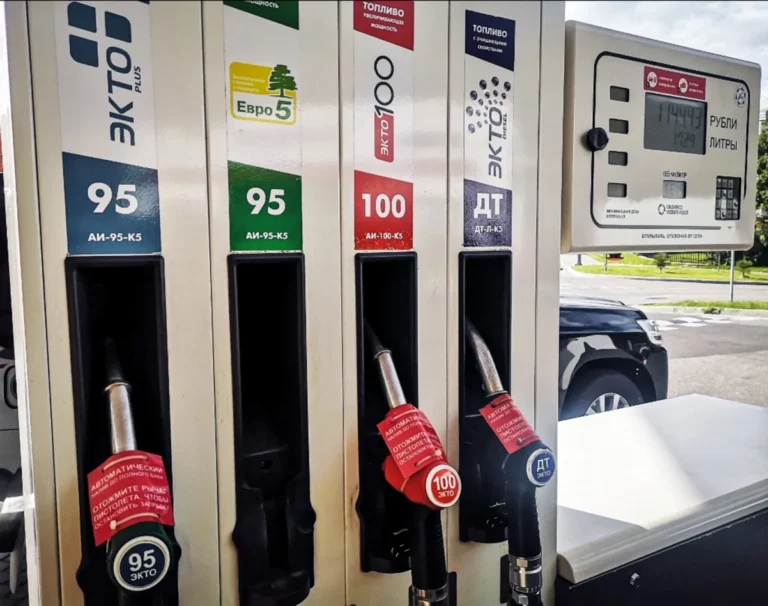
Fuel Prices in Ukraine: Why Gasoline and Diesel Will Not Become Cheaper Immediately After Oil Falls
President Donald Trump’s statement on ending the war with Iran and the possible reopening of the Strait of Hormuz has already affected the global oil market. Oil prices fell to their lowest levels since March 4, as market participants expect supplies to resume through one of the main sea routes for oil exports. Up to 25% of all oil reaching the global market previously passed through the Strait of Hormuz. Therefore, any threat to shipping in this area quickly pushes prices up, while signals of a possible return of tanker traffic, by contrast, bring quotations down. For Ukrainian drivers, this means that gasoline and diesel have the potential to become cheaper. However, fuel prices at filling stations do not mirror oil price movements immediately. The Ukrainian market depends on European quotations, but time passes between changes in oil prices, fuel purchases, delivery to the country, and the arrival of new supply at filling stations.
The main reason for the market’s slow response is fuel reserves that large chains purchased earlier at significantly higher prices. Some traders imported diesel fuel at around $1,100 per tonne. New batches may now arrive at about $920 per tonne. For large chains, this creates a difficult situation. If they sharply lower retail prices while still selling fuel from old, expensive reserves, they will effectively lock in losses. That is why large operators cannot instantly bring price boards in line with new quotations. Serhii Kuiun, director of the A-95 consulting company, explains that the market is already moving toward lower prices, but the process is uneven.
“Many small chains that do not build significant reserves are already selling diesel at 78–79 UAH per litre. That is, the market is already moving toward lower prices and this movement will continue.”
Smaller chains can respond more quickly because they do not accumulate such large volumes of expensive fuel. They sell through old reserves faster and shift to new batches. Large operators have broader networks, bigger reserves, and more complex logistics, so their pricing policies usually change more slowly.
Diesel has already become cheaper compared with the spring peak. In April, a litre of diesel at premium chains cost about 92 hryvnias. Now, at the same chains, the price is around 85 hryvnias. At some smaller chains, diesel is sold for 78–79 hryvnias per litre. This indicates that prices are already falling, but the decline is not the same at every station. The cost depends on when a particular chain purchased fuel, the size of its reserves, its margin, and how actively it is prepared to compete for customers. It may take at least two to three weeks for large chains to fully shift to new prices. During this period, old expensive batches will gradually be replaced by new supply purchased at lower quotations. Oleksandr Sirenko, an analyst at the Naftorynok consulting company, believes that the further decline may stretch over several months. In his view, the market will gradually move toward a new balance, while competition between chains will intensify.
“I think that now we will also spend several months moving toward fair prices. In addition, we should expect an escalation of marketing competition between chains. There will be huge discounts, giveaways, and additional litres of fuel.”
This means that part of the price decline may appear not only in changes to the numbers on price boards. Chains may use personal discounts, loyalty programmes, promotional offers, additional fuel litres, or special conditions for regular customers more actively.


At the same time, the fall in oil prices to around $80 per barrel does not yet mean that the market has fully stabilised. The Strait of Hormuz remains closed, and the full restoration of shipping will not happen immediately. Even if political agreements are reached, tankers, insurers, carriers, and traders need time to return to normal operations. An additional factor is the oil reserves of the United States, which, according to the available information, have reached their lowest level since 1983. This means that the global market remains sensitive to any new escalation in the Middle East. Dmytro Lioushkin, founder of the Prime group of companies, believes that the current Brent price of around $80 per barrel may be overly optimistic.
“The market is essentially bluffing, it is in deficit, and if, conditionally, the strait is not opened tomorrow, the situation will become very unpleasant and oil prices will soar above $100 per barrel again. Accordingly, fuel prices will rise.”
Such a scenario would mean that the current decline in prices could prove short-lived. If shipping through the Strait of Hormuz does not resume or the situation escalates again, global quotations may quickly return to much higher levels. In that case, the Ukrainian market will receive a new impulse toward higher prices.
Iran remains an important participant in the process, since the safety of traffic through the strait depends on its position. Future elections to the US Congress may become another political factor. Gasoline prices are traditionally a sensitive issue for American voters, so the stability of the oil market will matter not only to producers and traders, but also to political decisions. Under the baseline scenario, Ukrainian fuel prices may continue to decline in small steps by around 1–2 hryvnias per litre per week. However, this movement will depend on two conditions: whether low global quotations remain in place long enough and whether oil supplies through the Strait of Hormuz are restored.
For drivers, the key indicator will not be a one-time drop in oil prices, but how long that decline lasts. Only then will cheaper fuel batches be able to fully replace expensive reserves, and large chains will have the opportunity to lower prices without the risk of major losses.
About the Author

Related posts:
 Fuel Prices in Ukraine Have Stopped Rising, but It Is Too Early to Talk About Stable Decline
  Fuel prices are rising: how geopolitics, currency movements and winter are jointly pushing costs higher in Ukraine
  Fuel Prices Rise Without a Shortage: How Panic Spins Up Costs and What Is Really Driving the Market
  Fuel prices in Ukraine surge: what is happening on the market and whether there are grounds for suspicions