Russia–Iran Alliance: How Military Cooperation Is Reshaping the War in Ukraine and Threatening the US
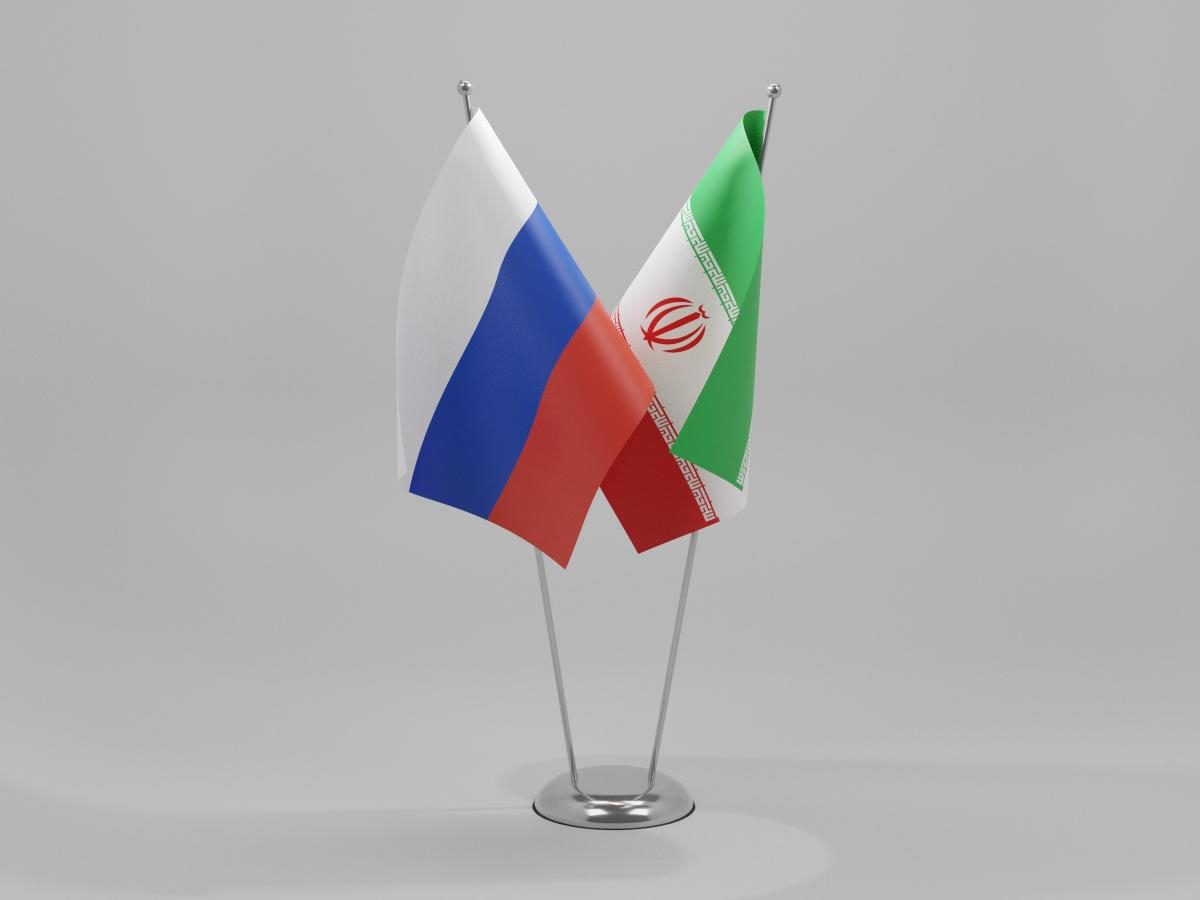
Relations between Russia and Iran are increasingly difficult to describe as a conventional partnership between two states temporarily aligned by shared interests. In Washington, the discussion is shifting toward a different definition the formation of a stable military-political axis that is shaping not only the war against Ukraine, but also developments in the Middle East. This is no longer about isolated arms deliveries or short-term cooperation under sanctions pressure. It is about deeper interaction, where Russia and Iran exchange technologies, battlefield experience, intelligence capabilities, and methods of bypassing international restrictions. That is why American lawmakers and foreign policy experts are increasingly treating Moscow and Tehran not as separate challenges, but as a connected power structure.
“Time for Action” analyzed the evolution of this alliance and its potential consequences. The main conclusion is clear Russia’s war against Ukraine has accelerated the convergence between Moscow and Tehran. Before 2022, their cooperation already had a long history: Russian weapons, shared strategic interests, the construction of a nuclear power plant in Iran, and political coordination on international platforms. But the full-scale invasion of Ukraine sharply changed the balance between them.
Iran, previously seen as a junior partner, became an indispensable supplier for Russia after the start of the large-scale war. The Russian military faced losses, depleted stockpiles, production constraints, and the need for cost-effective tools for mass attacks. Iranian drones provided exactly that: the ability to pressure Ukrainian air defenses, strike energy infrastructure, exhaust cities, and force Ukraine to use expensive defensive systems against cheaper targets. However, in recent years this cooperation has gone far beyond a simple formula of “Iran supplies drones Russia uses them.” Russia has accumulated a significant body of practical experience from the war in Ukraine: how to structure waves of attacks, how to overload air defense systems, how to combine drones with missile strikes, and how to adapt navigation systems to electronic warfare conditions. According to assessments by American experts and lawmakers, this experience is now being transferred back to Iran in the form of tactical guidance, upgraded components, and battlefield-tested solutions. This is what makes the alliance more dangerous. Russia and Iran are not only supplying each other with weapons. They are helping each other wage war more effectively. If Iran absorbs Russia’s experience in large-scale drone warfare, the implications extend beyond Ukraine. These tactics can be applied against Israel, U.S. military installations, Gulf states, and other regional targets. This creates a new level of risk. Previously, conflicts were often viewed separately: Russia’s war against Ukraine was one issue, Iran’s confrontation with the United States and Israel another. Now these theaters are increasingly interconnected. Methods tested on Ukrainian cities can appear in the Middle East. Sanctions evasion mechanisms can sustain both regimes. Intelligence or technical support to one partner can strengthen the other. This explains why the tone in Washington is becoming sharper. For the United States, the issue is no longer limited to supporting Ukraine. If Russia is indeed assisting Iran in targeting operations or providing information that could be used against American personnel, then the Russia–Iran relationship becomes a direct security threat to the United States.
One of the most revealing aspects of this situation is the evolving role of Ukraine. It is no longer seen solely as a recipient of aid, but as a key partner in defense innovation. Ukrainian forces and engineers are constantly confronting Russian-Iranian drones, developing interception methods, adapting air defense systems, creating new solutions, and rapidly sharing practical experience with allies. While Western countries are still forming responses, Ukraine is already operating with real battlefield-tested knowledge. This shifts the perception of Kyiv’s role. Ukraine is not only seeking protection it is generating knowledge that can protect others. Interceptor drones, detection methods, countermeasures against combined strikes, analysis of drone routes – all of this already has significance far beyond the Ukrainian battlefield.
At the same time, there is no full consensus within Washington regarding the scale of Russia’s role in Middle Eastern escalation. Some U.S. officials publicly avoid direct assessments or downplay the importance of the Russian factor. Intelligence agencies and the Pentagon have declined to comment on reports of possible Russian assistance to Iran, and the U.S. Secretary of Defense has stated that Russia and China are “not a factor” in the current conflict. This reflects caution within official institutions, which avoid conclusions without publicly confirmed details.
However, the tone in Congress is different. There is growing agreement that the Kremlin can no longer be treated as a potential partner in containing Iran. This effectively closes the earlier approach in which Russia could be engaged as a force capable of influencing Tehran in a constructive direction. If Moscow is involved in strengthening Iran’s capabilities, it cannot simultaneously act as a mediator to reduce that threat. This shift is significant. It indicates that Western policy is gradually moving away from treating crises separately and toward recognizing their interdependence. Russia’s aggression against Ukraine and Iran’s actions in the Middle East are increasingly viewed as parts of a broader confrontation, in which authoritarian regimes are not merely supporting each other diplomatically, but jointly improving their instruments of pressure. For Ukraine, this has a dual meaning. On the one hand, this perspective strengthens Kyiv’s argument: the war against Ukraine is not a local crisis that can be frozen or postponed without consequences for other regions. If Russia gains time and space to adapt, expand production, and deepen cooperation with Iran, it becomes more dangerous not only for Ukraine.

On the other hand, it means that the war is becoming part of a wider global struggle, where the stakes continue to rise. Russia began with Ukraine, but its military cooperation with Iran shows that the consequences of this aggression are already extending beyond a single front. What is being tested today against Ukrainian air defenses can tomorrow be used against an American base, an Israeli city, or infrastructure in Gulf countries. This is why support for Ukraine takes on a different dimension. It is not only about assisting a country defending itself against aggression. It is about containing a mechanism capable of spreading warfare, attack technologies, and destructive experience across regions. The Russia–Iran alliance is dangerous not only because of the number of drones, missiles, or components. Its primary strength lies in its ability to learn from war, rapidly transfer experience from one battlefield to another, and exploit weaknesses in the international system. This is why the response cannot be fragmented: Ukraine, the Middle East, sanctions, and defense technologies cannot be treated as separate issues. The current debate in the United States shows that this understanding is gradually taking shape. Despite internal political differences, the threat posed by coordination between Moscow and Tehran has created a rare moment of bipartisan alignment. And this is one of the key signals: Ukraine remains not only the frontline of its own war, but also of a broader confrontation with regimes that seek to make force the primary instrument of international politics.
About the Author

Related posts:
 What is known about a possible new meeting between Ukraine, the United States, and Russia
  Weapons Without Borders: Why Strikes on Drone Factories in Iran and Russia Matter Beyond the Battlefield
  Bitcoin and War in the Middle East: Why Crypto Reacts First and Where It Leads
  The Tourism Market Reacts to the War in the Middle East: Demand Falls and Holiday Prices Decline