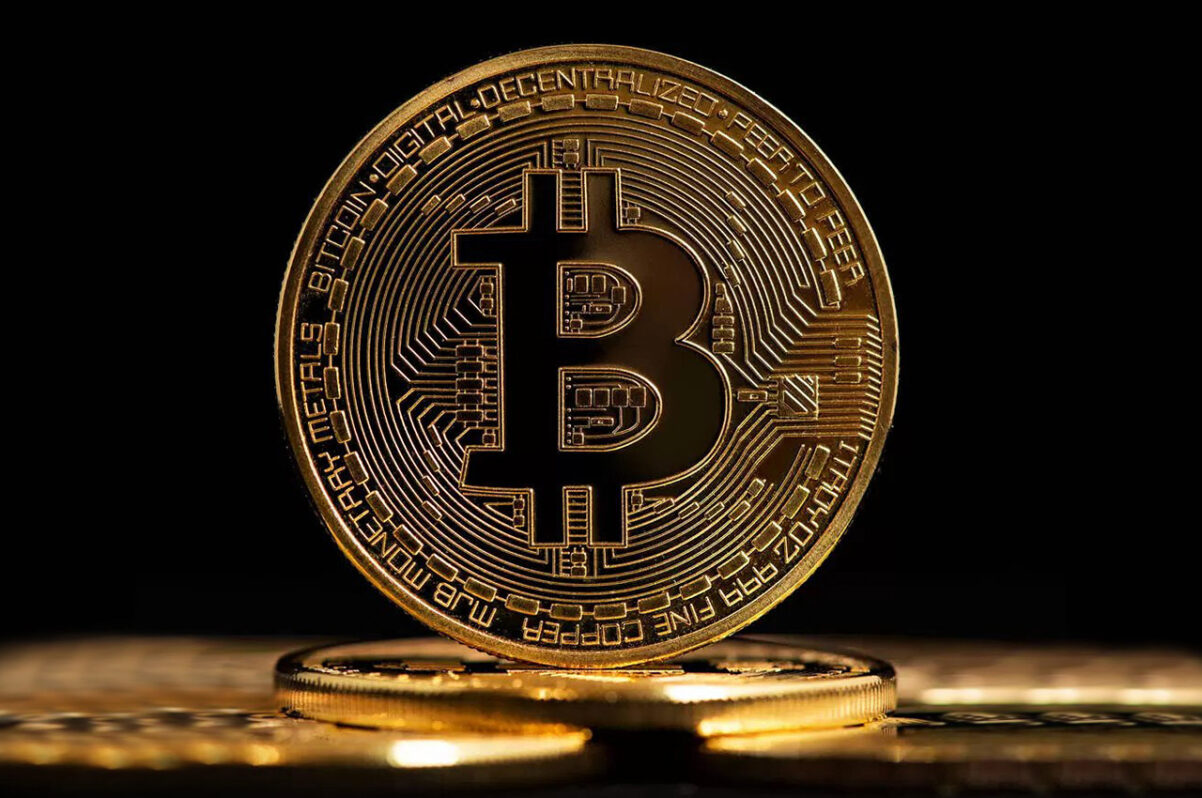
Bitcoin Surpassed $78,000: Why the Crypto Market Rose and What Is Holding Back Further Growth
Bitcoin has surpassed the $78,000 mark for the first time since early February, showing growth of nearly 4%. The upward move did not happen in isolation: other digital assets, including Ethereum and XRP, also strengthened. This synchronized reaction points to an external factor that has shifted investor behavior. The key trigger was the announcement of the full reopening of the Strait of Hormuz for commercial traffic. This is one of the most important transit routes for global trade, and any tension around it directly affects financial markets. A reduction in geopolitical risk in this area is seen as a signal for capital to return to riskier assets.
That is why cryptocurrencies reacted with growth. When risks decline, investors become more willing to move into volatile instruments in search of higher returns. In such conditions, Bitcoin traditionally becomes one of the first assets to attract additional demand. However, the price dynamics are not entirely straightforward. Despite the increase, the derivatives market continues to show a restrained sentiment. Funding rates for perpetual futures remain negative, indicating that part of the market is still positioned for a potential decline.
This is further confirmed by strong demand for protective instruments. Traders are actively buying options that hedge against a drop to $60,000 and even $50,000. Such behavior shows that even during a price increase, the market is not ruling out the possibility of a sharp correction. This creates a specific situation: the price is rising, but confidence in that movement is limited. Investors react to positive signals while simultaneously preparing for a reversal.
At the same time, the market is supported not only by geopolitical developments. Among the additional factors is large-scale Bitcoin purchasing by companies, including acquisitions worth billions of dollars within a short period. These transactions create underlying demand and help prevent sharp declines. Another element is the growing involvement of financial institutions. Plans by major players to launch crypto trading and recommendations to allocate a portion of investment portfolios to Bitcoin are shaping longer-term interest in the market. This is not an immediate driver, but it gradually changes how cryptocurrencies are perceived as an asset class.


Despite this, uncertainty remains a defining feature. The market clearly signals that a decisive breakout from the current range requires two parallel conditions sustained geopolitical stability and continued institutional demand. Without both, any upward movement may remain temporary. It is also notable that after reaching local highs, Bitcoin partially retreated and moved below its earlier peak levels. This once again confirms that the upward movement is not yet firmly established.
As a result, the market is in a state where positive news creates momentum, but does not yet form a stable trend. Geopolitical signals can quickly change the direction, while trader behavior shows that the risk of correction remains significant. Bitcoin has returned to levels not seen since early February, but this alone does not indicate the beginning of a new phase. The market is reacting, but not fully trusting the movement. This tension is currently shaping its behavior.
About the Author

Related posts:
 Bitcoin Without Panic: Why the Crypto Market Is Not Mirroring the Behavior of Stocks and Oil During War
  Bitcoin at a Point of Uncertainty: Is the Previous Market Scenario Repeating
  Crypto Outflow from Iran Surges 700% After Airstrikes What It Means for Bitcoin
  Can Bitcoin Become a Reserve Asset for Governments