Chinese Cars Disappeared From February’s Top 10, but Not From the Market: What Is Holding Sales Back at the Start of 2026
Time for Action looked into why in February none of the ten most popular new passenger cars in Ukraine was a Chinese model, even though 2025 was a record year for “the Chinese.” The picture does not look like a rollback or a loss of position. It looks more like a pause after a strong year and a change in conditions that hit precisely the segment where Chinese brands were strongest.
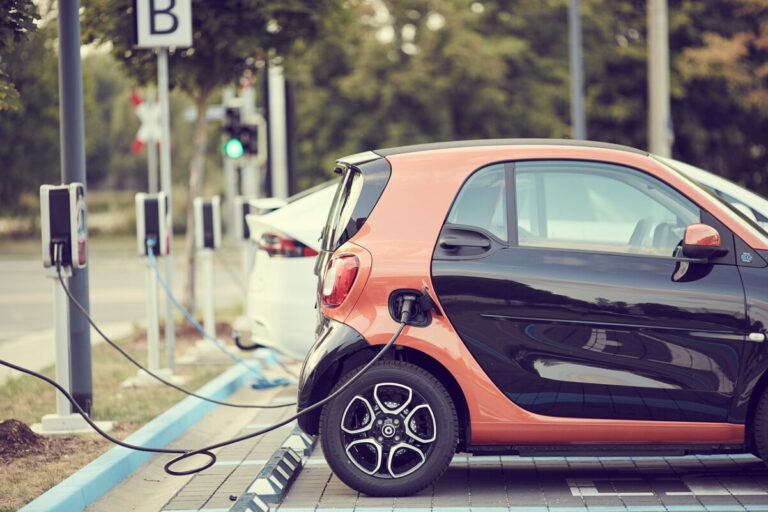
In 2025, Ukrainians purchased almost 40,000 new and used cars made in China. Looking more broadly, last year Ukraine recorded 278.6 thousand first registrations of used passenger cars and almost 80 thousand new ones. Among used cars, the share of China-made vehicles was small 5.1 thousand, or 1.8%. In the new-car segment, however, “the Chinese” became one of the key players: 20 thousand registrations, or 25% of the new-car market. This is a record and the culmination of three years of growth: 13.7% in 2023 (7.8 thousand), 16.4% in 2024 (10.8 thousand), and a jump to 25% in 2025. That is why the absence of Chinese models in February’s top 10 looks not like a systemic defeat but like a situational shift in the structure of demand. February’s sales leaders formed a significant share of the new passenger-car market, and most of them were crossovers. But the key question is not body styles. The key is that Chinese brands in Ukraine in recent years “pulled” primarily the electric-vehicle segment. And it was exactly this segment that took several hits at the start of 2026.
The first factor is a change in tax conditions. Most Chinese imports are electric vehicles, and from the start of the year VAT is charged on them. For buyers this is not a “small adjustment,” but a noticeable difference in the final price. And for a market that in 2025 accelerated on affordable EVs, it is a sharp slowdown. In the new-car segment, even a modest price increase can change behavior: some people delay a purchase, some switch to other models, some return to proven gasoline or hybrid options. The second factor is the “180-day rule” in China, which complicates the fast export of new cars for resale abroad. In practical terms, this breaks the old scheme where a car could be bought and quickly shipped to another market. Now it is not a matter of “found the car – imported it – sold it.” A time lag appears, making the flow less flexible. For the Ukrainian market this means lower speed and more complicated logistics precisely in the segment of new China-made cars.
The third factor is demand saturation at the end of 2025. The assessment voiced by Ostap Novytskyi, an analyst at the Institute for Automotive Market Research, is direct: demand for EVs was “avalanche-closed” at the end of last year, and a quick recovery should not be expected earlier than mid-2026. This is an important nuance. Ukraine’s EV market often works in waves: when there is a window of favorable conditions, buyers act fast. When the window closes, demand does not disappear forever, but takes a pause.
It is also worth fixing another layer reputational and global. Novytskyi calls 2025 “a new era of the Chinese.” This phrase is not about marketing. It is about the difference between two waves. The first wave of mass imports in 2005–2008 formed, for many, an image of cheap and not very reliable cars. Today’s Chinese manufacturers are presented as global players competing not only on price but also on technology. In this logic, several markers are cited: in 2025 BYD sold 4.6 million cars, surpassed Ford, and overtook Tesla in sales of pure electric vehicles; Geely entered the global top 10, while Toyota and Volkswagen keep leading positions. Novytskyi’s forecast is that global markets will not be “filled” with the old names but will split, and in the global top 10 half of the brands may have Chinese roots. This matters for Ukrainian buyers because it explains why a 25% share in the new-car segment in 2025 does not look like an accident. Chinese brands entered where the Ukrainian market was ready to accept new technologies faster than traditional “long” decisions. The most obvious example is EVs.


At the same time, in everyday buying there is a simple logic: as long as Chinese cars remain cheaper than European or Japanese analogues, they will gradually take market share. An additional driver could be rising fuel prices, which naturally renew interest in electric vehicles. In other words, the impact of fuel prices here is not abstract economics but direct motivation: when gasoline and diesel become more expensive, people look more closely again at cost per kilometer. A separate story is the dominance of crossovers among February’s leaders. Novytskyi rejects explanations based on weather or roads. His formula is simple: a crossover is an attempt to “have everything at once.” Dimensions like a hatchback or sedan, capacity like a wagon, a high seating position, and a sense that the car can handle worse conditions. This is not about real off-road driving, but about ownership psychology and driving comfort.
This is where an interesting comparison of two approaches to buying appears. Using the example of the Toyota RAV4, Novytskyi speaks about thinking in terms of preserving capital: it is an “investment with zero risk.” By contrast, a Chinese electric crossover is described as a modern gadget: emotions, design, savings “here and now,” but with acceptance of the risk of faster depreciation. In real life these are two different types of buyers. The first pays for predictability. The second pays for technology and the feeling of novelty, but accepts that the market can value such a purchase more harshly. The conclusion looks like this: the absence of Chinese models in February’s top 10 does not erase the 2025 record and does not mean Chinese brands have “fallen out of the game.” At the start of 2026 three things worked at once: VAT on EVs, China’s export limitation through the “180 days,” and demand saturation after the buying wave at the end of last year. If these factors do not deepen, the market will not so much turn away as reformat. And a return of active demand, according to the assessment, is more logical to expect closer to mid-2026.
About the Author

Related posts:
 New Car Market in Ukraine: Stability, Electric Vehicles, and Crossover Dominance
  Ukraine’s Used Car Market in 2025: Import Records, Electric Shift, and Tax Expectations
  VAT on electric vehicles: how a tax decision reshapes the market and pushes it into the secondary segment
  The Electric Vehicle Market in Ukraine: Growth Amid War and What Is Holding Back Infrastructure Development