Druzhba Pipeline Dispute: How the EU, Hungary, and Slovakia Pressure Ukraine Over Inspection and Transit
Time for Action examined why damage to the Druzhba oil pipeline after a Russian strike turned into a political conflict between Ukraine, Hungary, Slovakia, and EU institutions, and how a technical repair issue became leverage against Kyiv at a moment when Europe is especially sensitive to any disruption in energy supplies.
After the January 27 strike on a critical infrastructure facility of the Naftogaz group in Brody, in Lviv region, oil transit through Druzhba stopped, and Ukraine officially warned about it. From that point, the dispute began to unfold not so much around the fact of the stoppage, but around who controls the evidence base and the verification procedure.
Hungary and Slovakia say Ukraine is delaying repairs and exaggerating the extent of the damage. From their side, this is framed as a story about an alleged political decision by Kyiv to block oil deliveries, even though, they argue, there are no technical or operational reasons for the stoppage. This line is reinforced by a public move from Hungary’s prime minister Viktor Orban, who released a letter to European Commission president Ursula von der Leyen and directly accused Ukraine of blocking transit. Orban also claims his position is confirmed by recently published satellite data, and that Ukraine’s motivation, in his view, is linked to influencing Hungary’s election campaign. In response, Ukraine insists the infrastructure was seriously damaged as a result of a Russian airstrike. Naftogaz head Serhiy Koretskyi describes the consequences as large-scale: after the strike, a 75,000-cubic-meter oil tank caught fire, the blaze was extinguished for ten days, and cables, transformers, and the leak-detection system were damaged. Separately, it is emphasized that this involves the largest oil tank in Europe, with a diameter compared to the size of a football field, and that a full assessment of losses takes time. Ukrainian authorities say evidence of the destruction has been provided to European partners, and explain the refusal to grant inspectors access by security considerations. An additional argument is practical: repair work in an area under constant shelling is dangerous.
The demand for access by an independent mission has become the central point for the EU. Brussels argues that verification is necessary because without it it is impossible to publicly confirm either the scale of the damage or the progress of repairs. Against this backdrop, wording appears in the EU suggesting Ukraine is creating a problem for itself by giving opponents grounds to block major decisions. One senior EU diplomat said Ukraine “scored an own goal” by giving Hungary a reason to block a 90 billion euro EU loan. In this logic, the lack of transparency becomes no less important than the damage itself, because it allows certain EU capitals to shift a technical issue into political pressure.
It is notable that, according to the available information, the inspection issue was raised at the highest level. European Commission president Ursula von der Leyen and European Council president Antonio Costa, during a visit to Kyiv, also asked for an independent mission to assess the damage, but received a refusal. In parallel, the European Commission positively assessed Orban’s initiative to send an inspection mission, stating it is ready to take such findings into account. This effectively means the EU is looking for an instrument to “close” the dispute over facts, but at the same time this approach creates a trust problem for Ukraine, which points to security risks. The conflict then moved beyond diplomacy into the realm of reciprocal restrictions. In response to the transit stoppage, Hungary and Slovakia halted diesel supplies to Ukraine and said they would not resume them until Ukraine repairs Druzhba, which was damaged by the Russian strike. Slovakia’s prime minister Robert Fico said that from February 23 Slovakia would stop providing Ukraine with emergency electricity assistance because Kyiv had not restored oil supplies to his country. Fico was backed by Orban, who said Hungary would do the same, but later Hungary’s foreign minister Peter Szijjarto said “special caution” is needed on the question of supplying electricity to Ukraine in order not to harm Hungarians in Zakarpattia. Ukraine’s Foreign Ministry called the ultimatum-style statements by Hungary and Slovakia, which threaten to stop energy supplies and demand restoration of Russian oil transit through Druzhba, energy blackmail, and urged that such demands be directed at the Kremlin, not Kyiv.
All this is happening at a moment when energy markets are more nervous than usual. It is noted that the dispute intensified amid rising energy prices after US and Israeli military actions against Iran, which affected global oil and gas supplies. Under such conditions, any transit story immediately becomes politically charged, and countries dependent on specific routes gain an additional incentive to act harshly.
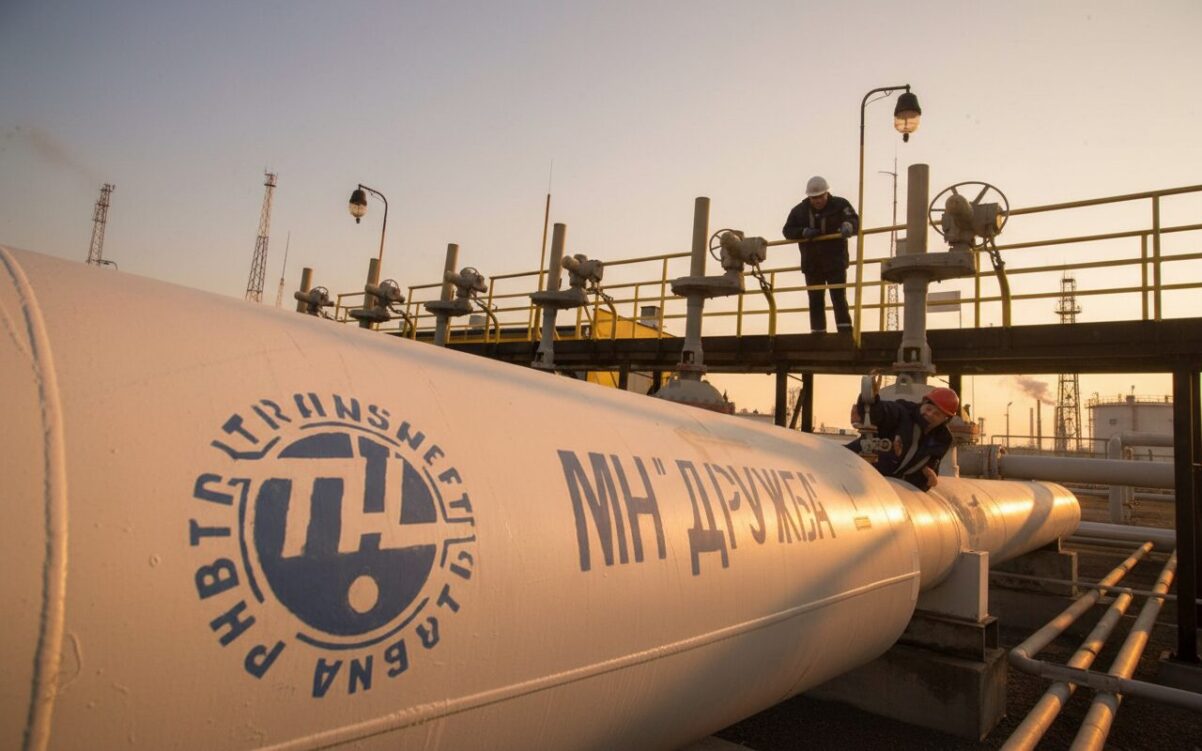
To understand what is at stake, it is important to remember that Druzhba is one of the largest trunk oil pipeline systems in the world, built in Soviet times to supply Russian oil to Eastern and Central Europe. The northern branch runs through Belarus and Poland to Germany, while the southern branch runs through Ukraine to Slovakia, the Czech Republic, and Hungary. In practical terms, this means the dispute over the Ukrainian section automatically becomes a dispute over certain EU members’ energy dependence on Russian oil, and therefore about those countries’ political positions regarding the war.
A statement by a Ukrainian official adds another line that makes negotiations more difficult: the issue is not only repair work, but also whether Ukraine, during wartime and without a ceasefire agreement, should urgently restore transit of Russian oil to countries that Kyiv calls “friends of Russia.” This argument sharply raises the political temperature because it moves the discussion from the technical plane into an ethical and security one, while the EU in this structure seeks to return to verifiable facts through an inspection mission. Two processes are now visible in parallel. The first is a struggle for the legitimacy of the narrative: who convinces Brussels that they are acting responsibly. The second is the use of energy as an instrument of pressure: Hungary and Slovakia demand that transit be restored and tie their decisions on fuel and electricity to that outcome. For Ukraine, the problem is amplified by the fact that the dispute is unfolding not in abstraction, but alongside concrete European financial packages that can be blocked.
About the Author

Related posts:
 Slovakia Threatens to Suspend Emergency Electricity Support to Ukraine
  Hungary and Slovakia Suspend Diesel Supplies: Will Ukraine Face Fuel Shortages?
  Why Relations Between Kyiv and Budapest Have Reached a Breaking Point
  Will the U.S. transfer Russian assets to Ukraine? Trump’s new strategy and prospects for military aid