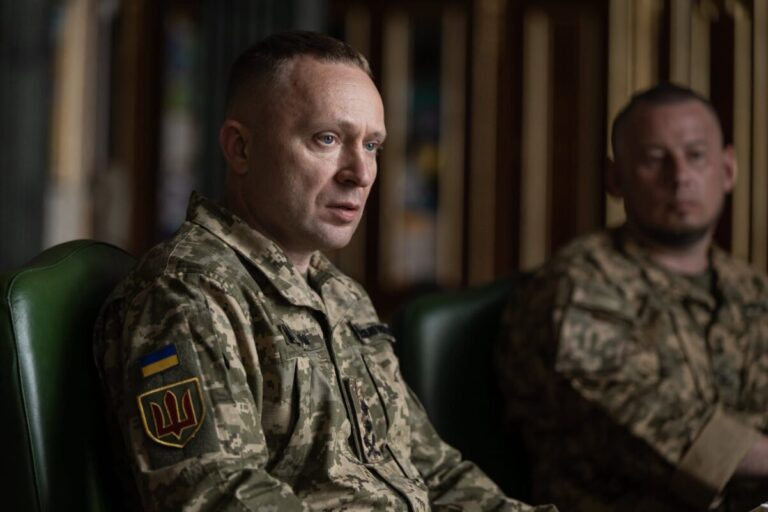
Zelenskyy’s Letter to Putin: How Ukraine Is Seizing the Initiative in the Peace Process
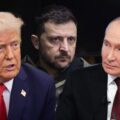
Volodymyr Zelenskyy’s open letter to Vladimir Putin became not only a direct proposal for a meeting. It is an attempt to change the political framework of negotiations and show who exactly is avoiding a real end to the war. Ukraine proposes a clear date, a ceasefire for the duration of the talks, the possible participation of the United States and Europe, monitoring of the silence, a prisoner exchange under the “all for all” principle, and the return of civilians and children. In response, the Kremlin again shifts the conversation into the field of a humiliating and unacceptable format for Kyiv: if Zelenskyy wants a meeting, he should come to Moscow.
Time for Action analyzed that the main strength of this letter is not in emotion, but in calculation. Zelenskyy publicly removes Russia’s ability to keep promoting the claim that Ukraine is supposedly disrupting negotiations. Kyiv demonstrates its readiness to speak directly, but not on terms of capitulation and not in the setting dictated by Moscow. That is why the letter contains not general calls for peace, but specific elements of a possible negotiation framework. The toughest part of the address is directed personally at Putin. Zelenskyy speaks not only about the war as Russia’s state policy, but also about the personal responsibility of its leader:
“If you personally, in your thoughts, do not come to the idea that it is time to end this war, Ukraine will continue to fight for its existence. We will have those who support us. But you will also have to fight much more for your existence not Russia’s, but your personal one. And this is not a threat from me or Ukraine. These are facts of Russian history that you know well: when Russia gets tired, changes happen. We can work toward such fatigue. You can stop your war”
This quote is important because Zelenskyy is addressing not only the Kremlin as an institution. He is speaking to Putin as a person whose power depends on the ability to control the war, society’s fatigue, the elites and the consequences of his own decisions. There is a subtle political signal in this dragging out the war may create a problem not only for Ukraine, but also for Putin’s personal position inside Russia.
Zelenskyy also proposes setting a “clear date for a meeting” and allows for the participation of a wider circle of actors Europe and the United States. This is important because Kyiv does not lock the process into a bilateral format, where Russia traditionally tries to impose on the stronger side the right to dictate terms. The participation of Western partners may give the talks additional guarantees, as well as strengthen control over the implementation of agreements. The key proposal is a complete ceasefire for the duration of the negotiations. Zelenskyy says directly that the current front line should become the point from which diplomacy begins. This is fundamentally different from the Russian approach. Moscow wants Ukraine to first make territorial concessions, including on the entire Donetsk region, and only then talk about a ceasefire. Kyiv proposes a different logic first real silence, then negotiations.
“This is standard practice, which is now confirmed by the circumstances around Iran as well. An attempt to establish real silence is the best start to begin speaking to each other. We believe that this will be not just an attempt, but a real ceasefire if you want it”
This wording contains the main test for the Kremlin. If Russia truly wants negotiations, it can agree to a ceasefire and move on to a conversation about a political settlement. If not, it will again start talking about conditions, venues, statuses, Donbas, the “spirit of Anchorage” and other constructions that allow it to drag out time.
The Kremlin’s reaction was expected. Dmitry Peskov said that Putin would be informed about the letter, and also effectively repeated the old proposal Zelenskyy can come to Moscow. Later, he confirmed that Putin had already been briefed on the address.
“He has been briefed”
The Kremlin did not answer the question about Putin’s reaction.
“I will not get ahead of myself”
Such caution shows that Moscow is not ready to immediately give a substantive response. But the proposal to meet in Moscow is itself a political maneuver. For Ukraine, such a format is unacceptable for both security and statehood reasons. The Kremlin understands this. Therefore, such an answer gives Russia the opportunity to pretend it is ready for a meeting while offering a condition that Kyiv cannot accept.
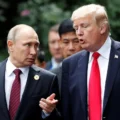
This is exactly what Russian tactics are built on. Moscow does not say directly “we do not want negotiations.” It sets conditions that either humiliate Ukraine, or force it to agree to preliminary concessions, or move the process into an endless discussion of venues. In this way, the Kremlin tries to preserve the appearance of diplomatic activity without agreeing to the main thing a real ceasefire without prior Ukrainian capitulation. The US position in this situation strengthens Ukraine’s move. Donald Trump reacted positively to the idea of a meeting between Zelenskyy and Putin:
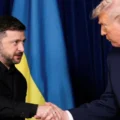
“… I’m glad that they may be talking about a meeting. I’m glad we had something to do with it. I think it would be great if they met. They should do it”
For Kyiv, this is important because support from the American president makes the Ukrainian proposal stronger in the eyes of the international audience. If Washington publicly considers the meeting the right step, it becomes harder for the Kremlin to explain refusal by claiming that Ukraine supposedly does not want to talk. Especially after Trump denied the existence of an agreement with Putin on handing all of Donbas to Russia.
At the same time, the US House of Representatives approved a large-scale package of aid to Ukraine and sanctions against Russia. The adopted law provides more than $1 billion in aid to Ukraine, up to $8 billion in military loans, support for reconstruction, assistance to the Baltic allies, the unblocking of lend-lease and new sanctions against Russia’s financial, energy, mining and government sectors. This creates additional pressure on Moscow a diplomatic refusal may be combined with new sanctions and stronger military-political support for Ukraine. No less important was the assessment by US Secretary of State Marco Rubio. He directly called Russia’s invasion a strategic catastrophe for Moscow:
“I do not think that at this stage there is any doubt among most observers in the world, and I would say among some people inside Russia, that the invasion of Ukraine has become a strategic catastrophe for them”
This statement strongly reinforces the logic of Zelenskyy’s letter. Ukraine tells Putin: the war is exhausting not only Ukraine, but also Russia. At the same time, the United States publicly records that Moscow’s initial military goals have not been achieved, and that the campaign itself has become a strategic defeat for Russia. Together, this creates a new diplomatic position: the Kremlin can no longer sell the war as a successful and controlled process without serious losses for itself.
A separate part of the letter concerns humanitarian issues. Ukraine is ready for a prisoner exchange under the “all for all” principle. It also raises the issue of returning civilians and children taken away during the war. This is another important element, because negotiations are not reduced only to the front line. Kyiv shows that a real end to the war must include the people whom Russia is holding, has taken away or has torn from Ukraine. In this sense, Zelenskyy’s letter is not a gesture of weakness. On the contrary, it puts the Kremlin in a difficult position. If Putin agrees to a meeting on acceptable terms and to a real ceasefire, he admits that the war can no longer continue in its previous mode. If he refuses, Ukraine receives clear proof for its partners that it is Moscow that is blocking diplomacy. That is why analysts speak of a deliberate trap for the Kremlin. Zelenskyy offers a way out while understanding that Putin may reject it. But in that case, the refusal becomes political proof. It can be shown to Americans, Europeans, the countries of the Global South and Russians themselves the problem is not that there is no format, venue or mediator. The problem is that Putin is not ready to end the war without Ukraine’s defeat.
Ukraine is trying to seize the initiative in the peace process and force the Kremlin to respond not with propaganda formulas, but with a concrete decision. Kyiv proposes a date, silence, monitoring, an exchange, the return of people and the participation of partners. Moscow, in response, again talks about Moscow as the meeting place and gives no clear answer on the main points. This does not mean that peace is close. But it does mean that Ukraine is forming a stronger diplomatic position. It shows readiness for negotiations without abandoning its statehood, territorial position and security. And the Kremlin receives an unpleasant choice either move toward a real conversation about a ceasefire, or increasingly clearly demonstrate that negotiations for it are only an instrument for dragging out the war.
About the Author