EU 90 Billion Euro Loan for Ukraine Is Blocked as Britain Is Considered for Arms Procurement
The European Union and the United Kingdom are negotiating the possibility of Ukraine purchasing British weapons using a €90 billion loan, and the very fact of these talks already reveals a great deal. Formally, this is about defense financing, procurement mechanisms, and access to weapons. But a closer look shows that this story has long moved beyond purely military support. It has become a test of European unity, an indicator of whether the EU can implement already agreed decisions, and an example of how a single country can slow down assistance to a nation at war.
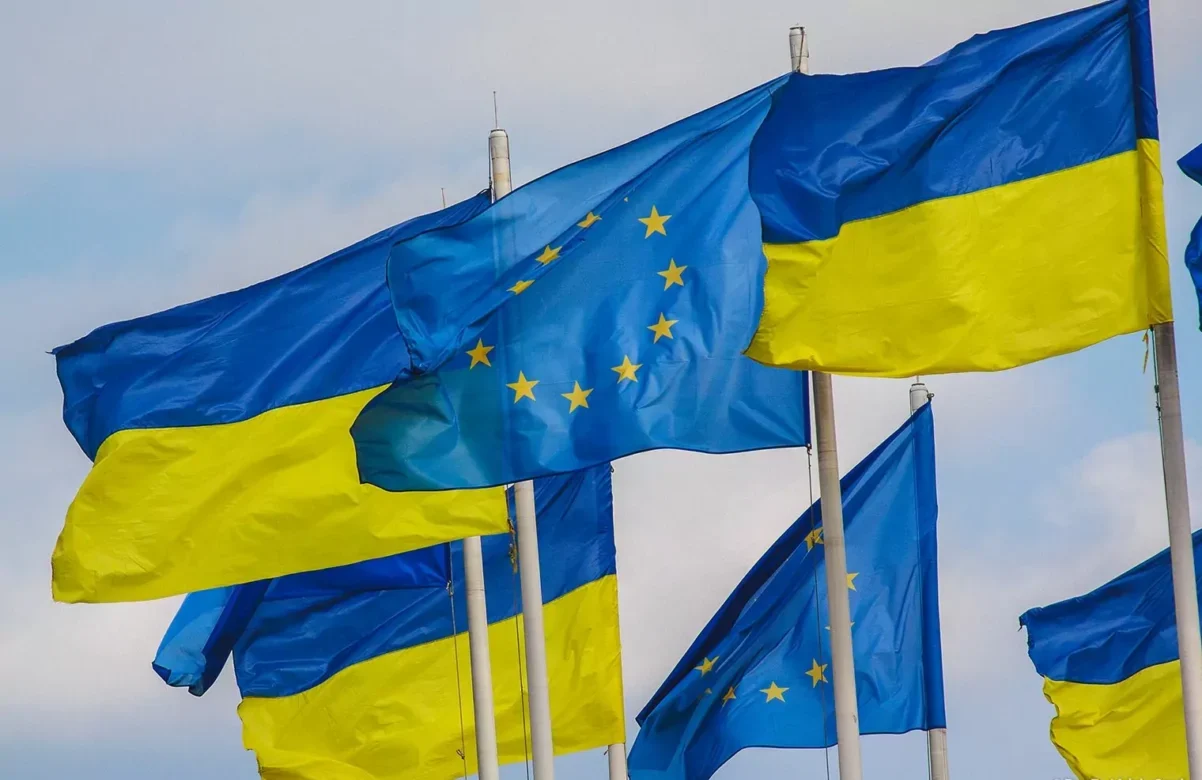
“Time for Action” analyzed the situation, and it becomes clear that a complex structure has formed around the €90 billion loan. It brings together Ukraine’s needs, internal disputes within the EU, relations with the UK, and Hungary’s position, which has effectively blocked the release of funds. This is why the discussion about the UK’s participation in weapons procurement appears not as a technical issue, but as an attempt to find a workaround, or at least a more flexible path, in a situation where a formally approved mechanism is not functioning. Politically, this loan was agreed in Europe back in December 2025. Its volume is €90 billion for 2026 and 2027. At the end of February 2026, the President of the European Parliament, Roberta Metsola, signed the document authorizing its allocation. The plan is for these funds to cover roughly two-thirds of Ukraine’s financial needs through the end of 2027. This is not limited to defense. The funds are intended to support essential government services, maintain Ukraine’s defense, protect the shared security and freedom of Ukraine and the EU, achieve a lasting peace, and secure Ukraine’s future in Europe.
On paper, this looks like a large-scale and strategic decision. In reality, the funds have not yet been released. The reason is simple and revealing: the mechanism requires approval from all EU member states, and Hungary is blocking the decision. This means the issue is not a lack of political statements, not a lack of understanding of Ukraine’s needs, and not a technical inability to create a support instrument. The issue is that the EU’s decision-making system remains vulnerable to a veto by a single country. Against this background, the ongoing negotiations between the EU and the United Kingdom take on particular significance. They concern the possibility of Ukraine purchasing British weapons using this loan. For London, this is not only about supporting Kyiv, but also about participating in a broader European defense architecture. Previously, the EU and the UK failed to agree on London’s participation in a €150 billion European defense fund due to disputes over access fees. The current talks are partly seen as an attempt to resolve or at least soften these disagreements in practical terms.
A representative of the European Commission, Thomas Regnier, stated that the sides are holding constructive discussions regarding full UK participation in procurement within the framework of the loan. This is an important formulation. It means Brussels does not rule out a scenario in which the British defense sector becomes a full part of the supply chain for Ukraine. For Ukraine, this is also crucial. The broader the range of suppliers, the greater the flexibility in choosing weapons and the lower the dependence on internal bureaucratic or political barriers within a single bloc.
However, the current rules of the loan impose restrictions. Ukraine can purchase weapons outside the EU only if such equipment is unavailable within the Union or if there is an urgent need. This makes the discussion about UK participation particularly sensitive. In practice, the question is whether the EU is ready to interpret its own mechanism more flexibly and acknowledge that in wartime, speed, availability, and the range of weapons can be as important as the origin of the supplier. In this context, Hungary’s blocking position appears even more striking. Budapest has directly linked its decision to the issue of oil transit to Hungary via the Druzhba pipeline. On February 20, Hungarian Foreign Minister Péter Szijjártó stated that his country would block the loan to Ukraine until oil transit is restored. This statement followed a Russian strike on the Druzhba pipeline in Brody in western Ukraine on January 27, 2026. Ukraine’s foreign ministry described these accusations as illogical.
This is one of the most critical points in the entire situation. Financial support for Ukraine, which is meant to address defense, state stability, and European security, has become tied to an energy issue that arose after a Russian strike on infrastructure within Ukraine. This makes the situation look less like a technical dispute and more like political pressure, where Ukraine’s urgent needs are pushed into the background. This became even more evident on March 3, 2026, when Viktor Orbán sent a letter to European Commission President Ursula von der Leyen. In it, he argued that Ukraine’s refusal to reopen the Druzhba pipeline was politically motivated and even linked it to alleged interference in Hungary’s election campaign. Such statements shift the conflict into a broader political confrontation between Budapest and Kyiv.
The EU’s response indicates awareness of the risks. Brussels has discussed the possibility of providing Ukraine with financial assistance to repair the pipeline infrastructure. This appears to be an attempt to remove at least the formal reason for Hungary’s blockade. However, even this willingness to seek compromise has not changed the main fact: the decision remains blocked. All of this creates a complex picture. On one hand, the EU has already agreed on a major support instrument and publicly demonstrates political will to assist Ukraine. On the other hand, the mechanism is not functioning due to internal resistance from a single member state. This is why negotiations with the UK appear to be part of a broader effort to adapt to this new reality. If delays within the EU become systemic, Brussels is forced to look for ways to maintain the pace of military support. The fact that UK participation is now being discussed specifically within the framework of this loan shows another important shift. European security is increasingly extending beyond the formal borders of the EU. The UK, despite Brexit, remains a key defense partner. If the European support mechanism for Ukraine begins to rely on British defense capabilities, it suggests that the practical needs of war are pushing cooperation forward faster than political disputes can be resolved.

At the same time, Brussels does not rule out a change after Hungary’s parliamentary elections scheduled for April 12. European officials acknowledge that if Orbán retains power, his position could soften, potentially unlocking the loan. The very fact that such expectations exist shows that part of the EU’s strategy is based not on immediate compromise, but on waiting for a political shift. For Ukraine, this approach is problematic. War does not pause for election cycles in EU member states. The need for defense funding and maintaining basic state functions does not diminish because one government uses its veto as leverage in another dispute. This is why the delay of the €90 billion loan is not just a bureaucratic episode. It demonstrates how vulnerable even major, politically supported decisions can be when there is no unified discipline within the Union on security matters.
At this point, the situation around the loan has become about more than the fate of a single financial package. It raises a broader question of whether the European Union can act as a strategic player, capable not only of agreeing on decisions but also of implementing them. It also highlights whether the United Kingdom can become a practical part of this defense framework. And finally, it shows how long a single country can hold up a decision that has already been recognized as necessary at the European level. The main conclusion is clear. The €90 billion loan for Ukraine is not stalled due to a lack of resources or political declarations. It is stalled because of an internal conflict of interests within the EU. In this situation, negotiations with the UK are not just a technical discussion about procurement, but one of the few ways to maintain flexibility and prevent formally approved support from turning into another unfulfilled promise.
About the Author

Related posts:
 The EU Between Financial Support for Ukraine and Political Blockages
  The IMF Decision on $8.1 Billion for Ukraine and Its Implications for the State Budget
  Conflict over money, oil and politics: what lies behind the incident between Ukraine and Hungary
  Ukraine’s $800 billion recovery plan: what this document is and why it is not about money yet