Drones Over the Baltics and Moscow’s New Rhetoric: How Airspace Incidents Turn Into a Tool of Pressure
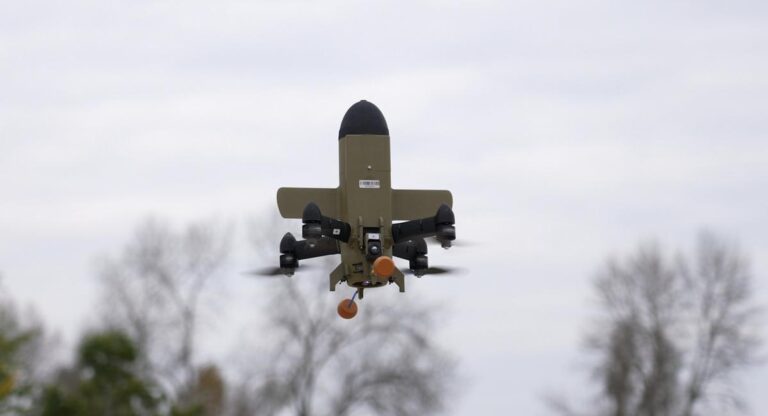
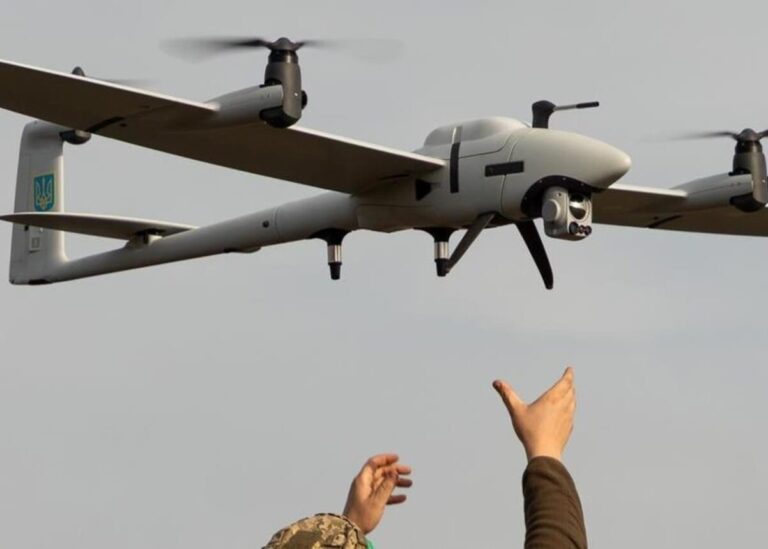
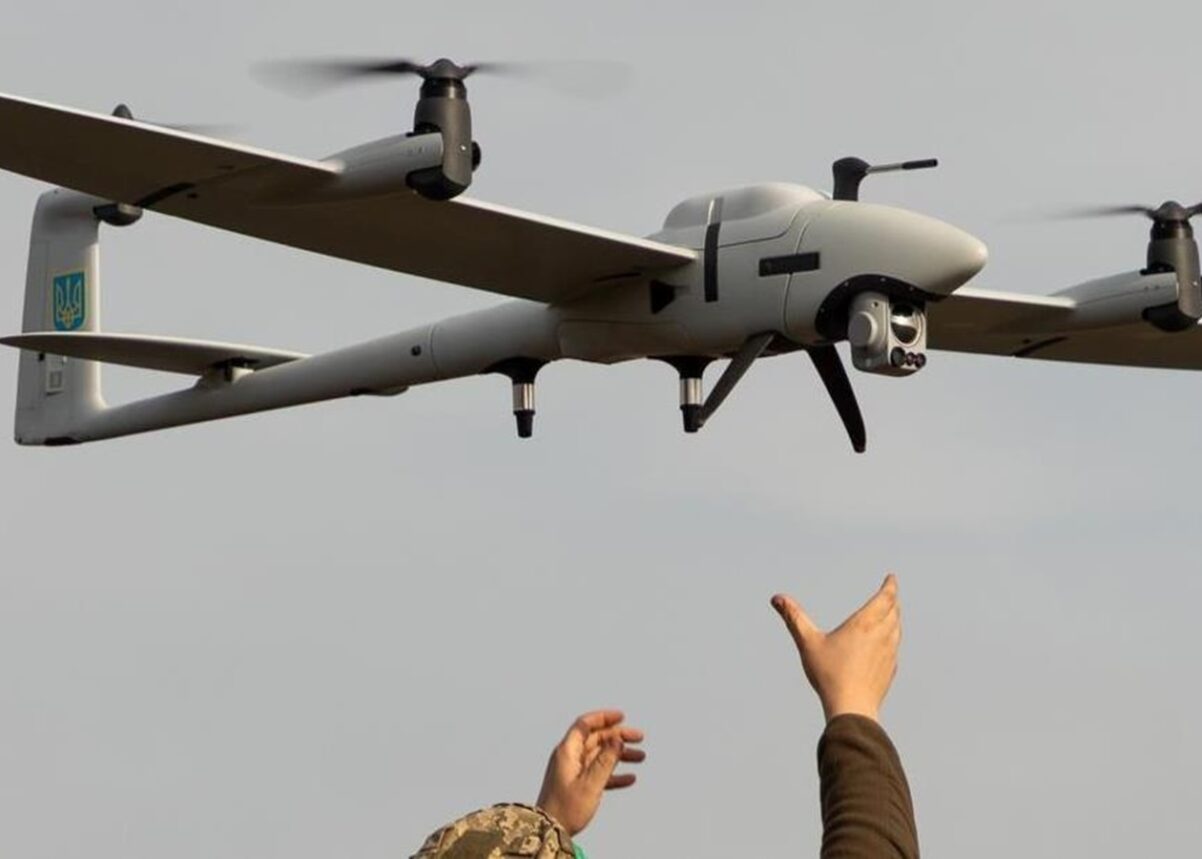
March and early April 2026 showed how isolated incidents can quickly turn into a political signal. Time for Action has analyzed how the appearance of Ukrainian drones in the airspace of Baltic countries became the basis for a new wave of statements from Moscow and why these statements go beyond the events themselves.
After a series of cases where drones were detected over Finland, Lithuania, Latvia, and Estonia, Russia moved to open warnings. The Kremlin stated possible consequences if the use of EU airspace for attacks on Russian infrastructure is confirmed. These statements appeared against the backdrop of strikes on oil facilities along the Baltic coast, through which a significant share of Russian oil exports passes. The tone of the statements quickly became harsher. The Russian side began to speak directly about a response if the Baltic states do not change their position. This marks a shift from cautious wording to direct pressure aimed not only at individual countries but at the entire European Union.
Ukraine, for its part, responded in a restrained manner. The incidents are explained by technical factors, particularly the influence of Russian electronic warfare systems that can alter the course of drones. It is emphasized that there was no deliberate direction of drones toward European countries. This position allows the issue to be framed as a technical risk rather than a political action that can be fully controlled in wartime conditions. The Baltic states and Finland have chosen a careful yet pragmatic line of behavior. On the one hand, they do not accuse Ukraine and recognize its right to self-defense. On the other, they stress that they have not provided their airspace for attacks and recommend avoiding routes that may pass near their borders. This approach allows them to maintain support for Ukraine while avoiding accusations of involvement. This model reflects an attempt to maintain a balance between security and political commitments. It reduces the risk of direct involvement in the conflict while preserving stable relations with Kyiv. In a situation where any sharp decision could have serious consequences, such a strategy appears as cautious as possible.
At the same time, another dimension is forming the informational one. Russian statements are not limited to reacting to specific incidents. They build a broader narrative in which EU countries are portrayed as participants in military actions against Russia. This approach gradually shapes the perception of an external threat that extends beyond Ukraine. This narrative operates on several levels. Domestically, it creates justification for further actions by presenting the confrontation as expanding. Externally, it aims to create doubts among Ukraine’s partners and introduce tension between Kyiv and European allies. Within this logic, even accidental incidents can be used as elements of a broader information campaign.
An important factor in this situation is uncertainty. Drones can indeed deviate from their course due to air defense systems or other technical reasons. This creates a space where it is difficult to draw a clear line between accident and intent. It is precisely this uncertainty that becomes a tool for political messaging. The European Union is responding with restraint. In Brussels, it is emphasized that these are statements, not actions. At the same time, it is underlined that any attack on a member state would be considered an attack on the entire Union. This signals readiness for a collective response without escalating the situation in the absence of a direct threat.
Such a position demonstrates an effort to avoid escalation while maintaining clear boundaries. The EU does not treat the statements as an immediate danger but acknowledges possible scenarios. This allows it to retain control without reacting to provocative signals. Taken together, these factors show that the situation goes beyond isolated incidents. Airspace is becoming another dimension of confrontation, where technical occurrences intertwine with political messaging. In such conditions, even minor events can acquire disproportionate significance.

Recent developments indicate a shift in approach. The rhetoric is becoming harsher, and the informational pressure more systematic. At the same time, no military actions beyond Ukraine have been recorded. This suggests that the situation remains in the realm of signals rather than actions. However, the very emergence of such signals matters. It creates an environment in which any incident can be used for further escalation. And this is what makes the situation unstable not the events themselves, but their interpretation. At this stage, balance remains the key factor. The Baltic states are trying to avoid being drawn into the conflict, Ukraine is maintaining partner support, and the EU is preventing escalation. Meanwhile, Russia is steadily increasing the intensity of its rhetoric, creating a foundation for possible future steps. This confrontation is unfolding not only in the military domain, but also in the sphere of interpretation. And it is precisely there that the limits of how far this situation can go are being defined.
About the Author

Related posts:
 Drones over Russia: Why Ukraine has started to go deep – and what it changes
  Lithuania Closes Its Border with Belarus: A New Dimension of Hybrid Threats for the Baltics
  A New Round of Sanctions and Diplomatic Pressure: How Ukraine Is Strengthening the International Front Against Russia
  Russian Drones over Poland and “Zapad-2025” Exercises: How NATO Reacts to a New Challenge