Political Target: What the June 6 Attack on Kyiv Really Means
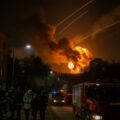
On the night of June 6, Russia launched one of its most massive airstrikes on Ukraine to date. According to official reports, 452 aerial threats were fired — 407 Shahed drones and 45 missiles of various types. Ukraine’s air defense shot down 406 of them. It’s a record. But behind the numbers lies something deeper: a message, a demonstration of power — and possibly, preparation for a targeted strike.
More Than Retaliation
The Kremlin officially claimed the attack was a “response” to Ukraine’s Operation Spider Web, during which over 40 Russian military aircraft were reportedly destroyed. Yet the real targets of the strike were Kyiv and several other peaceful cities.
Kyiv, Lviv, Ternopil, Poltava, Lutsk — all came under fire. Critical infrastructure in the capital was damaged, and three rescuers were killed. Dozens were injured. But beyond the destruction, the direction of the assault raises questions: drones and missiles were launched toward the government district and left-bank neighborhoods. At the same time, Moscow’s public messaging shifted — from targeting Ukraine to naming President Zelensky personally.
Political Rhetoric — or Instruction?
Just hours before the attack, Russian senator Andrey Klishas publicly stated that Moscow “may recognize Zelensky as a terrorist,” adding that “it’s only a matter of time.” Formally, it’s a political statement. In practice — a legal pretext.
This wasn’t an isolated comment. Kremlin-aligned Telegram channels have begun openly discussing Zelensky as “Target No. 1,” “the face of the regime.” In Russian political culture, such rhetoric often precedes covert action — not mere words, but a narrative foundation for future operations. Russia used similar tactics in Chechnya, Syria, and occupied parts of Ukraine.
When Russian officials label someone a “terrorist,” it’s not a slur. It’s a designation. And it changes the rules of engagement.
Why Now?
This convergence of propaganda and missile strikes is likely not coincidental. Ukrainian lawmaker and military analyst Roman Kostenko warned that Russia might be preparing a direct strike on Kyiv’s government district. He suggested that one or more of the missiles could have been aimed specifically at the political leadership — under the guise of a broader attack.
Was this a direct assassination attempt? There’s no confirmation. But the structure of the attack — dozens of drones and missiles launched simultaneously from multiple directions — created perfect conditions for a targeted hit to go unnoticed as deliberate. A single “accidental” missile hitting a government facility could be explained away as collateral damage.
Russia has used this method before: information groundwork first, plausible deniability later.
Revelant



What Is Putin Betting On?
The Kremlin isn’t only targeting Kyiv with missiles — it’s targeting Washington with narratives. Russian propagandists openly declare that Putin is counting on Donald Trump. The message is that Trump, if re-elected, will halt military aid to Ukraine. Recent statements by the U.S. president — downplaying sanctions and calling the war a “playground squabble” — only reinforce this perception.
From this perspective, the strike on Kyiv serves a dual purpose: to terrorize Ukraine and to pressure the West. Russia is sending a message: we can strike anywhere, anytime — and your response is indecision.
What Comes Next?
The scale of the June 6 attack isn’t an endpoint. It’s a shift. A signal that the war is evolving — from military confrontation to political coercion.
Ukraine continues to defend itself. Its air defenses hold. Its leadership remains in place. But now, the challenge extends beyond Ukraine. If the West continues to treat such strikes as “just another escalation,” the Kremlin will interpret it as permission for more. And threats against Zelensky — once dismissed as rhetorical — could materialize.
The real question isn’t whether this was an assassination attempt. The real question is: do we see the change in strategy?
Because when the enemy stops aiming at cities and starts aiming at political will — the cost of indifference can be immeasurable.
About the Author