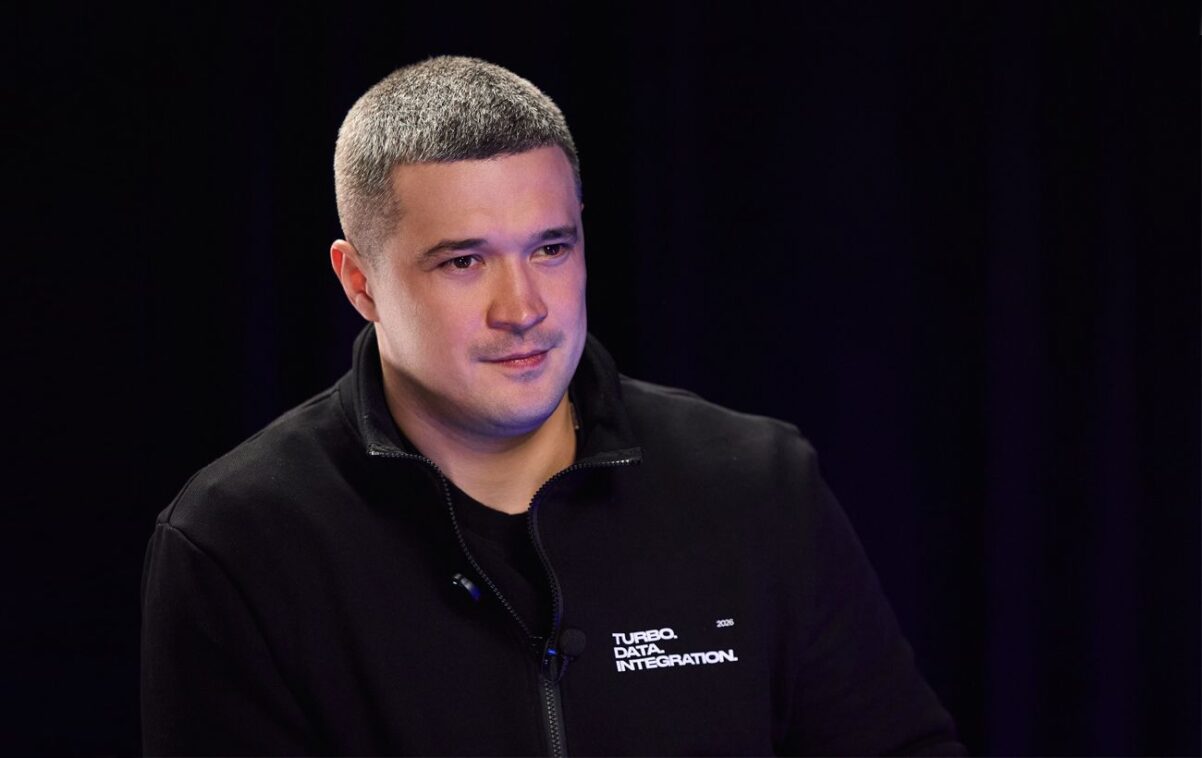
Mykhailo Fedorov Summarized His Work at the Ministry of Defense and Named Unfinished Reforms
Mykhailo Fedorov published a summary of his work as Ukraine’s Minister of Defense on his Telegram channel. In the post, he listed changes in defense procurement, unmanned technologies, air defense, international cooperation and military production that he associates with the work of his team. At the same time, Fedorov acknowledged that the Ministry of Defense had not managed to complete its organizational transformation according to NATO standards, fully transfer procurement to a tender-based system or establish a culture of responsibility for decisions made.
All the results and assessments presented are information published by Mykhailo Fedorov on his own Telegram channel.
Time for Action analyzed which changes the former head of the Ministry of Defense named as the most important, which reforms remained unfinished and how his report is connected with the government reshuffle. Fedorov named disconnecting Russian troops from Starlink satellite communications as one of the key results of his work. According to his assessment, this restricted the Russian army’s ability to use drones and coordinate combat operations. The report places particular emphasis on changes in the structure of defense procurement. According to Fedorov, the Ministry of Defense redirected funding toward technologies that have direct importance in modern warfare. These include fiber-optic FPV drones, mid-strike and deep-strike systems, low-cost reconnaissance drones, unmanned ground systems and interceptor drones.
Fedorov claims that in four months, the Ministry of Defense purchased more drones than during the entire previous year. His message does not provide detailed figures on the number of systems purchased, but he names the acceleration of procurement as one of the main results of the team’s work. Another area was the launch of the so-called “Logistics Lockdown.” According to Fedorov, the combination of new procurement, technological solutions and support for individual military units made it possible to disrupt Russian military logistics and begin the isolation of Crimea. The Ministry also continued funding the “Drone Line” program and launched support for modern drone assault units. These are units in which unmanned systems play a central role in reconnaissance, strikes and support for assault operations.
In the area of supporting defense development, the Ministry introduced 70% advance payments for procurement through the Brave1 Market. This approach was intended to provide manufacturers with greater financial resources to fulfill orders and scale up production. Fedorov also reported that the procurement system had been reformed. According to him, the Ministry launched the first tenders for long-range artillery and the procurement of hundreds of thousands of drones. Thousands of pickup trucks, buggies and quad bikes were also purchased for the military through tender procedures. A separate part of the report was devoted to air defense. According to Fedorov, after Pavlo Lazar was integrated into the Air Force and a procedure for analyzing every large-scale Russian attack was introduced, the interception rate for Russian drones increased from 83% to 91%, while the interception rate for cruise missiles rose from 47% to 87%. Fedorov did not provide a detailed methodology for calculating these figures in his message. At the same time, he links their increase to changes in management, analysis of previous attacks and adjustments to the operation of the air defense system.
Among the results in the field of air defense, he also named the first contracting of Patriot PAC-2 GEM-T missiles and the submission of an application to purchase PAC-3 missiles using a European loan. PAC-2 GEM-T and PAC-3 missiles perform different tasks within the Patriot system. In Fedorov’s message, the main emphasis was placed on the move toward direct contracting and the use of European financial instruments to purchase air defense equipment. Another area was a system for the predictable supply of drones to combat brigades. According to Fedorov, it was created so that military units could receive unmanned systems on a more predictable schedule rather than relying exclusively on individual purchases or irregular deliveries. In the field of defense production, the Ministry launched a grant program for manufacturers of explosives and missiles. Fedorov also reported the expansion of production of low-cost missiles to counter jet-powered attack drones and the signing of a record contract for their supply. In addition, according to him, a new Ukrainian ballistic system was successfully tested, while the cost of the corresponding product was reduced by 30%. The message did not disclose the system’s technical characteristics or details of the tests.
Among international agreements, Fedorov named the signing of a contract to purchase Gripen fighter jets. He also reported that three meetings in the Ramstein format had been held, during which partners announced $40 billion in support for Ukraine in 2026, excluding the European loan. According to Fedorov, the Ministry of Defense also launched a mechanism for using the European loan to finance military needs. His report presents this as one of the key results of the team’s international work. He separately mentioned the implementation of Operation Auchan, but did not provide details of the operation in his message. The Drone Deal program was launched to support defense exports. According to Fedorov, it is intended to promote the export of Ukrainian defense technologies and create additional opportunities for manufacturers.
Another initiative was the creation of the Trophy Lab platform, designed to study Russian military technologies. The probable practical purpose of this work is to examine captured systems, their technical solutions and vulnerabilities, although Fedorov himself did not provide details about the platform’s work in the cited message. To develop artificial intelligence in the military sphere, the Ministry created the Defense AI Center A1. According to Fedorov, the center is expected to work on introducing artificial intelligence technologies into defense processes. Among other areas, he named the beginning of the transformation of the military service system. However, he did not provide specific results or completed changes in this area, indicating that the reform remained at an early stage. Despite the extensive list of claimed achievements, Fedorov separately addressed what his team had not managed to implement.
He named the organizational transformation of the Ministry of Defense according to NATO standards as one of the main unfinished tasks. According to him, the new structure had already been launched and personnel changes had begun, but the reform was not completed. The Ministry also failed to transfer absolutely all procurement to a tender-based system. This means that some defense orders continued to be carried out through other procedures. Fedorov named the establishment of a culture of responsibility for decisions made as another unfulfilled task. This formulation concerns not an individual procurement contract or technological project, but the management system of the Ministry of Defense and interaction between its structures.
“I will continue working for the mission with which I previously came to the Ministry of Defense defeating the enemy through asymmetry, the speed of innovation and the strength of organization,” Fedorov concluded.
In his message, he did not specify which position he plans to take after leaving the Ministry of Defense. Fedorov’s summary post appeared during a large-scale government reshuffle. On July 12, 2026, President Volodymyr Zelenskyy announced a transition to a new model of work in foreign policy. A separate official is expected to be appointed for each priority area and will be responsible for implementing agreements reached at the level of national leaders.
On July 14, the Verkhovna Rada supported the resignation of Yuliia Svyrydenko as prime minister. The entire Cabinet of Ministers resigns together with the head of government, opening the question of the new composition of the government and the leadership of key ministries. The position of Minister of Defense remained one of the main personnel uncertainties. Before that, Zelenskyy had said that he would decide on a candidate after consultations with Mykhailo Fedorov, Commander-in-Chief of the Armed Forces of Ukraine Oleksandr Syrskyi and prime ministerial candidate Serhii Koretskyi. Before Fedorov published his summary post, Ukrainska Pravda, citing sources in the Servant of the People parliamentary faction, reported that the president allegedly did not plan to nominate him again for the position of defense minister. Among the possible reasons for this decision, the publication named a systemic conflict between Fedorov, Syrskyi and part of the military leadership.
“He [the president – ed.] said that, ideally, both Fedorov and Syrskyi should be dismissed, but he cannot do that now,” one of the meeting participants told Ukrainska Pravda.
Foreign media also reported disagreements between the leadership of the Ministry of Defense and part of the military command. In particular, The Economist wrote that some members of the military leadership did not support Fedorov’s reforms. His final report shows that the work of the Ministry of Defense was focused primarily on technological solutions, unmanned systems, faster procurement, the development of defense production and the attraction of international financing. At the same time, the largest unfinished tasks concern systemic changes within the Ministry itself its organizational structure, procurement procedures and responsibility for management decisions. The assessment of this period therefore depends not only on the number of drones purchased, contracts signed or programs launched. No less important is whether the initiated changes will continue to function after the change in leadership, and whether the claimed results will be confirmed in public reporting and subsequent state decisions.
Sources: Mykhailo Fedorov’s Telegram channel, Ukrainska Pravda, The Economist.
About the Author

Related posts:
 Mykhailo Fedorov at the helm of the Ministry of Defense: a bet on technology, speed, and anti-corruption
  Private Air Defense and Interceptor Drones Are Becoming a New Level of Ukraine’s Defense
  One Hundred Days of Yulia Svyrydenko’s Government: Defense, Reforms, International Support and Digitalization
  Ministry of Defence Transfers Military Technologies to Manufacturers for Serial Production