Ukraine’s War Economy: How Record Defence Spending Is Reshaping the Country
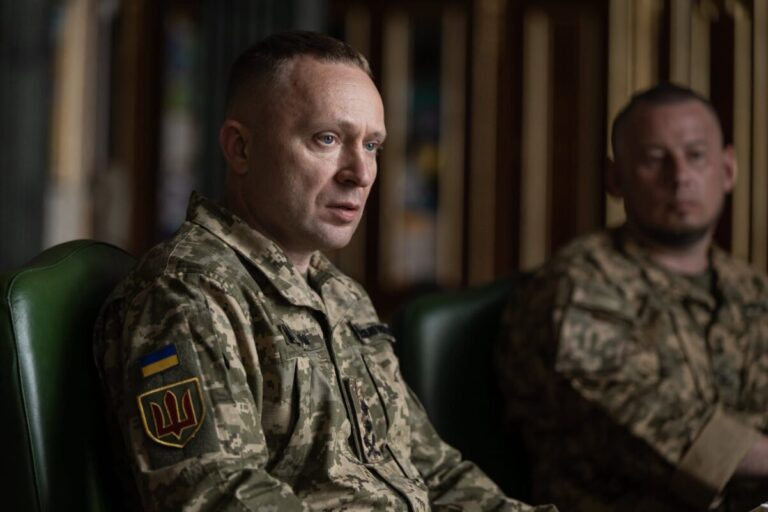
The war has forced Ukraine to direct resources toward defence that would have been impossible for a peacetime economy. Military spending has reached $84.1 billion, or around 40% of gross domestic product. Defence accounts for 63% of all state expenditures. This is a historic maximum for a country that is simultaneously maintaining its armed forces, ensuring the work of public services, paying social benefits, supporting education, healthcare, transport, and critical infrastructure.
Such pressure cannot be assessed through a single figure alone. The share of defence spending in GDP shows how deeply the war has changed public finances, but it does not explain what allows the economy to continue functioning. Ukraine’s model rests on a combination of domestic mobilisation, international financial support, private initiative, the development of defence production, and the state’s ability to rapidly change rules where old procedures stood in the way of survival. Ukraine spends a significant share of its own resources on defence, but it does not attempt to cover all state needs independently. This is fundamentally important. Domestic revenues and internal financial capacity are directed primarily toward the armed forces, weapons, payments to military personnel, support for the defence sector, and other expenditures directly related to the war. External support helps maintain the social part of the budget: payments, the work of state institutions, basic services, and the restoration of critical systems.
Without such a model, the state would be forced either to sharply cut social spending, increase domestic debt, or launch large-scale money issuance. All three options would create additional pressure on the economy and the population. This is why financial assistance from partners has more than humanitarian importance. It supports internal stability and allows Ukraine to focus a significant part of its own capacity on defence. At the same time, the war has not halted the development of certain sectors. The most visible changes have taken place in the production of drones, communication systems, software, electronic warfare equipment, robotic solutions, components for defence equipment, and analytical technologies. Ukraine has become a place where new developments are tested not in a laboratory, but under real combat conditions. This gives the country experience that cannot be quickly reproduced in a peacetime environment. A technology may look promising during a presentation, successfully pass testing at a training ground, and still prove insufficiently effective in a war where decisions must be made within minutes and the enemy constantly adapts. The systems that work in such conditions become an important source of knowledge for manufacturers, investors, the military, and the state. This is why Ukraine’s defence sector is increasingly connected not only with resource mobilisation, but also with the development of high-tech production. Demand for engineers, programmers, manufacturing specialists, communications experts, electronics professionals, and unmanned systems specialists creates jobs that may remain necessary after the war ends. This does not remove the problem of losses, destruction, demographic pressure, or labour shortages. However, it also creates new areas in which Ukraine is accumulating expertise faster than in many traditional industries.
One of the main factors behind this development is the easing of some bureaucratic barriers. During wartime, the state was forced to respond more quickly to the needs of manufacturers, seek mechanisms to attract investment, simplify certain procedures, and give private companies more opportunities to enter the defence sector. This does not mean a complete absence of state control. The defence sector is inevitably connected with security, state procurement, and restrictions on access to certain technologies. However, the principle itself has changed: the state is not trying to produce everything on its own, but is opening space for private solutions. This approach differs from a model in which the military industry depends almost entirely on large state-owned enterprises, closed systems of resource distribution, and political control. Ukraine’s model relies more on speed, competition, flexibility, and the ability of small teams to quickly adapt a product to real frontline needs.This is also important for the post-war period. After the war ends, Ukraine will need not only large-scale reconstruction of destroyed cities, energy infrastructure, transport, and housing. The country will need a new economic structure capable of generating high added value, attracting investment, and creating jobs for people returning from military service, displacement, or emigration.
High-tech production can become one of these areas. It already has practical experience, demand, domestic developers, access to international partners, and the attention of major technology companies. After the war, this potential may become important for the production of security systems, aviation components, unmanned platforms, software, communications, and other products that are in demand not only in Ukraine. Western investment in Ukrainian technologies should also not be explained solely by solidarity. Support for Ukraine has a moral and political dimension, but business enters the country because it also sees the possibility of future profit. Companies working with defence technologies, analytical systems, satellite communications, or artificial intelligence gain access in Ukraine to unique experience in using their solutions under difficult conditions. This also applies to satellite communications. Systems of this type have become critically important for the military, civilian services, logistics, and the work of some state institutions. At the same time, the involvement of major corporations in such processes is not purely charitable. Technologies are used, scaled up, gain real examples of application, and companies strengthen their positions in the future market for security and communication solutions.
European financial support also has a dual meaning. For Ukraine, it is funding that helps prevent the destruction of the social sphere and maintain stability in the state. For Europe, it is a contribution to its own security. Ukraine is holding back the Russian army, which without resistance could create far greater risks for the EU’s eastern flank, infrastructure, borders, and internal security in European countries. Therefore, support for Ukraine is not a one-sided gesture. It reduces the costs Europe would have to bear in the event of an expansion of the war, a new wave of instability, or a direct threat to EU states. In this sense, the money directed to Ukraine also works as an investment in deterring a far more expensive scenario.
Russia’s economy is moving in a different direction during the same period. It is becoming increasingly subordinated to military spending, the production of missiles, drones, ammunition, equipment repairs, and the supply of the army. Formally, this may support certain production indicators. However, growth in the output of goods for war does not automatically mean an improvement in public well-being or the development of civilian industries. When resources are directed toward missiles, ammunition, or military equipment, they are not spent on modernising hospitals, developing education, housing construction, civilian engineering, consumer goods, or improving quality of life. Part of the economy may show activity, but society does not necessarily receive more goods, better services, or higher incomes as a result.
Military production can increase GDP figures, but it does not guarantee real economic development. GDP records the volume of goods and services produced, but it does not show whether these resources are working for the country’s future. Ammunition production can improve statistical indicators, but after being used in war, these resources do not create a long-term economic effect for civilian life. Russia also faces another problem: the growing role of the state in the economy is accompanied by stronger control over property. In a system where security structures can pressure businesses, change company owners, or redistribute assets, private investment becomes riskier. An entrepreneur cannot plan development years ahead if they are not confident in the protection of their property and the rules of the game. This creates a serious difference between short-term mobilisation and long-term development. The state can quickly direct resources toward military needs, force enterprises to operate under new rules, increase defence orders, and redistribute the budget. However, such a system loses flexibility, innovation, and trust, without which it is difficult to build a modern economy. An additional problem is the reliability of official statistics. During wartime, macroeconomic indicators are harder to verify and explain even in open states. In a country where a significant part of the data is closed and the authorities have a political interest in showing stability, the risk of distorted figures increases. Some assessments indicate that Russia’s real budget deficit may be larger than official data suggests, while inflation may be higher than the declared level. At the same time, there are international forecasts that assess the pace of inflation slowdown less pessimistically. This means there are no grounds to speak of an inevitable and rapid collapse of the Russian economy. However, there are grounds to speak of an accumulation of problems that are not always visible in official statistics.

Russia’s economy can continue functioning through raw material exports, state spending, reserves, military contracts, control over private business, and the redirection of resources from civilian sectors. However, this model has limits. The longer the war continues, the more resources are needed to support the army, repair equipment, produce ammunition, pay military personnel, and compensate for losses. Ukraine’s main difficulty lies elsewhere. Its economy cannot indefinitely spend around 40% of GDP on defence without significant external assistance and without risks for future recovery. However, the country is already creating sectors that can become the foundation of economic growth after the war. Ukraine is paying an extremely high price for its defence. Losses, destruction, population outflow, risks for business, and the constant need for resources remain defining challenges. At the same time, the war has not turned the country solely into a space of survival. It has accelerated technological development, changed rules for production, attracted investors’ attention, and created experience that may matter far beyond wartime.
The future of Ukraine’s economy will depend not only on how much money is invested in reconstruction. The decisive factor will be whether it is possible to preserve openness to investment, support private initiative, use the technological experience of war, and prevent a return to old bureaucratic models. Ukraine has already demonstrated that even under record defence spending, it is capable not only of sustaining the state, but also of creating new opportunities for development. Russia, by contrast, is becoming increasingly dependent on a model in which war consumes resources, while the civilian economy loses room for future growth.
About the Author

Related posts:
 The Global Economy in 2026: Growth Driven by a Technology Boom and Hidden Risks
  Ukrainian Banking Sector: Growth Despite Tax Pressure and Wartime Economy
  How Ukrainians Are Driving Poland’s Economy: Taxes, GDP, and Business Growth
  Ukraine’s Economy After the Winter Blow: Why the NBU Forecast Gives Cautious Hope, But Does Not Promise an Easy Recovery