Farmers in Ukraine’s Frontline Regions: How Agricultural Producers Return to Their Land Despite War, Losses and Danger
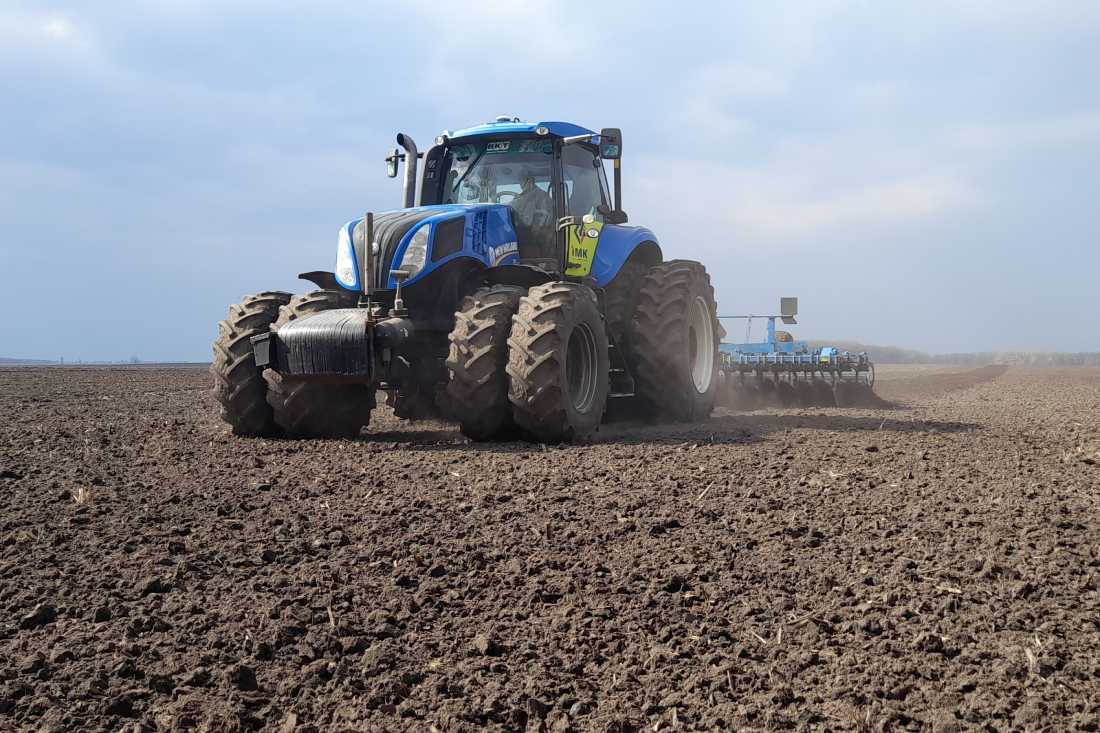
Ukrainian farmers from frontline and de-occupied territories are working in conditions where an ordinary farming decision has long stopped being only a business matter. To sow, to plant, to restore irrigation, or to return to native land now means taking on a risk that cannot be fully calculated. Drones may be flying nearby, part of the infrastructure may be lost or destroyed, and previous investments may remain in occupied territory without any real access to the property.
This is about an entire group of Ukrainian agricultural producers who, before the full-scale war, spent years investing in land, machinery, irrigation, storage facilities, seed material, jobs, and the development of communities. After Russia’s invasion, some of these people faced a choice with no good options to remain under occupation, lose control over their business, or start almost from scratch in another region. For farmers in the Kherson region, the war struck at the very foundation of their work. Southern Ukraine is not only fields. It is irrigation systems, logistics, seasonality, workers, and processes built over years. If a farm specialized in potatoes, it could not randomly move the entire cycle to another place without losses. It needed land, machinery, water, storage facilities, people, a market, time, and money. When all this remains in occupied territory, relocation is not a full rescue. It only provides a chance to survive.
One of the key problems is lost property. For a farmer, machinery, a storage facility, or irrigation is not an abstract asset in documents. It is the basis of production. If harvesters, planters, storage facilities, equipment, and produce remain in occupied territory, the farm loses not only property, but also the ability to work at its previous scale. At the same time, debts for pre-war investments do not disappear. They may be restructured, but they remain. A farmer who invested in development may, after occupation, find themselves without access to what they had invested in, but with financial obligations that still have to be fulfilled. This creates unequal conditions for those who were forced to leave occupied territories. Some agricultural producers had an opportunity to hold on in another region because they already had a branch or production base there before the war. Others had no such opportunity. For them, the loss of one location meant the actual loss of the entire business. And it is this category of farmers that now risks being left outside full-scale support programs. Ukraine has mechanisms related to damaged or destroyed property, but the problem of property lost because of occupation remains a separate painful issue. If an enterprise physically exists, but the owner has no access to it, does not control it, and cannot use the machinery or infrastructure, standard approaches do not always work. This situation requires a separate solution, because this is not a temporary inconvenience, but years of work that were forcibly torn away from the owner. The return of farmers to the Kherson region, even in dangerous conditions, shows that agricultural producers do not see their native land as a lost space. They may work in another region, but the connection with the south does not disappear. For them, returning is not a gesture for a beautiful story, but an attempt to preserve an economic presence where their families, workers, and communities worked just yesterday.
It is especially important that farms often keep people around them. When an enterprise relocates, workers, their families, and specialists who lost their homes or jobs because of occupation may leave with it. In such cases, business performs not only an economic function. It gives people support, wages, employment, and the feeling that they have not fallen out of life after losing their home. At the same time, stories from the Kherson region remind us that occupation is not only the seizure of territory. It is violence against civilians, pressure on communities, fear, the destruction of local economies, and an attempt to take away people’s normal order of life. For farmers, this means not only the loss of machinery or fields. It also means the loss of workers’ safety, broken family ties, forced displacement, uncertainty about the future, and constant waiting for news from native places.

Frontline farming today operates on the edge of risk. Where there is a threat of shelling, mines, drones, or a renewed escalation of hostilities, every season becomes a test. A farmer cannot wait for ideal conditions, because land has its own deadlines. Planting, cultivation, irrigation, harvesting everything is tied to time. The war does not cancel this time, but it makes every stage more expensive, more dangerous, and harder. That is why the issue of supporting farmers from frontline and occupied territories cannot be reduced only to compensation. Tools are needed that will allow them to work again: access to land, lending, special conditions for those who lost assets because of occupation, support for relocated workers, restoration of irrigation, help with machinery, and a fair approach to debts that arose even before the full-scale war. Ukrainian farmers today are holding not only production. They are holding Ukraine’s presence on the land that Russia tried to tear away by force. When a farm returns to the Kherson region, even with smaller areas and greater risks, it says something important: the region has not been written off, people have not given it up, and work on the land remains a way of recovery where the war is trying to leave emptiness. This story is not about one farmer. It is about many agricultural producers who lost property, machinery, fields, years of investment, and part of their lives, but still look for a way to keep working. For the state, this should be a signal: without a separate policy for farmers from frontline and occupied territories, the country risks losing not only businesses, but also people who are capable of restoring these regions after the war.
About the Author

Related posts:
 Agricultural Land Market: Transition to a Structural Model or a Phase of Cautious Growth
  New Land Payment Rules When Changing Property Owner: A Step Toward Transparency and Simplification
  When “I’ll Return” Fades: Why So Many Ukrainians Abroad Are Not Coming Back
  Land Under Protection: how an owner can safeguard a plot from fraud and registration errors