Fuel Prices Rise in Crimea Amid Oil Costs and Supply Disruptions
Fuel prices in occupied Crimea are rising, and the explanation of this process has already become a subject of public disagreement between Russian officials and industry analysts. The official version comes down to complicated logistics: the peninsula is said to be in a difficult position, and fuel supply is accompanied by limitations and challenges. But a closer look at the broader picture shows that logistics is only part of the problem, not a complete explanation.
Time for Action analyzed the situation, and it becomes clear that the rise in fuel prices in Crimea is driven by several factors at once. Some of them are visible on the surface, while others are far less convenient for public acknowledgment. This is why official statements focus on delivery routes and transportation difficulties, while issues such as domestic oil pricing, the condition of Russian refining capacity, and the impact of strikes on critical infrastructure are mentioned far less often.
The head of the Russian parliament in occupied Crimea, Vladimir Konstantinov, explained the price increase simply: the peninsula is in a complex logistical situation, and the ways of delivering fuel under current conditions cannot be described as easy. This statement does have a practical basis. Crimea is a territory where resource supply directly depends on transport routes, security conditions, infrastructure reliability, and the overall situation in the region. All of this affects costs, and those costs ultimately translate into retail fuel prices. However, this explanation does not cover the full picture. Industry analysts point to a deeper process a sharp increase in oil prices within Russia’s domestic market. This factor is described as one of the main drivers of rising fuel prices. According to available estimates, the price of oil in Russia’s domestic market increased from 22,000 rubles per ton in February to 60,000 rubles by the end of March, and at the beginning of April ranged between 66,000 and 74,000 rubles per ton. This is a rapid and significant change within a short period. When raw material prices rise this quickly, it inevitably puts pressure on the final product gasoline and diesel fuel.
In other words, the market follows a simple but unfavorable logic for consumers: more expensive oil leads to more expensive fuel at the pump. And while Russian officials emphasize logistics, the economic chain shows that the issue is not only how fuel is delivered to Crimea, but also how much it already costs before transportation. Another important aspect is the broader external environment. At the end of March, the Russian government banned gasoline exports starting April 1, citing the need to stabilize domestic prices and ensure supply within the country. This decision itself is revealing. When exports are restricted, it indicates that the domestic market is under pressure, and resources must be prioritized internally. In other words, the risk of shortages or price escalation is considered serious enough to justify administrative intervention. Additional pressure has come from global developments. Due to escalation around Iran, Urals oil prices reached a 13-year high. In Primorsk, prices climbed to $116 per barrel, and in Novorossiysk to $114 per barrel almost twice the level of $59 per barrel used in Russia’s budget assumptions. At the same time, the discount of Urals relative to Brent dropped to its lowest levels in several months. For Russia, this created a more attractive export environment, but also increased tension in the domestic market.
Russian officials themselves acknowledged that in the context of tensions in the Middle East, exporting petroleum products becomes more profitable than selling them domestically. When external markets offer higher returns, domestic consumers inevitably face disadvantages. In this situation, the export ban appears less as a sign of abundance and more as an attempt to maintain balance in a system under strain.
However, one factor in this situation appears to be among the most critical, yet it is the least discussed in Russian information space. This concerns the shutdown or disruption of Russian oil refineries following strikes by Ukraine’s Defense Forces. In public discourse, this factor is often downplayed, although it directly affects fuel production. In recent weeks, Ukraine has intensified strikes on Russian refineries and oil infrastructure. This has already led to the shutdown or partial suspension of several major facilities. After a drone attack, the Lukoil-Nizhny Novgorod refinery halted operations. This is the fourth-largest refinery in Russia and the second-largest gasoline producer, with a capacity of around 16 million tons of oil per year, or approximately 320,000 barrels per day. When such a facility is taken offline, even temporarily, it inevitably impacts the fuel market.
At the end of March, the Saratov refinery operated by Rosneft also suspended operations. Following an attack on March 26, the Kirishi refinery the largest in the European part of Russia, with a capacity exceeding 20 million tons per year shut down for nearly a month. Critical equipment, including primary oil processing units, was damaged. According to available estimates, even partial restoration of its capacity required about a month. Later, the Bashneft-Novoyl refinery in Ufa was also hit, with one of its units ceasing operation after the strike. These events cannot be viewed as isolated incidents. Together, they indicate that Russia’s fuel production system is operating under sustained pressure, and that pressure is already affecting not only individual facilities but the overall stability of the market. When refineries shut down, even temporarily, the market loses part of its supply. When supply decreases, prices tend to rise almost inevitably.
Strikes on port infrastructure are also highly significant. If attacks disrupt export operations, companies are forced to reduce oil extraction because storage capacity is limited. This affects not only logistics, but the entire production chain. Strikes on the ports of Primorsk and Ust-Luga, according to available data, led to a 43% drop in Russia’s oil exports the sharpest decline since the beginning of the full-scale war. On April 6, Ukrainian drones struck the Sheskharis oil terminal in Novorossiysk, which handles up to 20% of Russia’s maritime exports. Following the attack, operations were halted. All of this leads to a clear conclusion the increase in fuel prices in occupied Crimea is not driven by a single cause, but by the overlap of several crises at once. Logistics are indeed more complicated. Domestic oil prices in Russia have risen significantly. Global market conditions have added pressure through price spikes and changing dynamics. Fuel production has been disrupted due to refinery damage. Export infrastructure is also under strain.

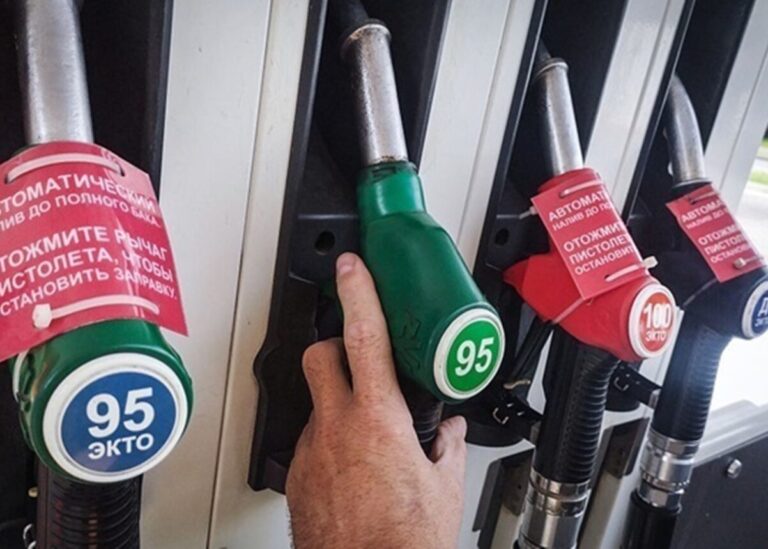
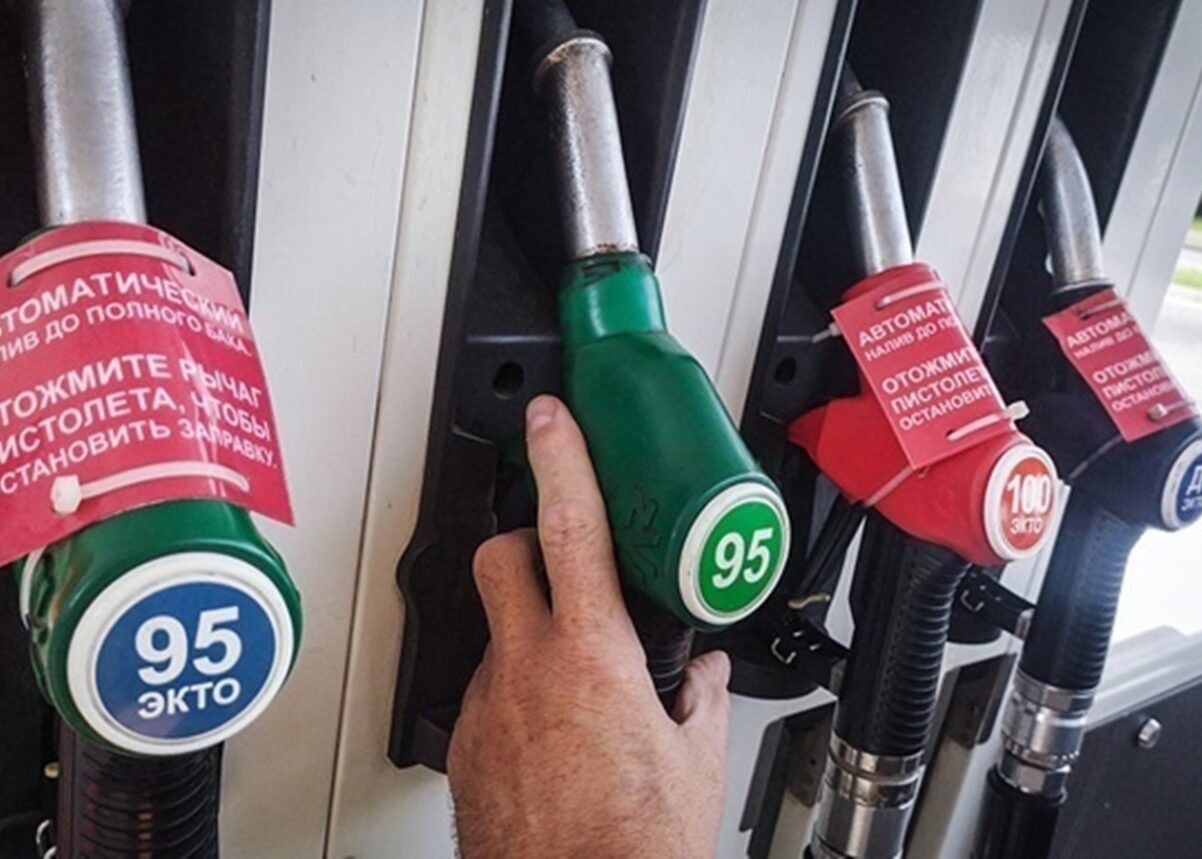
In this situation, references to “complicated logistics” sound more like a simplified political explanation that avoids addressing the full scale of the issue. A deeper analysis shows that Crimea is experiencing the effects of broader fuel instability forming within Russia’s economy and intensified by the war. For residents of the peninsula, this results in a direct and tangible consequence higher prices at gas stations. In Simferopol, gasoline prices for AI-95 already exceed 77 rubles at some stations, while in Sevastopol they are even higher. Prices for AI-92 also surpass 71–72 rubles. Even if this is presented as a temporary supply issue, the overall trend suggests a much deeper structural problem. The key conclusion is that the rise in fuel prices in occupied Crimea is a symptom of a systemic disruption, not a local fluctuation. It is linked to rising domestic oil prices in Russia, administrative restrictions, shifts in global oil markets, disruptions in refining, and strikes on infrastructure. And the longer these factors continue to overlap, the harder it will be to mask the real nature of this crisis behind explanations limited to logistics alone.
About the Author

Related posts:
 Fuel Prices in Ukraine: Why They Are Rising, What to Expect
  Fuel prices are rising: how geopolitics, currency movements and winter are jointly pushing costs higher in Ukraine
  Rising Fuel Prices Are Pressuring Business: When Consumers Will Feel It in Prices
  Fuel prices in Ukraine surge: what is happening on the market and whether there are grounds for suspicions