Ukrainian Drones, the War in Iran, and a New Security Market: How Battlefield Experience Is Becoming a Political and Economic Resource
War changes not only the battlefield. It changes the understanding of what a modern army is, which technologies are considered secondary, and which suddenly become decisive. This is exactly what happened with drones. What until recently some developed countries perceived as a forced tool of an under-resourced army is now increasingly seen as one of the most practical ways to defend against mass aerial attacks. Time for Action has analyzed how Ukraine’s experience in countering strike drones is moving beyond the Russian-Ukrainian war, why countries in the Persian Gulf have become interested in Ukrainian solutions, and how this interest can turn for Kyiv not only into defense cooperation, but into a longer political and economic presence in the region.
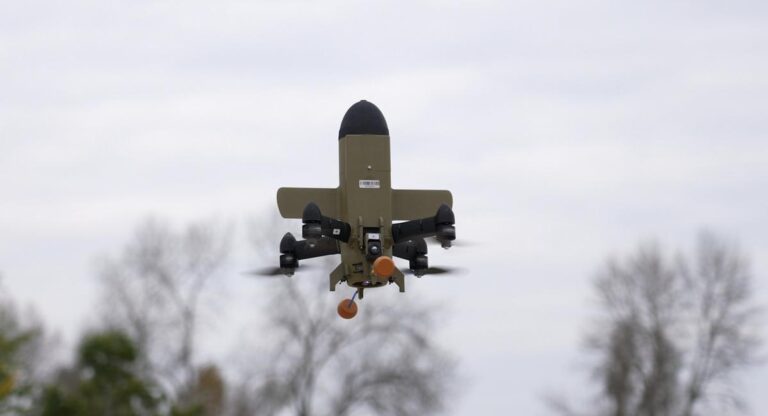
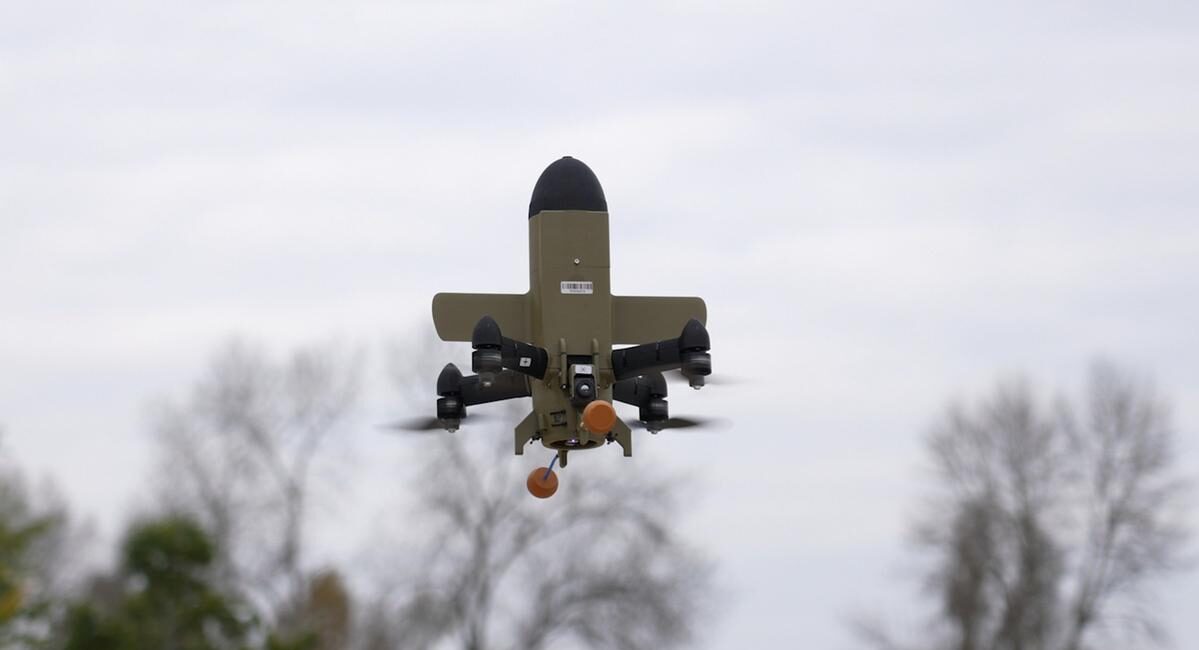
Events in the Middle East have demonstrated something Ukraine has been pointing out for a long time: the drone threat is no longer a narrow element of a single war. It has become part of a new military reality. In the conflict involving Iran, countries in the region faced not only missiles, but also the large-scale use of unmanned systems. Some of these strikes targeted military infrastructure, but residential areas and oil-processing facilities were also affected. This means that countering drones is no longer only a military issue. It has become a matter of protecting cities, critical infrastructure, and everyday security. This is where the value of Ukraine’s experience becomes clear. In Ukraine, countering drones is no longer an experiment. It has become a separate domain of warfare with its own logic, infrastructure, manufacturers, training systems, and combat record. It is not about a single successful model or isolated development. It is about a full ecosystem that has evolved under constant pressure from repeated attacks. This includes interceptor drones, detection systems, communication networks, remote control capabilities, and operational practices shaped in real combat conditions.
What is particularly important is that Ukrainian developers have focused not only on building another drone, but on finding a cost-effective response to a low-cost threat. This is one of the key differences in the Ukrainian approach. When the adversary launches large numbers of attack drones, intercepting each of them with expensive missiles creates an unsustainable economic model. Ukraine has therefore focused on solutions that are effective, but significantly more affordable. In practical terms, countering a mass drone threat requires not only precision, but also economic viability. For countries in the Persian Gulf, this logic became especially clear after they were forced to commit substantial resources to counter large-scale attacks. Fighter jets, helicopters, and missile systems were all used. But even with advanced and expensive systems, the main issue remains: the volume of incoming targets can make the cost of interception a challenge in itself. Wealthy countries can afford expensive defense, but even for them the question arises how long such a model can be sustained if the adversary relies on mass, relatively cheap, and continuously replenished tools.
Ukraine offers not a theoretical model, but a tested solution. Over the years of full-scale war, several types of interceptor drones have been developed and have demonstrated effectiveness specifically against strike drones. Some are already in use, some are being scaled, and others are being improved with remote operation and further automation. What matters is that this is not a series of isolated engineering successes, but an environment in which multiple producers work on similar challenges, compete, refine their products, and bring them into combat use quickly. This experience has become the focus of interest in the Middle East. Ukraine is increasingly seen there as a country that not only fights, but produces ready-made technical solutions for modern warfare. This interest is largely pragmatic. It is not based on political alignment, but on practical demand: Ukraine has tools that Gulf countries currently lack in defending against aerial drone attacks.
Developments in Iran have significantly accelerated this shift. What previously required extensive explanation through meetings, briefings, and demonstrations has now been demonstrated by the war itself. For Ukrainian defense producers, this creates a window of opportunity that is unlikely to remain open for long. As soon as the threat became visible, demand for relevant solutions increased. At the same time, this also means that once the active phase of the conflict subsides, interest may decline. For Ukraine, it is therefore not enough to have the technology. It must move quickly to enter the market, secure contracts, and turn short-term demand into long-term cooperation. This is not only about selling drones. The Ukrainian offer in this field is broader. Effective interception is not the result of a single operator with a controller. It depends on a system that includes detection, targeting, communication, radar support, coordination, logistics, and technical maintenance. This is why the Ukrainian experience is valuable not only as a technological product, but as an operational model for managing low-altitude airspace. For countries just entering this phase of counter-drone operations, this matters: they need not only equipment, but a framework for its use.
Another important aspect is training. Operators capable of handling high-speed interceptor drones are not developed instantly. In Ukraine, many specialists progressed gradually, starting with simpler systems and moving to more advanced platforms. This means that exporting Ukrainian expertise will likely involve training programs, instructors, and long-term engagement. What begins as a technological partnership can evolve into deeper security cooperation. The presence of Ukrainian air defense specialists in the Persian Gulf reflects this shift. It is not only a response to current threats, but an attempt to transfer elements of Ukraine’s defense system. For Kyiv, this is not only a matter of prestige. It is also a practical exchange: Ukraine provides expertise, training, and solutions, and expects in return security cooperation, defense agreements, industrial development, and broader economic engagement.
For Ukraine’s defense industry, this moment is particularly important. Domestic demand remains high, but state resources are not always sufficient to provide stable, long-term contracts. For producers, short planning horizons create uncertainty. Access to external markets offers not only additional revenue, but also the ability to scale production, retain teams, invest in development, and move toward mass manufacturing. Interest from the Persian Gulf has emerged at a critical time. Ukrainian producers report increasing demand and readiness to expand production capacity. However, this requires not only technical capability, but also clear and efficient export policies. Without timely decisions, potential opportunities may be lost. In the defense sector, delays often mean losing the market.
Competition will be strong. Western systems are already present in the region, and major producers are unlikely to уступити this market. Gulf countries are willing to pay a premium for priority access to effective solutions. This makes speed, reliability, and delivery capacity as important as the technology itself. Ukraine’s advantage lies in its combat-tested systems, but this advantage is time-sensitive. It must be supported by clear state policy and the ability to act with the same flexibility demonstrated on the battlefield. There is also a diplomatic dimension. The current situation creates an opportunity for Ukraine to build a different type of relationship with the Persian Gulf. Previously, these relations were often cautious and limited. Now, Ukraine offers a practical capability that is immediately relevant. This changes the dynamic. Ukraine enters the region not only with political arguments, but with solutions that directly address security needs.

This could lead to a new form of partnership. Not necessarily a traditional alliance, but a deeper and more structured cooperation. Defense collaboration can open the door to broader engagement in energy, investment, industrial projects, and reconstruction. For Gulf countries, stability and trust are key conditions. They are cautious about large investments and require confidence in long-term security. Ukraine’s current role in counter-drone defense may serve as a starting point for building that confidence. At the same time, expectations should remain realistic. Increased demand does not automatically guarantee long-term success. The region operates under strict security and business logic. Decisions are driven by effectiveness, reliability, and predictability. Ukraine has experience, adaptability, and proven solutions, but these must be supported by consistent policy and institutional capacity.
Recent developments have also reshaped global perceptions. For many developed countries, intensive drone use in the Russian-Ukrainian war was initially seen as a feature of a resource-constrained conflict. It was not treated as a model of future warfare. The conflict in the Middle East has changed that perception. It has become clear that the drone threat is expanding beyond state actors to irregular forces, and that low-cost, high-volume aerial systems will play an increasing role in conflicts worldwide.
In this new reality, Ukraine occupies a different position. It is no longer only a country defending itself and requesting assistance. It is also a source of practical knowledge on how to operate in an era of mass drone warfare, how to build defenses against persistent aerial threats, and how to create solutions that function under real combat conditions. This makes Ukrainian expertise relevant not only on the battlefield, but also in international relations, defense exports, and economic development. The question now is not whether the importance of these technologies has been recognized. That has already happened. The real question is whether Ukraine can move quickly enough to transform its wartime experience into sustained international presence, contracts, trust, and long-term cooperation with regions that only recently underestimated its approach.
About the Author

Related posts:
 Ukrainian Drones as a New Instrument of Influence in Global Security
  Canada and Ukraine: How Mark Carney’s Visit to Kyiv Signaled a New Phase in Security Cooperation
  Anti-Shahed Defense System: How the Armed Forces of Ukraine Are Expanding Their Capabilities Against Kamikaze Drones
  From Six Months to Ten Days: How Digital Systems and Drones Are Reshaping Ukraine’s Defense Industry