From a “Better Deal” to a Force-First Course: What the US and Israeli Strikes on Iran Mean and What Trump May Be Aiming For
Time for Action analyzed the escalation between the United States, Israel, and Iran and the key signals from Washington: the stated goal is no longer limited to negotiations on a nuclear deal. The operation is presented as an attempt to neutralize Iran’s military capabilities and change the regime’s behavior, including a calculation that internal pressure inside the country will grow.
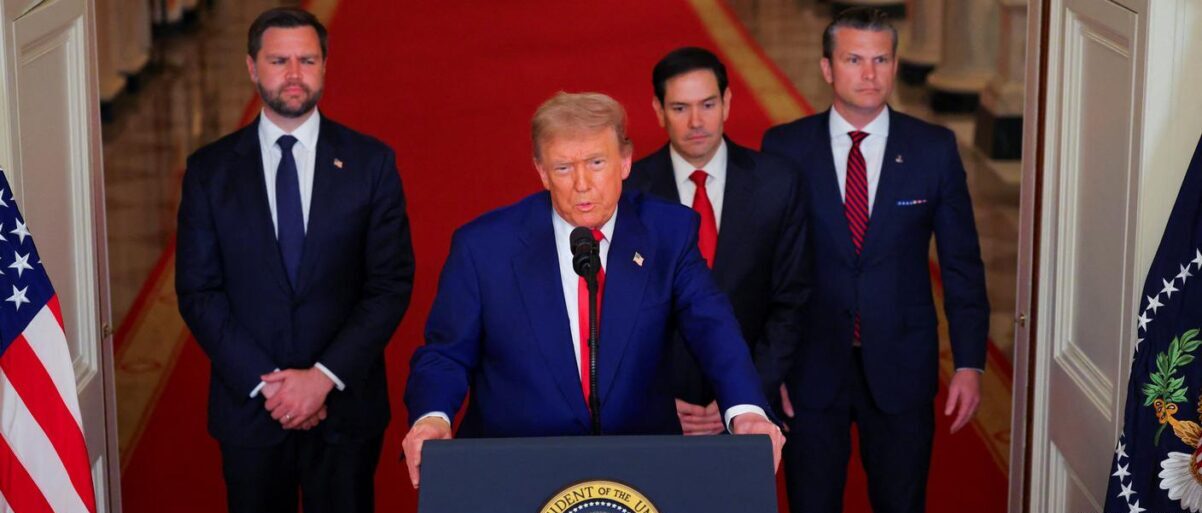
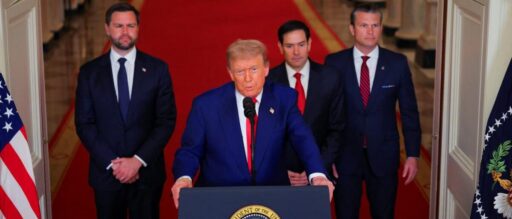
After weeks of rising tension and a buildup of US military presence, the United States and Israel carried out joint strikes on Iranian military facilities and the residences of the country’s top military leadership. In parallel, Israel announced a “preemptive military operation,” and the US president declared “large-scale combat operations.” The key change is that the White House’s public line is no longer only about a “tougher deal.” In a February 28 address, Donald Trump directly appealed to the Iranian people with messages about “freedom” and a call to “take power” after the military phase ends. This is a signal that military strikes and political pressure are being synchronized.
What Washington appears to be aiming for
In public explanations from the American side, two main objectives are emphasized:
- eliminating “imminent threats” posed by the Iranian regime;
- destroying Iran’s key military capabilities, particularly missile capabilities, as well as striking its naval capabilities.
A separate claim is voiced about Iran’s attempts to revive its nuclear program. Washington also links the campaign to the need to protect American citizens and military personnel.
At the same time, public commentary suggests that the diplomatic track has reached a dead end and that the gap between the sides’ positions is too large. In this configuration, force becomes the primary instrument of coercion, while negotiations become not the center of strategy but a possible outcome of pressure.
This is where the main question arises: is this a limited operation to reduce threats, or a longer campaign meant to change the very structure of power in Iran. Trump’s phrasing and the logic of the goals being stated publicly push the situation toward the second option, though without a formal legal declaration of “regime change” as an official objective.
A bet on an internal rupture and why it is difficult
A separate line is the expectation that weakening the state apparatus may encourage people to take to the streets. This is reinforced by Trump’s appeal to Iranian citizens and by the activity of Reza Pahlavi, who speaks of “decisive moments,” urges security forces to side with the people, and calls on citizens to stay calm and wait for further instructions.
However, recent experience from a previous conflict with Israel showed that during active fighting civilians primarily focus on survival. Therefore, expecting mass protests directly during strikes looks less realistic. A more likely scenario is protests after the intensity of fighting subsides, if the regime by then retains the capacity to control its security apparatus.
This creates a structural problem: a military operation has its own speed, and protest dynamics have another. If the bet is on “the street” as a fast mechanism, it may not work within the needed timeframe. If the bet is on a longer campaign, the risks of regional spillover increase.
Division of roles between the United States and Israel
A logical division of tasks is visible:
- the United States focuses on undermining Iran’s missile potential to reduce the ability to strike back;
- Israel concentrates on strikes against leadership, reinforced by reports of attacks on the residences of top officials.
This approach is designed to deprive Iran of two levers: the ability to inflict painful retaliation and the ability to maintain control through a command hierarchy.
Why Iran’s response may be less predictable
Iran’s reaction reflects a perception of events as an existential crisis. Under such conditions, decisions become harsher and riskier.
A “first wave” of drones and ballistic missiles against Israel was announced. Separately, the IRGC stated it had struck US bases in Bahrain, Qatar, and the UAE, including the headquarters of the US Fifth Fleet, and said it intended to continue operations. Qatar closed its airspace and declared it reserved the right to respond. Reports described interceptions of missiles in the UAE and Qatar, as well as injuries and a fatality in the UAE.
This means the conflict is already generating a regional wave that affects Gulf states.
Information control as a tool for holding power
Iran has faced a near-total internet blackout. NetBlocks reported that on February 28 connectivity fell to 4% of the usual level, and that in character this aligns with state actions during a previous conflict.
Such shutdowns have a direct effect:
- they slow the circulation of information;
- they make it harder to verify reports and videos;
- they reduce society’s ability to self-organize;
- they increase the share of rumors and managed narratives.
Ukraine: position and security recommendations
Ukraine’s position is framed through support for the Iranian people and assigning responsibility to the Iranian regime. Separately, it is emphasized that the regime in Tehran chose an alliance with the Kremlin and supplied “Shaheds” and technology.
Ukraine’s Foreign Ministry urges citizens to refrain from traveling to Israel and Iran until the situation stabilizes. For Ukrainians in Israel, recommendations were issued on following Home Front Command instructions, monitoring official updates, minimizing movement, and identifying the nearest shelters in advance.

Global reaction and different approaches
European reactions are not uniform. There are assessments of the escalation as dangerous, and emphasis on protecting civilians and observing international humanitarian law. Some EU countries broadly support US actions, others criticize them. The United Kingdom says it did not take part in the strikes, but repeats that Iran must not be allowed to obtain nuclear weapons. France insists on good-faith negotiations to end Iran’s nuclear and ballistic programs and announces an initiative for an urgent UN Security Council meeting. Russia condemns the strikes and calls for a diplomatic settlement.
What will determine the trajectory next
Three groups of factors will be decisive:
- The speed of weakening Iran’s ability to strike back and its capacity to broaden the conflict across the region.
- The regime’s ability to maintain control inside the country, including over the security apparatus and the information space.
- The willingness of allies and partners to support a longer campaign if risks to civilians and stability in the Gulf increase.
The escalation looks like it has moved beyond a short episode. Washington’s phrasing, the structure of the strikes, and the bet on a psychological effect inside Iran raise the bar of objectives, and with it the price of an unpredictable response.
About the Author

Related posts:
 The U.S. Strikes Iran: What Happened, Why It Matters, and Why Ukraine Should Be Watching
  Trump’s Ultimatum to Iran: Two Weeks to a Nuclear Deal or a Military Strike
  Operation “Rising Lion”. What Israel’s strike on Iran means and where it may lead
  Weapons Without Borders: Why Strikes on Drone Factories in Iran and Russia Matter Beyond the Battlefield