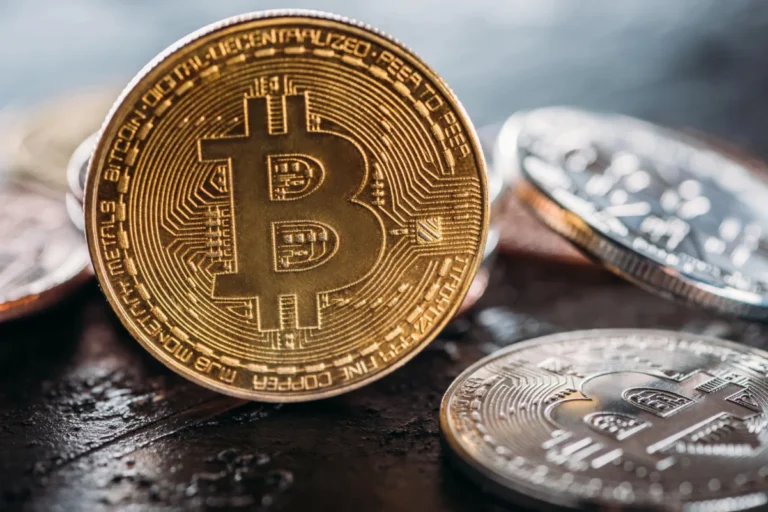
Bitcoin and War in the Middle East: Why Crypto Reacts First and Where It Leads
The crypto market once again acted as the first indicator of global risk. The drop toward the $63,000 zone was not an isolated episode, but part of a recurring behavioral pattern during geopolitical shocks.
After the start of airstrikes and reports of casualties in Iran’s Hormozgan province, bitcoin fell by roughly 3% within a few hours, approaching $63,000. It later partially recovered toward the $65,000 area, and then retreated again to about $64,700. This move looks familiar. When traditional financial markets are closed over the weekend, cryptocurrencies remain one of the few large liquid venues still trading. Stocks, bonds, and most commodity contracts are not. In that situation, bitcoin becomes an asset through which investors can immediately reduce risk. That is why the crypto market often acts as a kind of pressure-relief valve for global fear. The selling happens not because the network’s fundamentals change, but because market participants are looking for liquidity.
Bitcoin’s inability to hold above $65,000 suggests buyers are not ready to step in aggressively under uncertainty. At the same time, relative stability given the severity of the headlines points to an absence of mass capitulation. Thin weekend liquidity makes swings sharper than during the week, but this is not yet a structural break. The move looks like headline-driven risk reduction, not a long-term shift in sentiment.
The Strait of Hormuz as a fear factor
A significant part of the tension comes from the potential scenario of blocking the Strait of Hormuz. Roughly 20 million barrels of oil pass through this narrow corridor every day about one fifth of global supply. In the crypto community, there is active discussion that closing the route could push oil to $120–$150 per barrel, trigger an inflation shock, and drive another wave of sell-offs across risk assets.
However, expert assessments are more cautious. Iran produces around 3.3 million barrels of oil per day and exports a large share to China. A full closure of the strait would also hurt Iran itself. In addition, regional geography makes a complete blockade difficult: shipping lanes mostly run in Omani waters, which are deeper and better suited for large tankers.
Energy market experts emphasize that the strait has effectively not been blocked even during wars. That implies a full shutdown scenario is unlikely, and any oil price spike could be limited and temporary.
What is actually pressuring the crypto market
The main risk is not the strait itself, but the possibility of the conflict expanding into a full-scale war with direct US involvement. In that case, investors typically shift into capital-protection mode:
- demand for the dollar rises;
- capital flows into government bonds;
- risk assets decline.
Despite the “digital gold” narrative, bitcoin behaves like a high-risk asset in crisis phases. If tension persists, pressure may increase, and the $60,000 level becomes a key psychological threshold.

The current dynamic shows the crypto market remains sensitive to global geopolitics. Bitcoin continues to function as a risk indicator outside traditional exchange hours.
Without escalation and without a real disruption to oil supplies, a gradual rebound after traditional markets reopen remains possible. If the conflict deepens, the crypto market may enter a phase of heightened volatility with the risk of deeper downside.
For now, bitcoin does not show signs of a systemic crisis, but it clearly signals one thing: geopolitical tension is again becoming a defining factor for global capital. And the next move will depend on whether the Middle East turns into a short stress test or the start of a broader correction.
About the Author

Related posts:
 Crypto Market Liquidations: How the US-China Trade War Sparked Record Losses for Bitcoin
  How Crypto Crash Changed Youth Investment Attitudes in Ukraine: Risks, Choices, and New Financial Literacy
  Operation “Rising Lion”. What Israel’s strike on Iran means and where it may lead
  October That Changed Everything: A New Reality for Cryptocurrencies