Tariffs in 2026: Why Households Avoid Higher Electricity and Gas Prices While Businesses Pay More
From January 1, 2026, Ukraine is entering two parallel tariff realities at once. For households, electricity and gas prices formally remain unchanged, while for businesses, municipal utilities, and local budgets, energy costs are rising. At first glance, this looks like stability, but in reality it is deferred pressure that is already accumulating within the system.
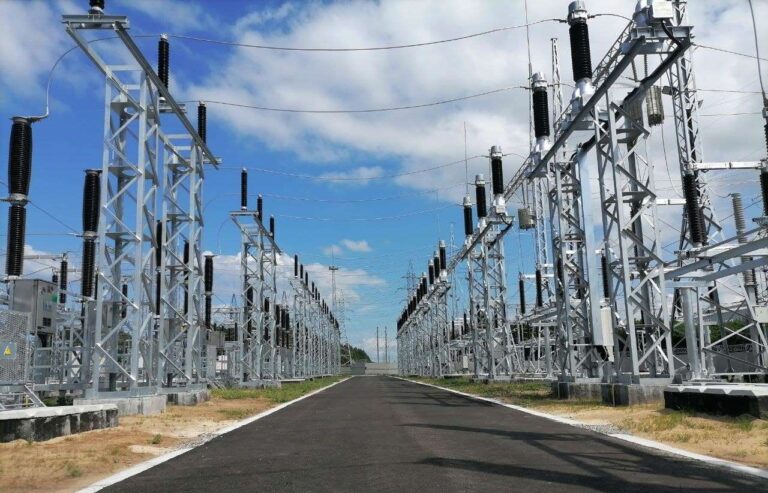
Despite the fact that from January 1, 2026, the tariff of NPC Ukrenergo for electricity transmission increased by 4% to UAH 713.68 per MWh, this increase has not affected household bills. The reason is the existing Public Service Obligation mechanism, PSO.
It is through the PSO that the state artificially maintains the household electricity price at UAH 4.32 per kWh, while the difference between the market price and the regulated tariff is compensated by two state-owned companies, Energoatom and Ukrhydroenergo.
At the end of October, the Cabinet of Ministers extended the PSO until April 30, which means that current tariffs will remain in place at least throughout the heating season.
For households using electric heating, the preferential pricing model has also been preserved:
- up to 2,000 kWh per month UAH 2.64 per kWh;
- above 2,000 kWh UAH 4.32 per kWh.
At the same time, it is important to remember that since the start of the full-scale war, household electricity tariffs have already been increased twice. In May 2023, the price rose from UAH 1.68 to UAH 2.64 per kWh, and in June 2024 it increased to UAH 4.32. This means that the current stability does not guarantee the absence of changes throughout 2026, although practice shows that such decisions are usually taken during the warm season.
From January 1, 2026, tariffs for gas distribution system operators increased. The weighted average tariff for regional gas distribution companies is UAH 1.56 per cubic meter, but this applies exclusively to non-household consumers.
For households, the situation remains unchanged. Ukraine has a moratorium on gas price increases for the duration of martial law and for six months after its termination. Therefore:
- customers of Naftogaz continue to pay UAH 7.96 per cubic meter;
- for other suppliers, prices range from UAH 7.96 to UAH 9.99 per cubic meter.
In effect, the state is once again shifting the financial burden away from households and onto businesses and the system as a whole.
The most vulnerable part of the utilities system in 2026 is water supply. Tariffs for 34 large water utilities regulated by the National Energy and Utilities Regulatory Commission remain unchanged. In large cities Kyiv, Kharkiv, Dnipro, and Odesa water bills will not increase.
The reason is straightforward: in 2023, the regulator attempted to raise water tariffs by an average of 32%, but after public criticism from the President, the decision was canceled and has not been revisited since.
However, the economics of water utilities have not become any easier. Electricity accounts for up to one third of water supply production costs. When electricity tariffs for businesses and municipal enterprises rise while water tariffs remain frozen, debt accumulation becomes inevitable.
That is why local authorities in smaller communities have begun to make their own decisions to raise tariffs. In 2025–2026, increases in cold water and wastewater tariffs were announced by communities in Chernihiv, Lviv, and Rivne regions, as well as by the cities of Kaniv, Volodymyr, Bilhorod-Dnistrovskyi, Konotop, Zhmerynka, and a number of others.
This is not a nationwide increase, but a clear signal: small communities are the first to fail under tariff imbalances.



Business pays more: new Ukrenergo and regional grid tariffs
Unlike households, for businesses, 2026 begins with a direct increase in utility bills. From January 1, new tariffs for electricity transmission and dispatching by Ukrenergo, as well as new tariffs for distribution system operators, came into force.
The electricity transmission tariff is increasing in two stages:
- from January 1 to UAH 713.68 per MWh;
- from April 1 to UAH 742.91 per MWh.
Separate reduced rates have been set for “green” metallurgy enterprises, while the surcharge used to finance renewable energy feed-in tariffs is also increasing in stages.
Distribution tariffs charged by regional grid operators are rising on a differentiated basis:
- an average of 3.2% at the first stage;
- for large enterprises connected to high-voltage networks up to 12%;
- at the second stage an additional 0.2%.
As a result, businesses are seeing higher electricity bills even without changes in wholesale market prices, purely due to the tariff component.
Time for Action has analyzed the real picture of tariff policy, and it looks as follows: the state is deliberately restraining socially sensitive tariffs for households, but the cost of this stability is gradually being transferred to businesses, municipal enterprises, and local budgets.
This creates deferred risks:
- rising production costs for goods and services;
- growing financial problems for water utilities and district heating companies;
- increased pressure on small communities that lack financial buffers;
- potential decisions to raise household tariffs after the PSO expires.
As of the beginning of 2026, households will indeed not see increases in gas and electricity tariffs. But this does not mean the system is stable. It is operating under a manual containment regime, where each increase for businesses and the municipal sector simply accumulates pressure.
The tariff pause for households is being bought at the expense of the broader economy, and the question is not whether society will have to pay for it, but when and in what form.
About the Author

Related posts:
 Utility Tariffs in Ukraine: Economic Inevitability, Debt, and Challenges for Ukrainian Families
  Tariffs for Housing and Utility Services: Why Ukraine Stands on the Threshold of Change
  A Growing Debt: What Lies Behind UAH 106 Billion in Unpaid Utility Bills
  Big Business Under Pressure: How Taxes and Tariffs Are Reshaping Ukraine’s Economy