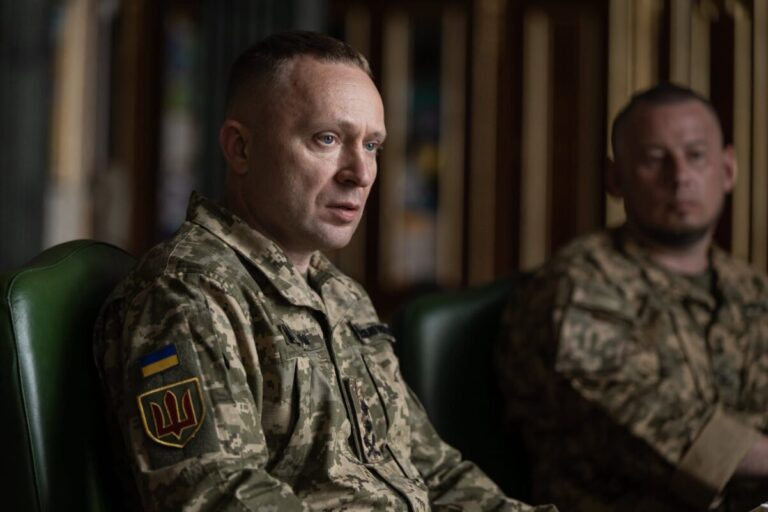
Frontera in Lutsk: Program of the 6th International Literary Festival on July 25-26
On July 25–26, the International Literary Festival “Frontera” will take place in Lutsk for the sixth time. The events will be held at the Museum Space “Okolnyi Castle” and at the Volyn Professional College of NUFT. This year, the festival will bring together more than 45 intellectuals, journalists, writers, artists and musicians from six countries. The central theme of the festival is “The Boundaries of Involvement”. This wording clearly conveys the general direction of the program: participants will speak about responsibility, trust, memory, communities, care, the future and the ability to remain close to one another at a time when war is changing not only politics or culture, but also the very way people communicate with each other. Time for Action looked into what will make this year’s “Frontera” special, whom it is worth listening to, what events are included in the program and why the festival in Lutsk has long gone beyond the limits of a regular literary format.
This year, “Frontera” is not limited to books and meetings with authors. The program includes discussions, public interviews, poetry readings, a podcast recording, music, stand-up, concerts, a solidarity performance, a children’s program and autograph sessions. This format makes the festival open to very different audiences: readers of contemporary Ukrainian literature, fans of journalism, music, public conversations, intellectual humor and artistic events. Among the festival participants are Artem Chekh, Halyna Kruk, Max Kidruk, Albert Tsukrenko, Yevhen Lir, Svitlana Taratorina, Valeriy Puzik, Anastasiia Levkova, Oleksandr Boichenko, Yanina Sokolova, Pavlo Derevianko, Vakhtang Kebuladze, Taras Liutyi, Sevgil Musaieva, Myroslava Barchuk, Liubov Yakymchuk, Olesia Ostrovska-Liuta, Taras Prokopyshyn and other Ukrainian authors, journalists and thinkers. The international part will be represented by guests from Spain, Portugal, Chile, the Netherlands and Poland. In particular, the program includes Juan Antonio Bernier, María Sotomayor, Vivian Lavín, João Pina, Joris Luyendijk, Mikołaj Grynberg. For a Ukrainian festival during the war, such international presence has a separate meaning: it is an opportunity to speak about the Ukrainian experience not only inside the country, but also within a broader European and global conversation.
The festival will be hosted by journalist Yana Brenzey. The main theme “The Boundaries of Involvement” will be explored through four major focus discussions. They will address the sense of community, voice, unyielding resistance, identity and the need to understand who “we” are in the conditions of a major war. This is not an abstract topic for a beautiful title. It directly concerns the current Ukrainian experience: who participates in a shared cause, how a person defines their responsibility, where the boundaries of personal involvement pass and what it means to stand beside those who live through war, losses and constant tension. The first day of the festival, July 25, will open with a speech by Valeriy Puzik. After that, the poetry readings “Who Are ‘We’” will take place with the participation of Olha Olkhova, Liubov Yakymchuk, Vasyl Karpiuk and Ihor Mitrov. Already in the first part of the program, the festival sets the tone: the conversation about community begins not with a political declaration, but with a poetic voice.
One of the key events of the day will be the focus discussion “The Boundaries of Involvement. Feeling One’s Own”. Pavlo Derevianko, Halyna Kruk and Juan Antonio Bernier from Spain will take part in it. The conversation will be moderated by Myroslava Barchuk. This event has the potential to become one of the central ones, as it combines the Ukrainian experience of war, a literary perspective and an international voice. Also on the first day, a public interview “A Long History of Involvement” with Nataliia Starchenko is planned, moderated by Mykyta Moskaliuk. A separate block will be dedicated to short form in literature the discussion “When a Few Pages Become Enough: Important Meanings of Short Form” will take place with the participation of Valeriy Puzik, Oleksandr Boichenko and Mariia Prydma. The festival does not avoid lighter formats. The first day’s program includes “Almost Intellectual Show” by “Underground Stand-Up”. Nastia Zukhvala, Yehor Shatailo, Yura Kolomiiets and a secret guest will take part. Such a format is important because it allows the festival audience to be addressed not only through serious discussions, but also through humor, improvisation and live contact with the hall.
After that, another focus conversation will take place “The Boundaries of Involvement. Speaking About Oneself”. The participants will be Danylo Lubkivskyi, Vivian Lavín from Chile, who will join online, and a secret guest. The event will be moderated by Rosana Tuzhanska. The theme of voice and self-representation is especially important for a country that, during the war, constantly explains itself to the world and at the same time tries not to lose internal honesty in speaking about its own experience. A separate artistic line of the first day will be formed by the solidarity performance “Echoes / Vidlunnia” with the participation of Olena Herasymiuk and international festival participants. The event will take place in partnership with the “Unwritten” project and with the support of the Embassy of Spain in Ukraine. The very name of the performance already works for the main theme of the festival: echoes of war, memory, voices and texts that cannot be left without a response. The evening part of July 25 will combine literature and music. Artem Chekh and Oleksandr Boichenko will speak about new texts, responsibility and irresponsibility. After that, the event “Reading Prescribed: Book Prescriptions for Any Occasion” will take place with the participation of Max Kidruk and Yana Brenzey, moderated by Anastasiia Zukhvala. The first day will end with a concert by the band thekomakoma. The second day of the festival, July 26, will begin with the recording of the podcast “SuchTsukrMuz: How Does Literature Sound?”. Artem Chekh and a secret guest will take part, and the moderator will be Albert Tsukrenko from the band “Hamerman Destroys Viruses”. The event will be held in partnership with “Hromadske”. This shows another feature of “Frontera”: the festival works not only as a meeting place, but also as a space for creating a new media product.
Next, the program will turn to genre literature. Svitlana Taratorina, Pavlo Derevianko and Max Kidruk will take part in the discussion “The Time of Fantasy and Science Fiction”. The moderator will be Kyrylo Lukash. For the Ukrainian literary scene, such a conversation is important because science fiction and fantasy have long ceased to be niche genres for a narrow audience. They are increasingly becoming a way to talk about fear, freedom, memory, power and the future. A separate discussion of the second day is “A Person Inside the System”. The participants will be Eduard Andriushchenko, João Pina from Portugal and Mikołaj Grynberg from Poland. Anastasiia Levkova will moderate. The title of this event already contains one of the main questions of modernity: how a person behaves inside large political, historical, media or bureaucratic systems and whether they can preserve their own choice.
Another focus event “The Boundaries of Involvement. Unyielding Resistance” will take place with the participation of Yevhen Lir, Liubov Yakymchuk and Yevhen Shybalov. The moderator will be Maksym Shcherbyna. The event will also take place in partnership with the “Unwritten” project. The theme of unyielding resistance in the Ukrainian space sounds not like a literary device, but as part of the daily life of a country that is fighting. The discussion “Media as a Space of Memory” will be important for journalistic and public audiences. The participants are Myroslava Barchuk, Joris Luyendijk from the Netherlands, Sevgil Musaieva and Taras Prokopyshyn. It will be moderated by Yuliia Tymoshenko. This conversation may become one of the strongest in the program, because Ukrainian media today do more than report news. They document the war, preserve the voices of witnesses, record crimes, losses and the experience of society. The musical break of the second day will be provided by the “Oranta” choir with the program “‘No, No, I Did Not Love the Wrong One!’, But Now in Chorus” popular Volyn hits performed by a choir. This detail adds a local tone to the festival: Lutsk and Volyn are not just the location of the event here, but part of its sound.
Another focus discussion “The Boundaries of Involvement. Who Are We and Do We Want to Know?” will bring together Svitlana Odynets, Olesia Ostrovska-Liuta and Taras Liutyi. The moderator will be Sofiia Kochmar. The event will take place in partnership with the Institute of Frontier and Ukraïner. It will continue the main line of the festival not to give simple answers, but to speak honestly about difficult questions of identity, memory and a shared future. The final part of the second day will include the poetry readings “Who Are ‘We’ Tomorrow” with the participation of Valeriy Puzik, Halyna Kruk, Juan Antonio Bernier and María Sotomayor. After that, the public conversation “Being Involved” with Yanina Sokolova and Vakhtang Kebuladze will take place, moderated by Yana Brenzey. The festival will end with a concert by a secret guest. A separate important part of “Frontera” is charity. The festival’s partner is the Come Back Alive foundation. As part of the partnership, a fundraiser is underway to collect 1 million hryvnias for communication equipment for the Liubart Brigade. This makes the festival not only a cultural event, but also a practically engaged one. It does not separate literature from the wartime reality in which the country lives.
Social accessibility has also been considered. Combatants and military personnel may attend the festival free of charge upon presenting the relevant document. Free entry is also provided for children up to and including 12 years old accompanied by an adult with a ticket, people with group I disabilities, their companions and people of retirement age. For teenagers aged 13–17, the ticket will cost 500 hryvnias at the box office on the day of the festival with a document and will be valid for two days. The cost of two-day tickets until July 24 inclusive is 1,300 hryvnias, and during the festival days 1,500 hryvnias. One-day tickets until July 24 inclusive cost 700 hryvnias. The organizers warn that changes may be made to the program because of martial law. The children’s stage and the autograph session area will be announced separately. All events will take place in Ukrainian and English with simultaneous interpretation. A shelter will be arranged at the location, and the events will be held in compliance with safety requirements during martial law. The organizer of the festival is the Literary Platform “Frontera”. The event is held with the support of the Ukrainian Cultural Foundation under the “Flagship Events” program, the Embassy of Spain in Ukraine and with the assistance of the Lutsk City Council. This year’s “Frontera” looks like a festival in which literature does not stand apart from life. It is combined with journalism, music, stand-up, diplomacy, charity and conversations about how society holds together during war. This is an event not only for those who read books. It is a space for those who want to hear difficult conversations, discover new names, support the military and be part of cultural life that does not stop even in the hardest times.
About the Author