Secret China-Russia Drills: Why Europe Sees This as a Security Threat
Secret military training of Russian forces in China has become a new signal for Europe: cooperation between Moscow and Beijing is increasingly moving beyond diplomatic statements and gaining practical military significance. According to Reuters, the drills were linked to Russia’s war against Ukraine, took place at facilities of the People’s Liberation Army of China, and were approved at a high level within Russia’s defense establishment. Time for Action examined why these drills caused concern in the EU, what role Russian and Chinese generals may have played in them, and why the issue of radiological, biological, and chemical protection has special significance during wartime.
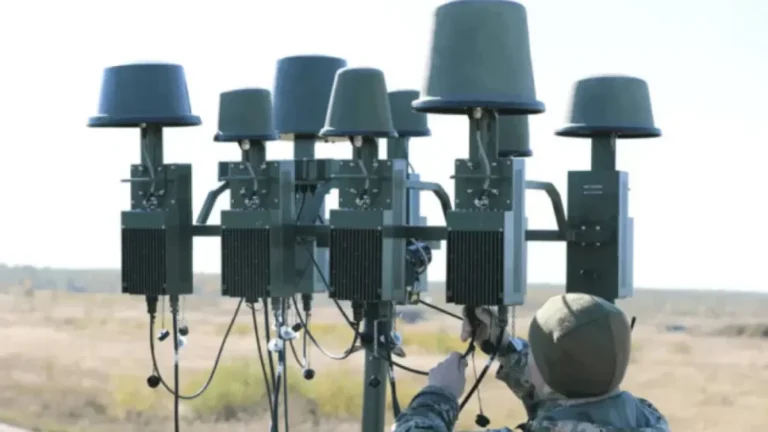
According to Reuters, the secret training of Russian military personnel in China last year was personally approved by Russia’s defense minister. A classified Russian document reviewed by the agency contains a direct reference to an internal order issued by Andrei Belousov in August 2025. The document says that, in accordance with his decision, a delegation of the Russian Armed Forces traveled to China to take part in drills at facilities of the People’s Liberation Army of China. This detail matters because it shows not a random contact between military structures, but organized interaction approved at the level of defense leadership. The participation of at least four Russian and Chinese generals, reported by Reuters, also indicates that this was not a technical exchange or a formal educational program. European officials paid particular attention to the subject of one of the courses. According to the agency, a three-week training course dedicated to radiological, chemical, and biological protection took place in November at a military facility in Beijing. The reports described Russian soldiers listening to lectures by a Chinese instructor, examining a model of a nuclear reactor, and training in “chemical reconnaissance,” “radiation reconnaissance,” and the protection of ventilation systems from contamination.
In peacetime, such courses could be explained as standard army preparation for emergencies. But for Russia, which is waging a war against Ukraine, any training in radiological, biological, or chemical protection carries a different political meaning. It can strengthen Russian military capabilities, even if it is formally presented as defensive. One European official, commenting on this part of the training, stressed that the inclusion of radiological, biological, and chemical warfare training emphasized the strategic nature of the exchanges.
“The inclusion of radiological, biological and chemical warfare training underscored the strategic nature of the exchanges”
Beijing denies the accusations and continues to insist that its position on Russia’s war against Ukraine has not changed. China’s Foreign Ministry said the relevant claims had no basis.
“The relevant accusations are completely groundless”
China has for years tried to preserve the image of a state that is not a party to the war and can claim the role of a mediator. But reports about the training of Russian troops at Chinese military facilities call this position into question for European governments. For the EU, the problem is not only what Beijing says, but whether Russia is receiving practical support that helps it continue the war.
Last month, Reuters also reported, citing European intelligence services and military documents, that China had trained about 200 Russian service members in November, some of whom may later have joined combat operations in Ukraine. The Kremlin then refused to comment but complained about “false information” published in the West. EU foreign policy chief Kaja Kallas said on June 15 that Brussels had confirmed through its own channels that the training had taken place and was now assessing the consequences. Beijing, in response, called her remarks “nothing but slander.” Germany’s reaction shows that this issue has already moved from the field of intelligence assessments into politics. On July 3, Berlin summoned China’s ambassador to the Foreign Ministry over reports of secret Russia-China drills. A German diplomatic source stated the position sharply: everything that helps Russia continue its war against Ukraine also creates risks for European security.
“Everything that enables Russia to continue its war of aggression against Ukraine also threatens our security. Thus, China’s decisive and growing support for Russia’s brutal war of aggression directly affects our security”
For the European Union, this situation is difficult. China remains one of the EU’s key trading partners, but at the same time its ties with Russia are increasingly being viewed as a security problem. After Russia’s full-scale invasion of Ukraine, European states see Moscow as the main military threat. That is why any deepening of military interaction between Russia and China automatically comes under the attention of European governments.
Closed-door discussions are already taking place inside the EU on a possible response to these drills. The question is whether the bloc is ready to increase pressure on China if this could affect trade interests. The EU has already imposed sanctions on Chinese companies that Brussels says support Russia’s military efforts. The new data may strengthen the arguments of those who believe China can no longer be treated only as an economic partner. Another important aspect is the difference in military experience between Russia and China. After more than four years of combat operations against Ukraine, Russia has practical experience of modern warfare. China, despite having a large and technologically advanced army, has not taken part in large-scale combat operations for decades. That is why cooperation may be useful to both sides: China provides infrastructure, equipment, simulators, and theoretical training, while Russia may bring experience from a real war. Internal Russian military reports reviewed by Reuters mentioned the strengths and weaknesses of Chinese training. One report on drills in Nanjing praised the level of equipment, the use of simulators, and the theoretical knowledge of instructors, but separately noted China’s lack of combat experience.
“One report on training in Nanjing praised the level of equipment, the use of simulators and the high theoretical knowledge of instructors, and also specifically noted China’s lack of combat experience”
The Russian side is publicly trying to downplay reports about such drills. Andrei Kartapolov, head of the defense committee of the Russian parliament, called the information “complete nonsense” and said Russian troops had nothing to learn from China.
“Russian troops have nothing to learn from China”
However, such a statement does not remove the main question: why Russian military personnel, including senior officers, may have taken part in training at Chinese military facilities. According to Reuters, the Russian delegation was headed by Colonel General Rustam Muradov, deputy commander-in-chief of Russia’s Ground Forces. The documents also mention Chinese Major General Li Jinsong, head of the Military Academy of Radiological, Chemical, and Biological Protection of the Chinese army, and Russian Major General Vitaly Gerasimov, who took part in a course in Bengbu.

The participation of such officials makes the story much more serious. This is not the level of individual instructors or a one-time visit. This is the level at which military cooperation may have long-term consequences for the war in Ukraine and for European security. For Ukraine, this information is important for several reasons. First, it points to possible additional channels of support for Russia that do not always look like direct arms supplies. Second, it shows that the Russian army continues to look for external resources to train its troops. Third, it strengthens Kyiv’s arguments in dialogue with European partners about the need to assess China’s role in the war more carefully. The greatest risk for Europe is that China-Russia cooperation may become more systematic. If the training of Russian troops in China is confirmed at the political level, it will mean that Beijing not only maintains ties with Moscow, but also allows practical interaction that may help the Russian army. The main conclusion is that the EU is facing a difficult choice. Ignoring such signals is already difficult, but a tough response to China may come with an economic cost. That is why reports about secret drills are not only a military story. They are a test for European policy: whether the EU is ready to view China not only as a trading partner, but also as a state whose actions may directly affect Russia’s war against Ukraine.
About the Author

Related posts:
 EU Sanctions Against China: How the West Responds to Technological Support for Russia in the War Against Ukraine
  China, Russia, and the New Global Balance: What “Unacceptability of Russian Defeat”
  Russia warns Europe over frozen assets: legal threats, geopolitical stakes, and financial risks
  18th EU Sanctions Package: how Europe targets Russia’s economy this time