Oleksandr Kubrakov Appointed Presidential Advisor: What an Out-of-Staff Role Means for Infrastructure and Communities
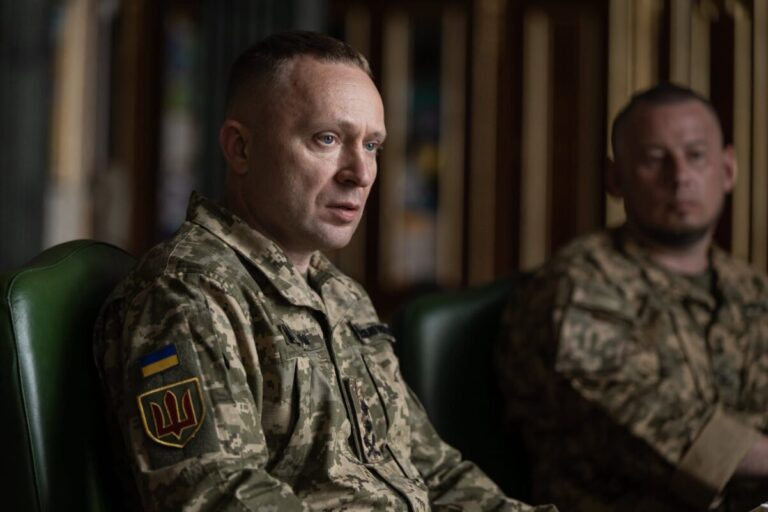
On January 20, President of Ukraine Volodymyr Zelenskyy signed a decree appointing Oleksandr Kubrakov as an out-of-staff advisor on infrastructure and cooperation with communities. Formally, this is a role without an office, without ministerial authority, and without a political mandate. In practice, it marks the return of one of the key infrastructure managers of the wartime period to the decision-making process. Such appointments usually remain outside the focus of broad public attention. In this case, however, the context matters more than the position itself.
Kubrakov steps into his new role amid an emergency situation in the energy sector, large-scale destruction of infrastructure, and a chronic shortage of investment solutions for communities. He directly defines his focus as strengthening community capacity, implementing an effective investment management system, and delivering projects that produce tangible results for people. This agenda is not new. In fact, it repeats the priorities he articulated while serving as Vice Prime Minister for the Restoration of Ukraine. The difference lies in the tools. An out-of-staff advisor is not an executor. This is a role of influence, coordination, and consultation, without direct responsibility for implementation. That is where both its potential and its risk lie.
Experience that cannot be ignored
Kubrakov’s career is closely tied to large infrastructure systems.
- from 2019 to 2021, he headed Ukravtodor;
- from 2021 to 2024, he served as Minister of Infrastructure and later as Vice Prime Minister for Restoration and Minister for Communities, Territories, and Infrastructure Development.
During this period, the state simultaneously:
- implemented the Big Construction program;
- ensured the operation of the grain corridor;
- restored energy infrastructure damaged by missile strikes.
It was a time of decision-making under constant crisis. Today, this very experience is being offered for use without a formal return to government.
At the same time, Kubrakov’s return cannot be considered outside the context of criticism and investigations that accompanied his work. During his leadership of Ukravtodor, methodological recommendations were introduced that effectively restricted the number of companies eligible to participate in large road construction tenders. This decision became the subject of sharp debate within the professional community. Investigations by the journalistic project Bihus.Info mentioned Ukravtodor in reports on alleged overpayments for asphalt concrete, which, according to journalists, generated excess profits for certain contractors. There were also claims of signs of cartel collusion among companies. Kubrakov himself denied these allegations and stated that an ordered information campaign was launched against him by the All-Ukrainian Road Association. These stories have not reached a legal conclusion, but they left a reputational trace that cannot be ignored, especially in the context of new advisory roles at the Presidential level.


What the “out-of-staff” format means
An out-of-staff advisor:
- does not adopt regulatory decisions;
- does not manage budgets;
- does not bear public responsibility comparable to that of a government official.
But such an advisor:
- has access to the first circle of consultations;
- can influence priorities;
- shapes decision-making logic at an early stage.
At a time when infrastructure, frontline logistics, exports, and energy security are tightly interconnected, this role can be significant even without formal authority.
Kubrakov’s appointment is more of a signal than a routine кадрове decision. It signals that the Presidential Office is betting on people with crisis-management experience, even if their background is not reputationally flawless. Whether this experience becomes a real resource for communities and infrastructure recovery depends not only on the advisor himself, but also on the transparency of the processes in which he will be involved. For now, this is a return without a formal mandate, but with a clear political subtext. That is precisely why this position deserves closer attention than many far louder appointments.
About the Author

Related posts:
 When “I’ll Return” Fades: Why So Many Ukrainians Abroad Are Not Coming Back
  Austrian Neutrality: A History of Compromise and a New Point of No Return
  Ukraine recovery 2025: how European support is changing and what it means for Ukraine
  Energy Emergency: why the state is shifting to crisis mode and what it means for people