Ukrainian Defense Technology Sector: How Wartime Innovation Shapes A New Industry
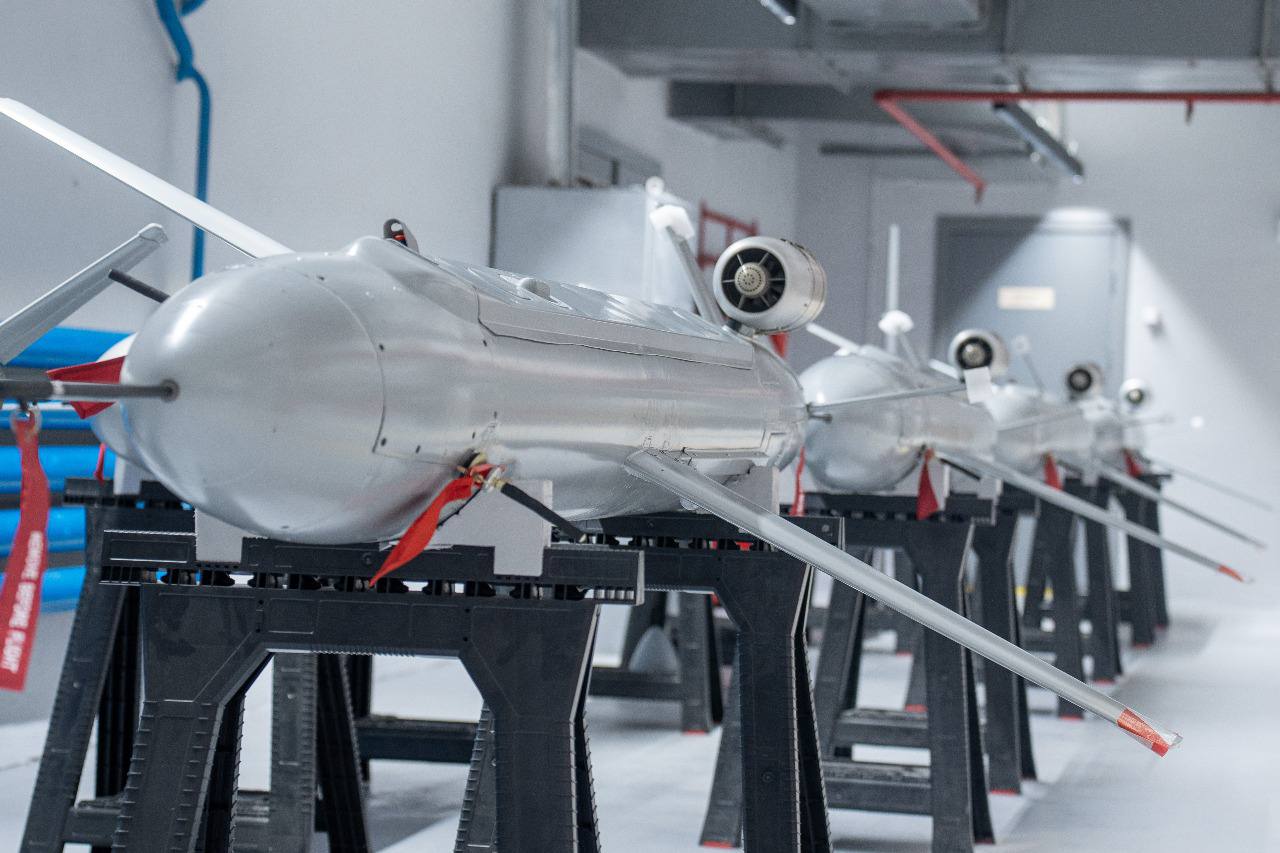
Time for Action analyzed how Ukraine’s defense technology sector has transformed by 2025, what drives its development, and why Ukrainian solutions attract attention from partners in Europe and the United States. Based on industry research, the country has entered a period of rapid growth and intensive experimentation in creating modern defense technologies. Hundreds of teams in Ukraine already develop systems at TRL7, a level of high product readinesswhere technologies are tested in real-world conditions. This is not theoretical work but practical tools of war: from drones and robotic platforms to software for processing and analyzing battlefield data. The speed of change, driven by frontline demands, has become the environment that both accelerates innovation and reshapes production approaches.
Time for Action collected data showing that today Ukraine’s defense technology market consists of 240 companiesoperating at serial or pre-serial readiness levels. Only five of them are state-owned, while all the others are private teams founded between 2014 and 2025. The most significant surge occurred in 2023, when 73 new companies appeared. This was the moment when frontline demand and available technologies aligned, creating the highest development velocity.
A central role belongs to the state platform Brave1, which currently hosts 3600 developments, many already codified under NATO standards and used on the battlefield. The dominant areas include unmanned aerial systems, robotic platforms, electronic warfare, and software for data analysis. These directions form the technological backbone of Ukraine’s defense solutions and directly respond to frontline needs.
Despite the size of the ecosystem, available capital remains limited. According to Molfar, as of September 2025 Ukrainian defense developers attracted 33.4 million dollars from private and government investors. The most funded areas are those where innovations most quickly appear in combat: software for drones 18.68 million dollars, robotic systems 13.16 million dollars, drone production 12.51 million dollars.
On the international stage, Ukraine faces a vast imbalance of capital. Defense innovation initiatives worldwide are concentrated primarily in the United States. Over the past five years, American defense startups received 15.5 billion dollars, whereas European ones received only 1.2 billion dollars. Notably, the economies of the United States and the European Union are nearly equal in size, yet their investment volumes differ dramatically. The U.S. investment peak came in 2022 with 4.5 billion dollars, while Europe though far behind shows rapid growth: from 49.7 million dollars in 2022 to 625.9 million dollars in 2024.
Against this backdrop, Ukraine stands out. According to entrepreneur Ragnar Saas, the country hosts over 2000 defense startups, while Scandinavian states combined have fewer than 200. This rapid expansion stems not only from wartime demand but also from the unique ecosystem in which developers work directly with soldiers, receive daily feedback, and refresh products far more frequently than international competitors. As Quantum Systems’ Matthias Lähner notes: “Right now Europe is learning an incredible amount from Ukraine, particularly in societal resilience, digitalization, and defense capability.”
Ukrainian developers openly acknowledge that most solutions are not breakthrough technologies but adaptations of accessible tools to real combat needs. Black Forest Systems founder Oleksandr Davydenko emphasizes that 90% of Ukrainian developments rely on imported components, yet the speed of adaptation is what makes them competitive: companies receive frontline feedback almost daily, and half of flagship products are updated up to 20 times a year. Such update cycles are unheard of among international manufacturers.
Head of Aerorozvidka Yaroslav Honchar explains the essence of Ukrainian uniqueness: “The main reason these developments are interesting is that they have been tested in practice. I cannot imagine another reason, because we do not have anything extraordinary or something that does not exist on the global market. All of this already exists.” He adds that in Ukraine “programmers write new code and the next day it reaches a combat unit,” where it is immediately evaluated. This short testing loop is unique and deeply valuable for partner nations.
International interest is confirmed by concrete examples. In 2024, the Ukrainian communication system HIMERA was tested with U.S. special operations forces, followed by its first international sale. American company Red Cat Holdings announced it would produce Ukrainian naval drones Magura V7 in the United States. Meanwhile, the Delta situational awareness system once a volunteer initiative has become an export-grade solution.


Ukraine’s strongest areas of success include robotics, drones, electronic warfare, cybersecurity, and data-management systems, as well as technologies for camouflage and protection. These solutions are already used on the battlefield and attract foreign partners. Industry representatives say demand is growing specifically for technologies proven under real combat conditions.
However, systemic constraints remain. Production facilities often operate unevenly, export channels remained restricted, and financing is insufficient for scaling. Experts note that development will depend mainly on two factors: full opening of defense technology exports and the intensity of frontline operations. Access to foreign markets could elevate the sector to a new level and enable joint production facilities with partners, strengthening integration into European standards.
In conclusion, Ukraine’s defense technology sector is entering a phase where real battlefield conditions are its competitive advantage. The industry grows not because of surplus resources but because of the constant need to adapt, test, and update solutions. This creates a market where competitiveness is defined by practicality, speed of change, and the ability to respond to daily challenges of war. If reforms continue and export mechanisms open fully, Ukraine has the potential to become one of the most dynamic defense technology hubs in Europe a place where innovation is not created in laboratory conditions but shaped by the battlefield and tested by reality.
About the Author

Related posts:
 Ukraine’s Defense Industry: From Mobilization to Global Ambition
  Ukrainian Defense Tech Valley 2025: Over $100 Million in Investments
  Rustem Umerov Appointed Secretary of the National Security and Defense Council: strategy, negotiations, and technology
  Europe’s Defense Industry: How War and EU Programs Accelerated Arms Production