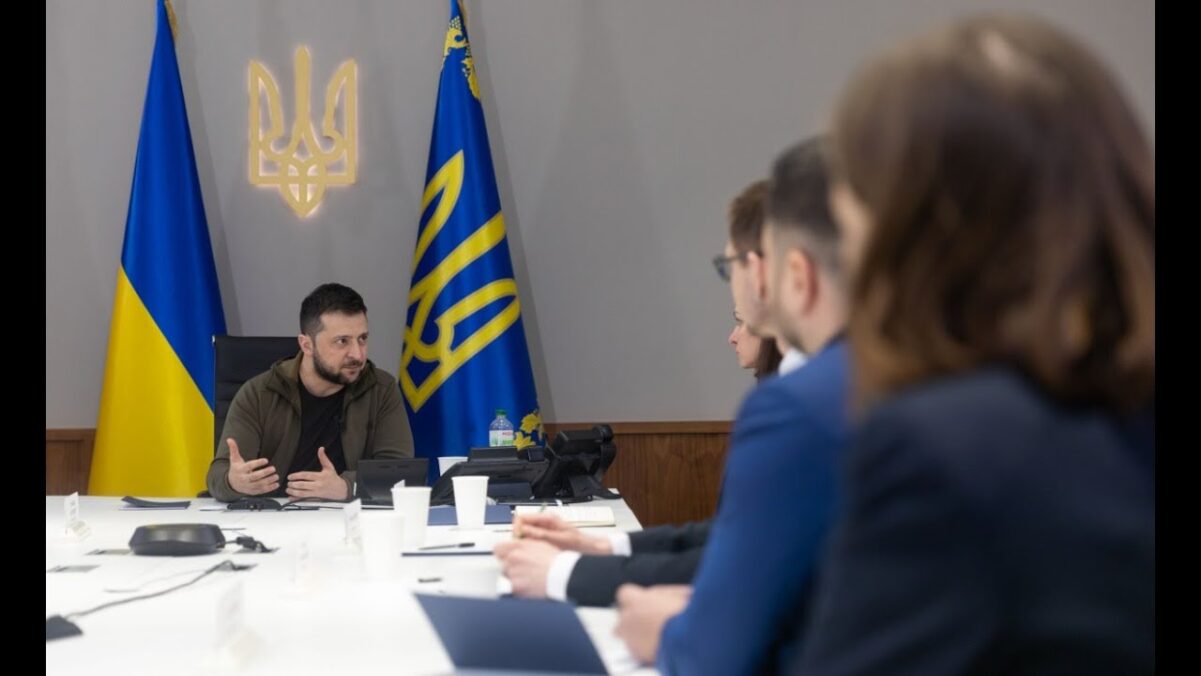
Elections, the peace plan and pressure from allies: how negotiations are reshaping Ukraine’s political landscape at the end of 2025
Time for Action analyzed how the issue of elections in Ukraine, the updated U.S. peace proposals and a series of negotiations with European leaders are forming one of the most complex political configurations in recent years. All the statements made by the President of Ukraine during his European tour on December 8-9, as well as the reactions from Washington and the EU, indicate that Ukraine has found itself at a point where internal democratic processes intersect with geopolitical pressure and security requirements.
During his visit to Rome on December 9, Volodymyr Zelensky repeated a formula that has accompanied his recent public appearances: “I am always ready for elections.” This phrase was spoken shortly after Donald Trump’s interview with Politico, where he claimed that the Ukrainian authorities “are using the war to avoid holding elections” and that Ukrainians “should have that choice.” At the same time, Trump added: “Maybe Zelensky would win I don’t know.”
Ukraine’s stance on elections has remained unchanged since 2023. Back then, Zelensky told ITV News: “If Ukraine lifts martial law before the end of the war with Russia, it will lose its army.” In January 2025, he again emphasized that elections are possible only after the end of martial law. And in February, speaking at the Munich Security Conference, he stressed that Ukrainians do not want elections right now.
Against this backdrop, the process of forming a new international peace plan is unfolding. On November 20, Ukraine received a draft of the American proposal, which Washington described as a foundation for a diplomatic breakthrough. Yet this document became the focal point of tension: it contained demands that Kyiv is not ready to accept. According to the text, key provisions included giving up Donetsk, Luhansk and Crimea, abandoning NATO membership, reducing the Armed Forces to 600,000 troops and holding elections 100 days after signing the agreement.
After consultations in Geneva, Ukraine and the U.S. announced that certain points had been amended, while the U.K., France and Germany proposed their own European version of the 24‑point peace plan. Europeans allow for a number of compromises, including setting Ukraine’s peacetime military personnel at 800,000.
On December 8–9, one of the most intensive diplomatic rounds of the year took place. London became the first stop, where Zelensky held talks with Keir Starmer, Emmanuel Macron and Friedrich Merz. After the meeting, the leaders emphasized the global importance of the Ukrainian issue. Merz stated: “We continue to firmly stand with Ukraine and provide support to your state because we all know: the fate of this country is the fate of Europe.” Starmer reiterated the principle “nothing about Ukraine without Ukraine,” while Macron stressed the need for Europe and the U.S. to coordinate positions.
That same day, Zelensky and Starmer held a joint call with the leaders of Finland, Italy, Poland, Norway, the Netherlands, Denmark, Sweden, Turkey, as well as EU and NATO officials. They discussed priorities for defense support, PURL, reinforcement of air defense and preparation for the next stages of negotiations.
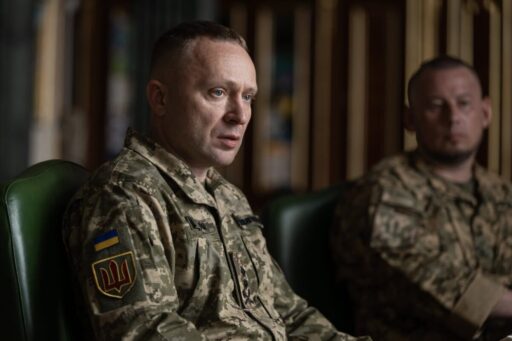
On December 9 in Brussels, Zelensky met with Mark Rutte, Ursula von der Leyen and António Costa. The talks focused on the structure of a potential framework document for establishing peace, security guarantees and Ukraine’s future EU membership. Chief of the General Staff Andriy Hnatov briefed the allies on the frontline situation, particularly near Pokrovsk. Rutte stressed that strengthening Ukrainian air defense remains the key priority of PURL, with partner contributions already exceeding $4.1 billion.
Amid all this, Axios published reports that the Donald Trump administration is increasing pressure on Kyiv to approve the American peace plan. Sources told the outlet that some provisions align more closely with Moscow’s interests and that the U.S., in their view, “is pressuring Kyiv more than Putin.” American officials deny this.
Tensions escalated after Trump’s advisers Steve Witkoff and Jared Kushner held a five‑hour meeting with Putin in the Kremlin. Officials in Kyiv fear that the U.S. position hardened after this encounter. After talks in Moscow, the Americans met with Ukrainian representatives and, according to Axios sources, expected Ukraine to essentially agree to the proposed terms. During Monday’s meeting with Macron, Starmer and Merz, Zelensky told journalists that the updated U.S. plan consists of 20 points, but there is still no compromise on territorial issues.
Post List

Time for Action highlights several key trends. First, the election issue has shifted from a domestic political factor to a component of a broader diplomatic structure. Zelensky’s statement about readiness for elections serves as a signal to Ukrainians and partners alike: Ukraine is not avoiding democratic procedures but will hold them only in a way that does not threaten its security. Second, international negotiations have entered a phase of maximum pressure and expectations. The U.S., EU and NATO each have their own vision of future peace, yet none can be realized without Ukraine’s political will.
Third, American pressure and European diplomacy illustrate two different approaches: the U.S. seeks faster results, while Europe emphasizes coordination and security. Ukraine, balancing among several centers of influence, is trying to preserve its agency and prevent decisions that undermine its territorial integrity.
In a broader context, the events of December 2025 show that Ukraine is entering a critical period of redefining the rules of the game. Elections, peace negotiations, allies’ demands and wartime realities intertwine into a complex political matrix. And how Ukraine manages to defend its positions within this multifaceted diplomacy will determine not only the outcomes of future elections but also the architecture of European security for decades ahead.
About the Author

Related posts:
 Zelensky-Trump Talks: How Patriot Deliveries and U.S. Ultimatums Are Changing the War in Ukraine
  Talks in Istanbul: Why the Third Round Is Not About Peace, But Messaging
  Imperial Ambitions Disguised as “Peace Talks”: What Russia’s Summer Offensive Really Aims to Achieve
  Trump-Zelensky-Putin Talks: Signals from Moscow and Ukraine’s Position