National Cashback: How One Program Changed Consumer Behavior and Became a Test of Economic Policy Effectiveness
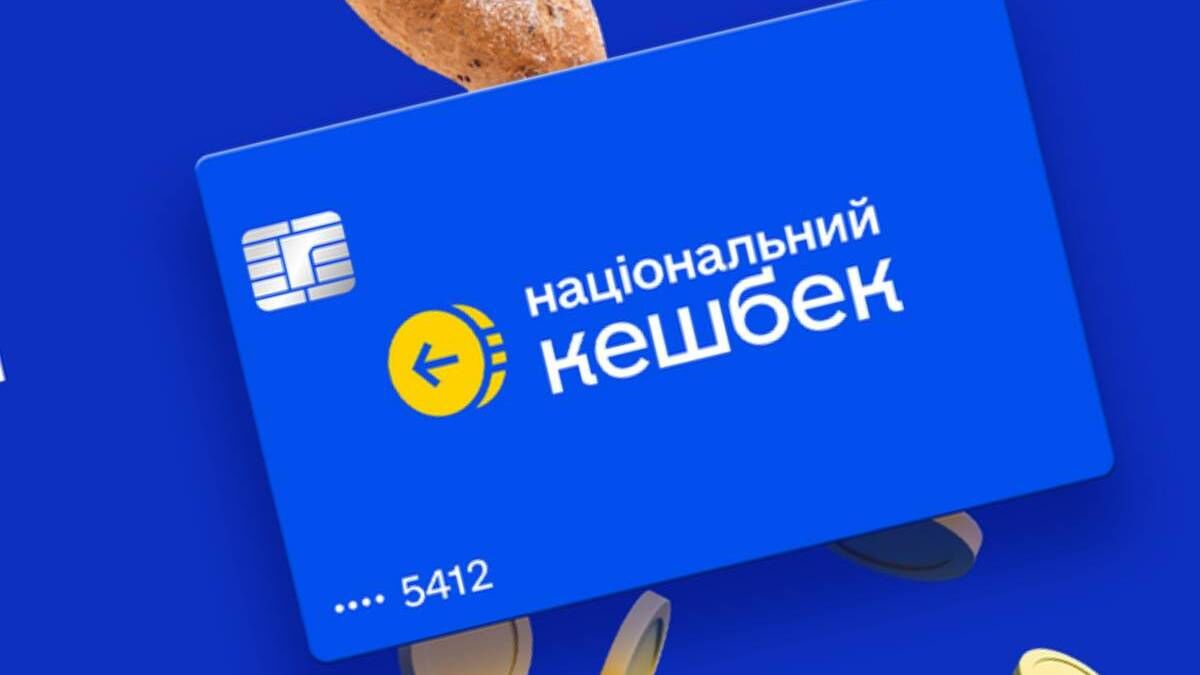
Ukrainian cheese has become an unexpected marker of deep changes in the country’s economic policy. It was in this category that, for the first time, the National Cashback displaced imports and elevated domestically produced goods to premium placement. The effect turned out to be broader than even the government expected: not only cheese but also furniture, clothing, and other categories of goods that for years had remained in the shadows or yielded to imports, moved into legal retail.
Over the past year, the program has become not only an instrument to support Ukrainian producers, but also an important indicator of how consumers respond to economic incentives and which mechanisms actually work in combination with market logic. At the center of this process is the “Made in Ukraine” policy, which today brings together fifteen active support programs from grants and compensations to affordable loans. Yet it was cashback that became the element which most quickly delivered a tangible effect.
The program has 7 million active users and nearly two thousand manufacturers who have joined the system. In areas where imports traditionally dominated, structural shifts have begun. Buyers are paying attention to the origin of goods, while retail responds to real demand. This has given rise to a phenomenon that previously seemed unlikely: Ukrainian products have appeared on the so-called “golden shelf” in the premium display zone, where imported brands usually stood.
This is not just about perception. Sales in the legal segment have increased to 10% in a number of categories because buyers are switching from informal markets to stores operating with fiscal receipts. For this reason, cheese has become a symbolic example: a portion of turnover left gray schemes, moved into controlled retail, and provided additional income for the economy.
Alongside cashback, other instruments operate that have a broader financial impact. The largest in terms of business coverage is the “Affordable Loans 5-7-9%” program. About 25,000 businesses use it every year. Thanks to 18 billion hryvnias of budget funding, the economy receives about 100 billion hryvnias in loan resources. The economic multiplier of this mechanism is from six to seven hryvnias of GDP growth per hryvnia of support. This is one of the few solutions whose impact is measured not in percentages but in multiples. The 25% compensation program for the cost of Ukrainian agricultural machinery and equipment also has a significant impact. Since its resumption in 2024, farmers have purchased more than 12,000 units of machinery worth over 9.1 billion hryvnias, and the state has already reimbursed nearly 1.9 billion. The multiplier of the program is 5–6 hryvnias of GDP growth for each hryvnia invested. This shows that support for production is no less important than stimulating demand.
All this forms a complex picture. On the one hand, the cashback program demonstrates large-scale demand, enables the collection of an unprecedented volume of data about the structure of consumption, and actually influences buyer choice. On the other hand, it is not without criticism. Part of the market points to limitations: cashback does not work in retail chains fragmented into sole proprietors, and does not cover informal trade. The head of the parliamentary committee, Danylo Hetmantsev, called the program “an ineffective PR initiative” and called for funds to be redistributed to other instruments such as “5-7-9.”
However, the official position of the government remains unchanged. The Ministry of Economy stated that information about the supposed winding down of cashback is not true. Changes in regulations concerned technical aspects of financing, not termination of the program. The government extended the experimental initiatives within the “Made in Ukraine” platform until June 30, 2026. The ministry emphasizes: in the event of any changes affecting the operation of the program, society will be informed in advance. Preparations for the next payments continue, manufacturer lists are being updated, and data analysis on consumption is being conducted.
Today, the analysis of the first year of operation reveals another important aspect: the program allowed the state, for the first time, to see the real structure of Ukrainians’ purchases. This became a starting point for policy correction: in categories with a high share of aggressive imports for example, in hard cheeses the need to strengthen support for the national producer has already formed. The effect is also tangible in light industry and furniture: some buyers are showing a stable shift from imported goods to Ukrainian ones. However, the success of cashback should not overshadow other instruments. The Ukrainian economy needs long-term stimuli that work not just for a year, but for five or ten. Only a combination of production development, affordable lending, modernization of equipment, and changes in consumer behavior provides a sustainable result. Cashback has become a catalyst for this process, but its role is supporting, not defining.
In a broader context, the program has shown: the Ukrainian consumer is ready to support domestic production if conditions are created in which this choice is not symbolic but economically advantageous. Retail responds to demand, business to economic incentives, and the state to changes in real statistics. This is a closed loop, which begins to work when each market participant sees a benefit for themselves in the legal sector.


National Cashback has become an indicator not only of consumer sentiment but also of the maturity of the state’s economic policy. It has shown that a well-crafted financial incentive can influence the market structure, reduce the shadow sector, strengthen the position of Ukrainian producers, and at the same time create the data needed to build long-term strategies. At the same time, the program is not a universal tool: its effectiveness depends on the sphere, the behavior of retail, tax discipline, and the structure of business itself.
The Ukrainian economy needs a combination of instruments that work in different directions: 5-7-9% loans, compensation for equipment manufacturers, cashback for consumers, industrial parks, grants. This model gives a comprehensive effect, where each program strengthens the other. That is why cashback should not be evaluated in comparison with other programs, but in the context of its role in the overall architecture of economic policy.
The main thing that has become obvious: when Ukrainians have a choice strengthened by economic logic, they are able to change the market structure much faster than the state expects. And in this sense, cheese is just a symbol. Behind it lies a much broader process: the gradual return of trust in Ukrainian production, the formation of a new model of consumer behavior, and the emergence of real competition where imports had dominated for years.
About the Author

Related posts:
 Oil and Fuel Market in Ukraine: Geopolitical Pressure, New Risks, and Consumer Prices
  Regulation of the Real Estate Services Market in Ukraine: Public Demand, Government Response, and Market Prospects
  How the War Changed the EU Gas Market: The End of Oil Indexation and Gazprom’s Strategic Failure
  Explosive Growth and New Challenges: How the Market for International Bus Transportation for Ukrainians Has Changed