How to Keep Food Safe During a Blackout: Effective Methods and Temperature Control
In the context of war and frequent blackouts, Ukrainians face the problem of keeping food fresh without access to electricity. Sudden and prolonged power outages can last from several hours to several days, and it is especially important during this time to know how to keep food from spoiling and avoid food poisoning. The situation when the refrigerator and freezer are full of products, and the power is cut off for an indefinite period, has already become typical for many families. However, there is no need to rush to throw everything away. According to her, this helps to keep the temperature low for longer: “This approach allows food to stay fresh even without electricity.”
An additional practical method is to store bottles of frozen water in the freezer. In the event of a power outage, it is recommended to move them to the main compartment of the refrigerator, which keeps it cold for several more hours. “Frozen bottles can be combined with cold packs, creating a kind of ‘cold cushion’ around the main products,” . This allows you to slow down heating as much as possible and extend freshness even for a day without electricity.
It is important to remember simple refrigerator rules: keep the doors closed this way, the cold lasts up to 4 hours even without power. If there is no electricity for more than 4 hours, food can be safely consumed for another 2 hours if the internal temperature does not exceed 2–3 °C. After that, the risk of food poisoning increases significantly. That is why experts advise buying a thermometer to monitor the temperature in the refrigerator and strictly monitoring this indicator. The optimal storage temperature is 2–3 °C.
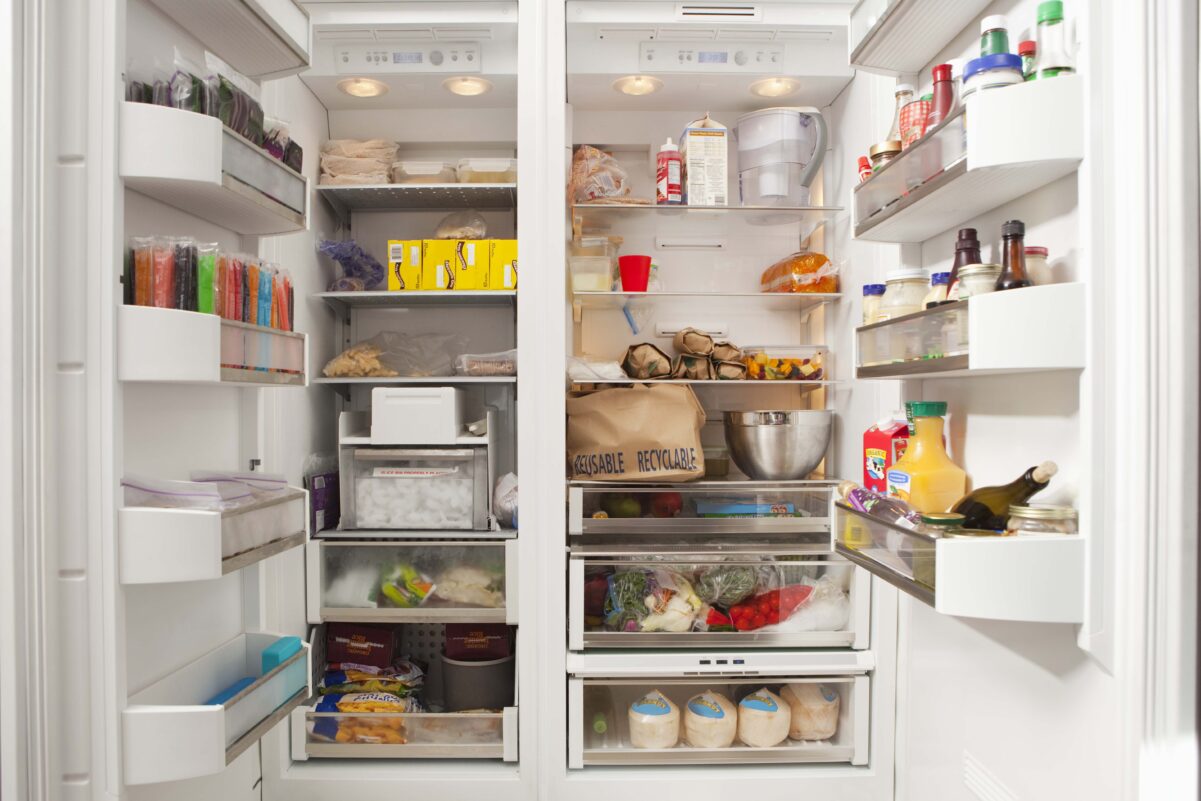
Special attention should be paid to the list of foods that should be thrown away after 4–6 hours without electricity. These include:
meat, poultry, fish (raw and cooked, delicacies, hot dogs, casseroles, salads, and pasta with these products);
dairy products (yogurt, sour cream, cream, cream cheese, ricotta, dishes based on them);
plant-based milk (oat, almond, soy, coconut);
soft cheeses;
tofu and meat substitutes;
cooked or sliced fruits and vegetables, boiled, ready-made salads, fresh juices;
dough (for pizza, cookies, buns, croissants);
homemade mayonnaise, creamy, tomato, oyster sauces if these products were above 10 °C for more than 8 hours.
It is safe to keep:
butter, margarine;
hard cheeses (Swiss, Parmesan, Pecorino);
whole, raw, dried, or canned fruits and vegetables, greens;
baked goods (bread, rolls, bagels, muffins, tortillas);
ketchup, mustard, hot sauce, jams, nut pastes, vinegar-based dressings, pickled cucumbers and olives.
If a product is not on the list it is safer to discard it rather than risk it. Experts emphasize: “It is better to throw out a product than risk your health due to food poisoning.”
The freezer retains cold longer a full freezer keeps the temperature up to 48 hours, a half-empty one up to 24 hours, provided the door remains closed. Frozen foods can be refrozen, but their quality may deteriorate. Densely packed products in the freezer help keep the cold, like “people warming each other with hugs.”
Post List




During long power outages, it is extremely important to follow clear rules: use cold packs and frozen water bottles, minimize opening the refrigerator door, monitor the temperature, and promptly sort food after the blackout ends.
The Ukrainian experience of blackouts shows that it is really possible to keep food fresh during prolonged power outages if you combine several simple but effective methods. Cold packs, frozen bottles, and careful attention to temperature are the basic set of tools that help avoid food waste and food poisoning. In modern conditions, such advice becomes not just a recommendation but part of a household survival strategy for many Ukrainian families. Knowledge, organization, and quick response are the best protection during another blackout.
About the Author

Related posts:
 New Food Summit 2025: The Main Event for Those Shaping the Future of Food in Ukraine
  How to Keep Wi‑Fi During a Blackout: A Complete 2025 Guide for Your Home
  How to Prepare Your Home for Winter and Blackouts: A Proven Guide for Those Who Want to Keep Warm, Stay Lit, and Remain Calm
  Male Manipulation in Relationships: Types, Scientific Approaches, and Effective Resistance