What Soldiers Complain About Most Often: Medical Care, Transfers, and Commanders’ Actions
The rights of military personnel are increasingly becoming a subject of dedicated attention at the state level. The number of appeals received by the relevant body shows that the problems are not isolated, but systemic, and affect key aspects of service. Time for Action has analyzed what soldiers most often complain about and which mechanisms are already working, and which still require changes.
The largest share of complaints is related to medical support. This is not only about access to treatment, but also about the timeliness of care, the accuracy of medical decisions, and the organization of processes within units. Some cases have gained public attention due to fatal outcomes. This forces inspections directly within military units and requires a comprehensive assessment rather than isolated responses. The medical issue is closely linked to another critical problem the functioning of military medical commissions. Some soldiers are classified as “limited fit,” but in reality cannot perform combat tasks. At the same time, they remain in service, are assigned to rear positions, and receive minimal pay. They cannot be discharged on medical grounds under current regulations. This creates a situation where a person is formally fit for service, but in practice limited in capacity and lacking a legal mechanism to change their status. That is why changes to regulatory documents governing diagnoses and discharge criteria are being initiated.
At the same time, there is another legal issue a discrepancy between the grounds for discharge and the grounds for deferment from mobilization. In practice, there are cases where a person should not have been mobilized, but after entering service, has no legal basis for discharge. This creates a sense of injustice and requires legislative correction. The second major group of complaints concerns transfers between units. Formally, the digital mechanism for submitting transfer requests is functioning, and tens of thousands of service members have already used it. However, in practice, conflicts often arise due to commanders refusing to approve transfers. As a result, soldiers are forced to seek additional ways to enforce their rights.
A separate provision allows transfers without a commander’s approval for those classified as limited fit. This rule is actively applied, but even here, compliance is not always ensured at the unit level, which requires additional oversight. The third category of complaints concerns the actions of commanders. These include alleged abuses, such as non-payment of financial allowances or decisions that soldiers consider unlawful. At the same time, a significant portion of such complaints is not confirmed. The reason is often differing interpretations of regulations or a lack of understanding of procedures.

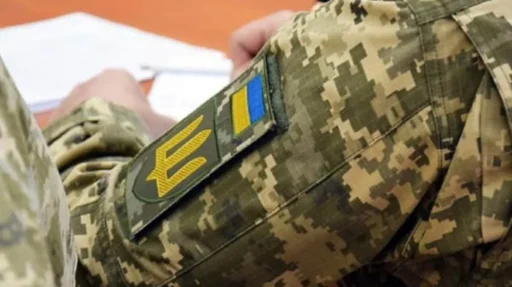
Another complex area is the withdrawal of soldiers from positions. This issue has both organizational and physical dimensions. The implementation of such decisions depends heavily on the situation on the ground, which is where the greatest tension arises.Particular attention is also drawn to the situation of soldiers who left their units without authorization and later returned to service. They are assigned to units of priority staffing. There are no regulations that specifically require sending them only to assault units. However, since such units are part of the priority category, some soldiers do end up there. This creates a perception that does not always align with formal rules. The number of appeals to the relevant body has decreased compared to the initial phase of its operation, but remains significant. Dozens of complaints are recorded daily. This reflects two parallel trends: on the one hand, the response mechanism has become more stable, and on the other, the volume of problems remains high. The current situation shows that some issues have already been shifted into the realm of tools and procedures. However, the key problems medical support, legal inconsistencies, and the implementation of decisions at the unit level require systemic changes. Without this, even effective response mechanisms will not reduce the number of complaints, but will continue to record them again and again.
About the Author

Related posts:
 Starlink under control: how the “white list” reshaped communications at the front and in the rear
  An Autumn That Will Decide the Future: What NATO Really Expects on Ukraine’s Front Line
  Cannes 2025: When the Red Carpet Becomes a Front Line
  Ukrainian Drones as a New Instrument of Influence in Global Security