“The Universe of Van Gogh” Opens in Kyiv: Why This Exhibition Could Become One of the Most Notable Cultural Events of the Season
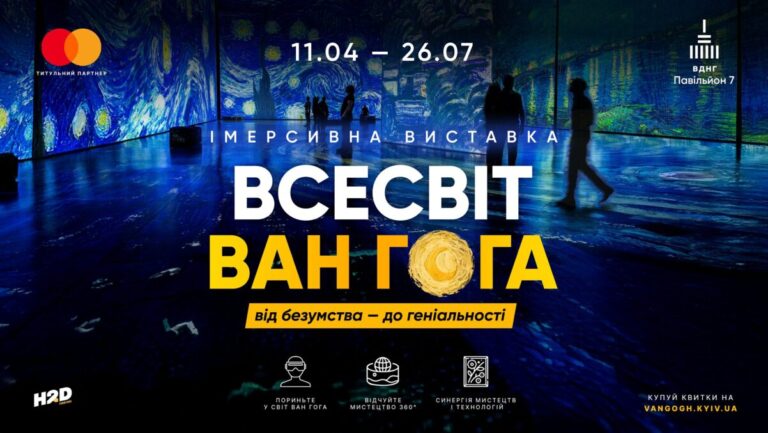
On April 11, the immersive exhibition “The Universe of Van Gogh” opens at VDNH in Kyiv, dedicated to the work of one of the most famous artists in the world. The project, which has already been shown in major cities abroad and attracted millions of visitors, will be presented in Ukraine for the first time. For Kyiv, this is not just another spring event, but a signal of how the way people experience art is changing today. Time for Action analyzed why this exhibition is drawing such attention and what makes it appealing even to those who were not particularly interested in painting before.
The first thing to understand: this is not a traditional museum exhibition where visitors quietly move from one painting to another. “The Universe of Van Gogh” is built in a completely different way. Here, the viewer is not standing aside, but is literally placed inside a visual space created from the artist’s works. Large-scale digital projections cover the walls and the floor, music enhances the atmosphere, and familiar paintings stop being just images from textbooks or the internet. They become an environment that a person physically experiences. This is exactly where the strength of this format lies. For many people, Van Gogh’s art is familiar only in fragments.Some have seen “Sunflowers,” others “The Starry Night,” some know parts of his difficult life story, but these pieces often remain disconnected. The immersive exhibition tries to build that connection. It does not simply show paintings it creates an emotional path toward them. A person does not need to understand art history to feel why these works still have such a strong impact.
For Kyiv, this is especially important. Projects like this act as a bridge between great art and a wide audience. Not everyone will go to a traditional museum, not everyone will read complex art analysis, not everyone is ready for detailed discussions about artistic styles. But many are ready to enter a space where art speaks through light, sound, movement, and atmosphere and only then begin to look deeper. The exhibition covers more than 2,000 square meters, allowing it to create not just separate elements, but a full experience route. Visitors do not come for a few minutes or a quick look. They enter a space designed as a journey. This is why such exhibitions attract not only art enthusiasts, but also those searching for a strong cultural experience.
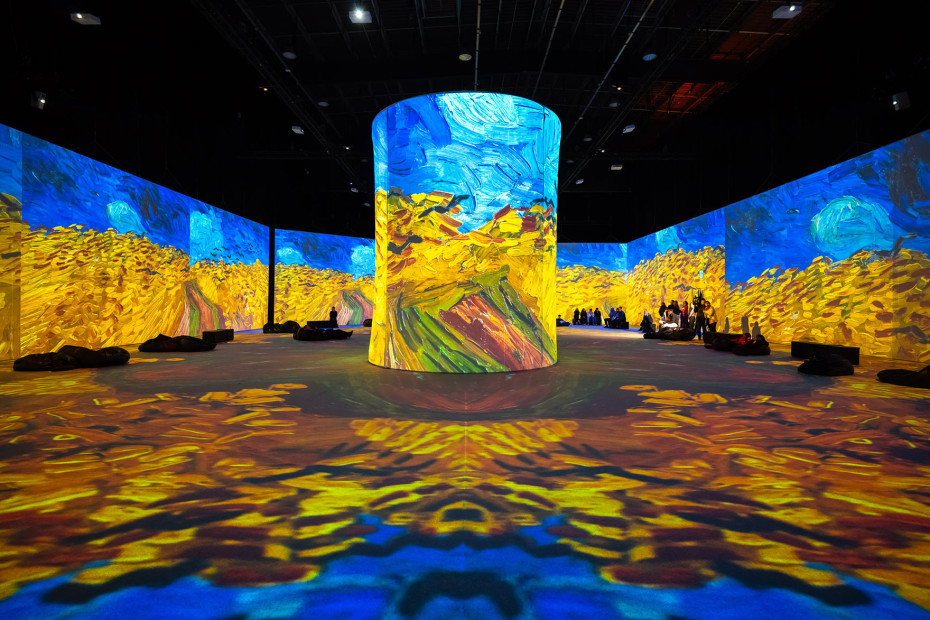
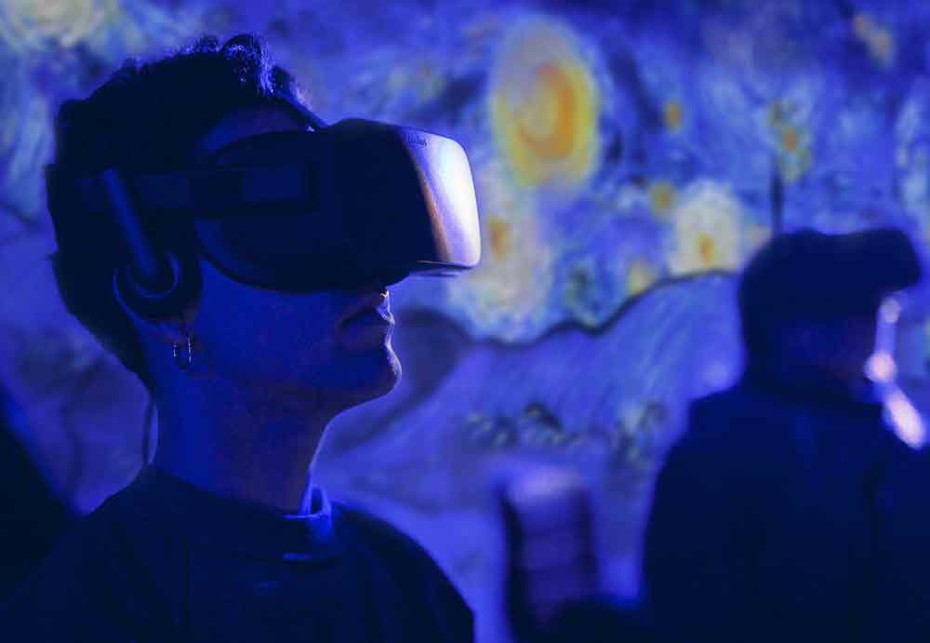
Another important advantage is that the project is not limited to projections. It includes VR experiences, animated elements, an audio guide, a reconstruction of the artist’s bedroom in Arles, a chronological presentation of his life, a gallery of full-scale reproductions, and his letters to his brother Theo. These elements matter, because they turn the exhibition into something more than just a visual show. When a person sees only impressive visuals, they receive emotion but not always understanding. When that visual immersion is combined with biography, personal letters, reconstructed space, and large-scale reproductions, a different perception emerges the artist is no longer just a famous name, but a real person with thoughts, struggles, and a unique way of seeing the world.
Van Gogh is often known through myth. His tragic life, late recognition, inner struggles, and emotional intensity have long become part of popular culture. But behind this image, the art itself is often overlooked. This exhibition has a strong chance to return attention to what truly matters: the works themselves, their energy, and the way they use color and movement. This becomes especially powerful with iconic works such as “The Starry Night,” “Sunflowers,” and “Café Terrace at Night.” In everyday perception, these are familiar images that many people have seen so often that they no longer truly observe them. The immersive format restores the feeling of first encounter. When “The Starry Night” expands beyond a frame and surrounds the viewer, when “Sunflowers” fill the space with color, the artwork begins to function differently. It becomes not just recognizable, but tangible.
Another strength is the balance between accessibility and scale. The exhibition does not require prior knowledge, yet it does not feel simplified. It can be understood immediately, but it also offers depth for those who want to look closer, listen carefully, and reflect. This makes it suitable for a wide audience: families with children, young people, occasional visitors to cultural events, and those who already appreciate art. For a child, such an exhibition can become a first meaningful introduction to an artist not through dates and lists, but through experience: a room, images, sound, and the story of a person who saw the world differently. For an adult, it can be an opportunity to look at a familiar name with fresh eyes. For the city, it is a sign that cultural life continues to evolve even under difficult conditions. The classical part of the exhibition also plays an important role. It helps maintain balance. Immersive formats can easily turn an artist into a visual spectacle, but when combined with a life timeline, large reproductions, and personal letters, visitors gain structure and understanding. They see not only emotion, but also the path behind it. The reconstruction of the artist’s bedroom adds another layer. It creates something simple yet powerful a sense of closeness. The artist, often perceived as a distant legend, appears as a person who lived in a real space, worked in a specific room, wrote letters, and observed the world from a particular window. These moments often change how art is perceived.


So why is this exhibition worth visiting? Not because it is a popular format, and not because it has already been shown in major global cities. It is worth visiting because it offers a rare opportunity not just to see Van Gogh’s name, but to feel his presence in space. It works through emotion, vision, sound, and memory and that is why it can stay with a visitor longer than a traditional exhibition. Such exhibitions do not replace museums, nor should they. But they perform an important function: they open the door. After such an experience, some may want to read Van Gogh’s letters, others may explore his work more deeply, and some may simply look at his paintings differently. This is how the format proves its value. “The Universe of Van Gogh” at VDNH has every chance to become not just a widely discussed cultural event, but an exhibition that leaves visitors with the feeling that art can be not only seen, but lived.
About the Author

Related posts:
 Wilhelm Kotarbinski Exhibition in Kyiv: Art Returning to the Viewer
  UBiennale 2025 in Kyiv: Digital Art, VR, AR, and International Installations at “Field of Memory. Time for Recovery”
  A Documentary “PALYANYTSIA” to Be Screened in Kyiv: A Look at Ukraine Through the Lens of Art
  Kyiv Stands: What We Celebrate on Kyiv Day 2025