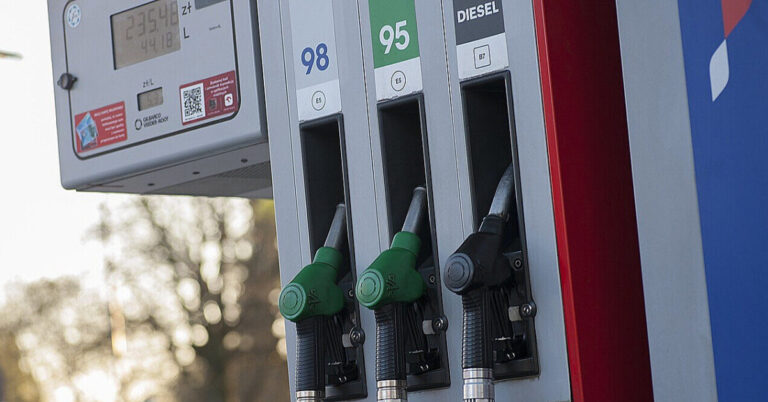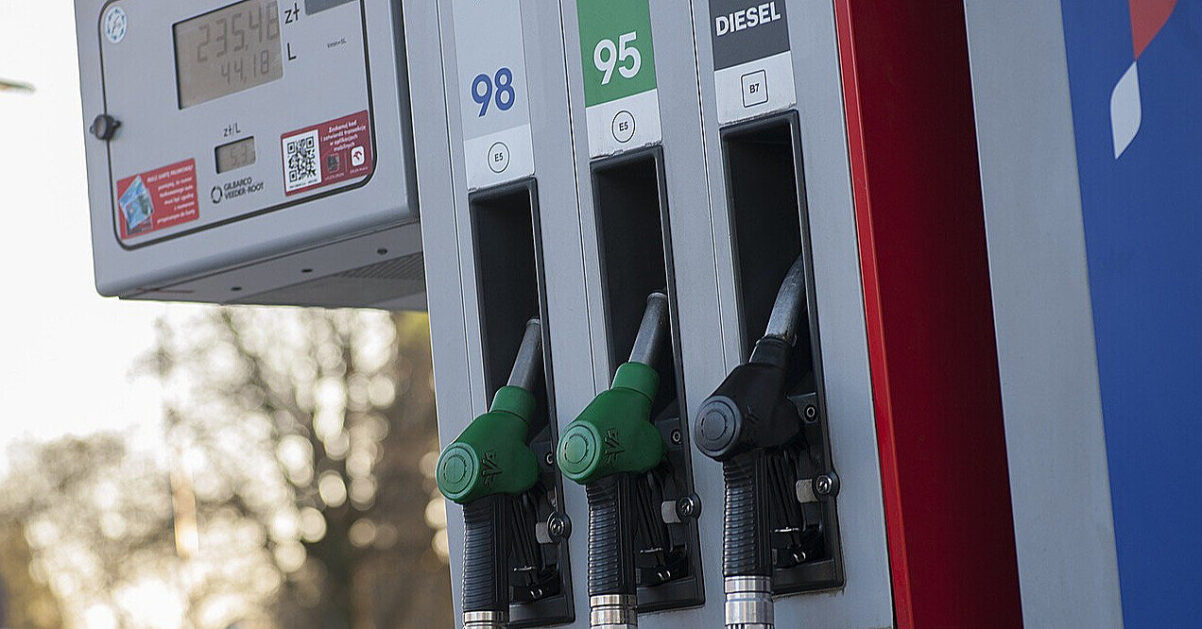
Fuel Prices Are Rising - Consumer Prices Are Preparing to Shift: How Businesses Are Responding and What It Means for the Market
The increase in fuel costs is gradually moving from an internal business challenge to a factor that consumers will begin to feel. Time for Action analyzed how exactly this affects companies and why holding prices steady will not be possible for long.
The situation is developing not abruptly, but steadily. Most companies have already felt the impact of rising fuel prices for some it is a serious hit, for others it is a moderate increase in costs that does not yet break their business model, but changes the financial logic. Only a small share of businesses remains unaffected by these changes. Logistics reacts the fastest. Rising transportation costs become the first and most visible issue, pulling other expenses along with them. Delivery of raw materials, movement of goods, transport operations all of this directly depends on fuel prices. That is why most companies primarily report increased costs in this segment. The effect then moves into production. When logistics becomes more expensive, the cost structure of products and services changes. This is no longer an isolated factor, but a chain reaction that affects pricing as a whole. Some companies are already revising budgets and operational plans to adapt to the new conditions. The rise in costs is not marginal. For a significant share of businesses, it ranges from several percent to double-digit increases, and in some cases exceeds that level. For many, this means the need for quick managerial decisions: either optimize processes or reconsider pricing.
For now, companies are trying not to pass all the pressure onto consumers. Some businesses have already raised prices, but a large number are still evaluating such a move or deliberately postponing it. This looks like an attempt to buy time and maintain competitiveness. At the same time, the ability to hold back prices is limited. For most companies, the time horizon is short several weeks or at most a few months. Only a small share of businesses has a sufficient margin of resilience to maintain current prices for longer. This means that the effect of rising fuel costs is delayed. It does not appear instantly, but accumulates over time. Businesses absorb the costs for a while, but gradually this pressure begins to transfer into the final price of goods and services.
At the same time, the situation cannot be described as critical for operational activity. Most companies continue to operate steadily, without major disruptions. Difficulties exist, but they are not widespread and do not yet lead to systemic failures. The reasons behind fuel price increases also matter. They are linked not only to economic factors, but also to market reactions to external events. The rise in global oil prices has been one of the key drivers, but market sentiment has also played a significant role. It could have accelerated the process by triggering a chain reaction of price increases. This is important for understanding what comes next. If part of the increase was driven by sentiment, the market may partially stabilize. However, even in that case, the already accumulated cost pressure will not disappear.

In this situation, businesses are showing a typical pattern of behavior: adapting, revising strategies, and at the same time expecting more predictable rules. Among the key expectations are clearer tax policies, transparency in the fuel market, and support for sectors where fuel costs are a critical component. The current dynamics show that the market is not in crisis, but is moving toward gradual price growth. This is not a sudden spike, but a process that unfolds over time and affects more and more sectors. In the near term, the decisive factor will remain the cost of fuel. If it stabilizes, businesses will be able to partially contain prices. If it continues to rise, it will become increasingly difficult to limit its impact. As a result, consumer prices are highly likely to start changing not immediately, but gradually, as companies exhaust their financial resilience.
About the Author

Related posts:
 Fuel prices are rising: how geopolitics, currency movements and winter are jointly pushing costs higher in Ukraine
  Fuel Prices in Ukraine: Why They Are Rising, What to Expect
  Fuel prices in Ukraine surge: what is happening on the market and whether there are grounds for suspicions
  Ukrainian business at the start: expectations are tightening, costs are rising, room for maneuver is shrinking