Ukraine Sanctions Lukashenko: Military Signals and the Future of Belarus’ Sovereignty
Recent developments indicate a transformation in Ukraine’s approach: from cautious restraint to a clearly articulated principle of conditional accountability. Time for Action has analyzed the statements of the President of Ukraine regarding Belarus, the sanctions policy, and the shift in security strategy.
In 2022, Ukraine faced a difficult choice. Russian troops advanced from the territory of Belarus, yet Kyiv refrained from launching retaliatory strikes on Belarusian soil. The reasoning was not only military, but political. At that time, there was still an assumption that the Belarusian regime did not fully control the situation or was not prepared to enter the war directly. There were claims that the leadership in Minsk did not control the launch systems from which attacks were carried out. It later became evident that this version did not withstand scrutiny. After the first months of the war, the situation began to change. The last recorded strikes from Belarusian territory occurred in autumn 2022. However, support for the aggression did not cease. It evolved into infrastructural, informational, and military-technical cooperation. This includes providing infrastructure, assisting the Russian military-industrial complex, transferring weapons, and sharing intelligence. Parallel statements were made about the placement of nuclear weapons and the construction of facilities that the Belarusian leadership openly boasts about.
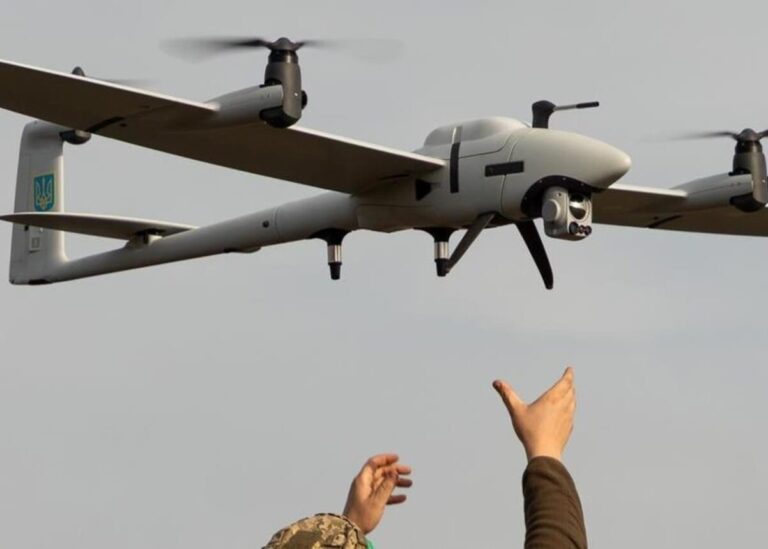
Particularly significant is the confirmation of drone control centers operating on Belarusian territory. This indicates that the country is being used not merely as a political rear base, but as an operational element of the war infrastructure. Under such conditions, the shift in Kyiv’s rhetoric appears consistent. The President of Ukraine stated directly: “Belarus is taking a serious risk.” This formula carries several layers of meaning. First, the risk of losing sovereignty. Further involvement in the war implies deeper dependence on Moscow. Second, the risk of being drawn into the hot phase of hostilities. Third, internal destabilization in the event of forced mobilization or an attempt at direct military intervention.
It is important to note that the Belarusian army has not crossed the Ukrainian border. The 1,084-kilometer border remains a deterrent factor. Previously, the position was that opening a second front was disadvantageous for Ukraine. Today, that stance has evolved. Ukraine does not declare an intention to wage war against Belarus, but it does not exclude military responses to specific threats particularly against facilities enabling Russian attacks.Sanctions represent a separate dimension. The decision to impose restrictions on Lukashenko is presented as a new step. In reality, it is the final element in an already existing sanctions pyramid. Restrictions had previously been introduced against military personnel, propagandists, border officials, commanders of operational groupings, and representatives of the military-industrial complex.
In effect, personal accountability has now been formally закреплена. The signal is clear: the regime is no longer perceived as neutral or semi-detached. It is regarded as a participant in the aggression. Another notable statement concerns the possibility of Belarusian forces entering the war. The thesis has been voiced: “A second front is not needed by anyone.”
At the same time, there is a clear understanding that the primary threat stems from the presence of Russian troops on Belarusian territory. It was precisely this presence that proved decisive in February 2022. The evolution of Kyiv’s attitude toward Belarusian democratic forces is also significant. Initially, the approach was reserved and even critical. The reasons included ambiguous statements, positions regarding Crimea, and rhetoric toward Russia. Subsequently, systematic work on communication began. Democratic forces started to be viewed as representing a segment of Belarusian society opposed to aggression and to the course of complicity in the war.

Today, these forces are considered a situational ally. This does not concern military assistance, but political support, symbolic legitimization of an alternative to the current regime, participation in international events, and the development of a new framework of engagement.
Ukraine’s position has become clearer. If Belarusian territory is used for aggression, a response is possible. If the regime deepens cooperation with Moscow, the risk of losing independence increases. If Belarus remains a formal platform without direct entry into the war, space for deterrence may persist. What has changed most significantly is the absence of illusions. The period of naïve expectations that the regime would stop before the Kremlin has ended. Further developments will depend on whether the current balance of deterrence holds or whether Belarus ultimately loses its capacity to maneuver between Moscow and Kyiv. In the latter scenario, the consequences could prove fatal for its formal statehood.
About the Author

Related posts:
 Belarus Factor and “Zapad-2025”: What Lies Behind the Exercises and What Ukraine Should Expect
  Fuel Crisis in Russia: Why Moscow Turns to Belarus for Supplies as Refineries Halt and Regions Impose Limits
  Lithuania Closes Its Border with Belarus: A New Dimension of Hybrid Threats for the Baltics
  The Oval Office Map: What It Signals for Ukraine’s Talks and Security Guarantees